
Secret Club at Ballermann: Police Stop Alleged Cannabis Trade in Playa de Palma
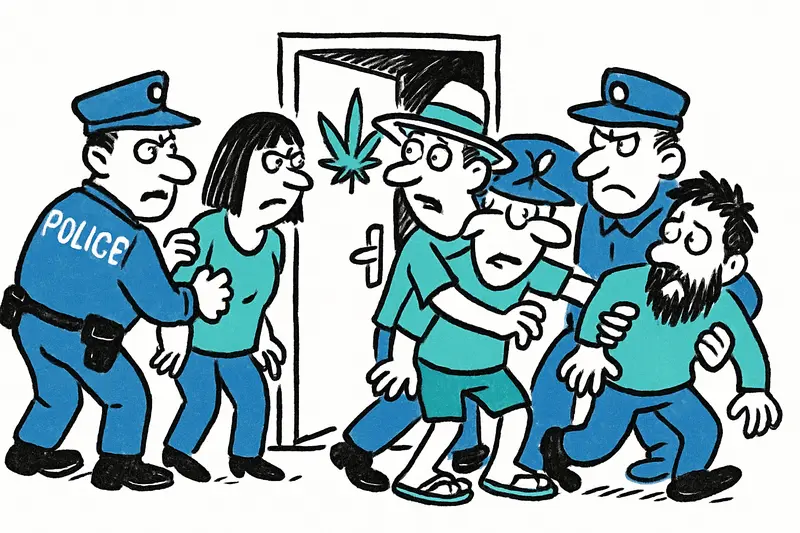
In a side street of Playa de Palma, the National Police stormed a meeting that presented itself as a "closed club." Five people were arrested; investigators suspect organized trade behind the guise of an association structure.
Raid at Playa de Palma: When holiday vibes turn into serious investigations
On what had otherwise been a mild morning, with seagulls circling the horizon over the sea and the last party songs still echoing from the bars at Ballermann, police sirens broke the usual soundscape of Calle Diego Zaforteza. What looked from the outside like another tourist venue — sun hats, flip‑flops, the buzz of voices — ended in a raid: investigators from the National Police arrested five people, three men and two women with German and Polish citizenship (Arrestos en Ballermann: club de cannabis en Playa de Palma bajo sospecha).
Why investigators looked more closely
The unit responsible for drugs and organized crime (UDYCO) said it followed tips that the venue was not only used for consumption but also for sales. Weeks of surveillance, repeated customer checks and finally a targeted operation led to the intervention. Witnesses describe plainclothes officers watching customer after customer, noting procedures and then entering the premises together. Some guests fled the room, others tried to hide in back rooms (La policía detiene fiestas de playa ilegales en Ballermann 6 — Una cuestión de equilibrio).
Particularly sensitive for investigators is how the establishment presented itself on social media: as a closed community, for members only, a private meeting point. This club or association rhetoric is not new, but experts believe it is often used to disguise commercial activities and blur the line between private consumption and organized distribution.
Association cover as a shield — a legal grey area
The idea that a few rules and a membership form could turn a criminal offense into a harmless hobby occurs in practice more often than one might think. The problem: under criminal law the difference between solely private consumption and systematic trafficking is not always easy to prove. Evidence such as handovers, recurring buyers or money flows is decisive. According to police sources, marijuana, hashish and documents that point to organized procedures were found during the search.
The group's leader apparently already appeared in earlier police files — an indication that this may not be an isolated incident but a recurring business model (Drug alarm at the Kultmauer: German dealer threatened youths at Playa de Palma). Such structures often operate at the interface between tourist areas and local nightlife, where uneven enforcement, language barriers and changing guests complicate investigative work.
Impact on residents, hospitality and reputation
A resident of Calle Diego Zaforteza summed up the situation soberly: “You constantly saw people coming in and out — parents with children don't immediately think of trafficking.” For neighbors this creates insecurity; restaurateurs fear damage to their reputation when a street is suddenly associated with raids, and tourists are unsettled when holiday idyll is punctuated by a police presence.
The balance is delicate: more controls can bring short‑term calm but also create mistrust among residents and business owners. In the long term, it would be important to create transparent rules on how private clubs, associations or meeting points in tourism‑adjacent areas should be run and inspected — for example mandatory registration, proof obligations for member administration and controls that strengthen cooperation between municipalities and police.
What should be done now — concrete steps
Investigations are ongoing; the five suspects were brought before a judge and released after invoking their right to remain silent. Regardless of the outcome of the proceedings, some questions remain that administration and police should answer:
1. Better registration: Municipal registration requirements for clubs in tourist zones would create transparency and prevent grounds for suspicion.
2. Cooperation with hotels and landlords: Tips from hosts should be evaluated more systematically without falling into blanket suspicion.
3. Digital monitoring: The use of social media as a marketing or concealment tool requires specialized analytical capacities within the police.
4. Local prevention: Neighborhood initiatives, information booths during peak season and targeted controls that are less spectacular than nightly raids could strengthen the sense of security.
This is a familiar Mallorca reality: between beach bars and apartment blocks, business models repeatedly exploit patchy regulation. The recent action makes clear that authorities are paying attention — whether that is enough depends on smart, structural measures.
Note: The allegations are subject to ongoing investigations. Until a court decision, the presumption of innocence applies.
Frequently asked questions
What happened at the club in Playa de Palma?
Is cannabis legal in Mallorca if a place calls itself a private club?
Why do police investigate clubs in Playa de Palma so closely?
What signs can make a cannabis club in Mallorca look suspicious to investigators?
What was found during the Playa de Palma police search?
How does a police raid affect residents in Playa de Palma?
What should tourists know about private clubs in Mallorca nightlife areas?
What happens to the suspects after a police raid in Mallorca?
Similar News

Near-miss on Lanzarote: Landing Ryanair Jet and Iberia Takeoff — what really went wrong
On Lanzarote there was a dangerous incident: A Ryanair flight (FR5910) from Dublin landed on runway 03 while an Iberia E...

Eurowings introduces new Premium Business seats on Mallorca routes
From December 1, selected Eurowings flights to Palma and other destinations will feature eight particularly generous sea...

Car on MA-13 near Inca in flames – a safety check for the island
A vehicle caught fire on the MA-13 towards Alcúdia on Tuesday afternoon. The driver was uninjured, the car was destroyed...

Real Estate in Mallorca: Fewer Buyers, Higher Prices — What's Behind It?
Sales on Mallorca are falling, yet prices continue to climb. Why fewer transactions do not equal relief — and what shoul...
Just Bought — Already Trouble: Water Damage in the Heiters' Villa and What Owners in Mallorca Should Know Now
A newly purchased sea-view property — and within days a water damage. What risks lurk in new properties in Mallorca, and...
More to explore
Discover more interesting content

Can Cap de Bou

Townhouse Lleo 72
