
Huge Ship, Small Questions: What the Arrival of 'Kensho' in Palma Bay Leaves Unanswered
Huge Ship, Small Questions: What the Arrival of 'Kensho' in Palma Bay Leaves Unanswered
The 75-meter superyacht 'Kensho' lies in the Bay of Palma. Who benefits? What does it cost the city, the environment, the neighborhood?
Huge Ship, Small Questions: What the Arrival of 'Kensho' in Palma Bay Leaves Unanswered
The facts are on the table. The debate has gaps.
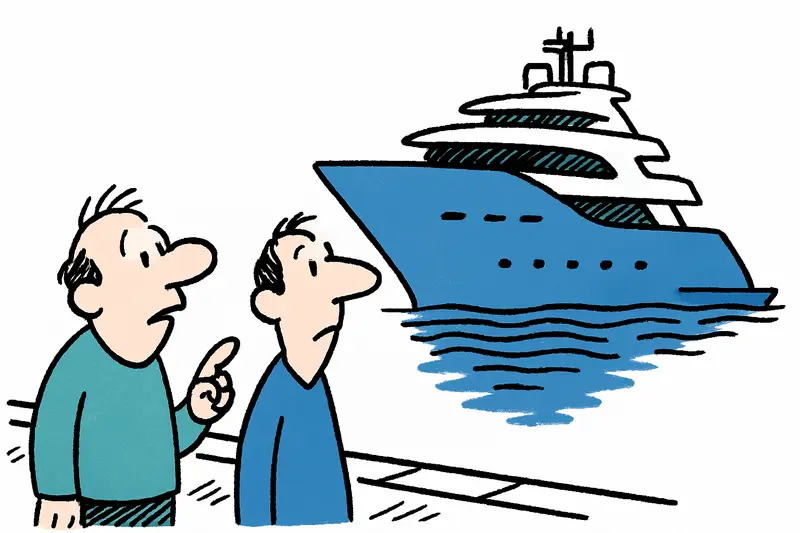
Late in the morning, when the wind from the sea drives moisture over the Passeig Marítim and the gulls eye the boats, a vessel suddenly appeared that drew attention: 75 meters of hull length, futuristic lines, built in 2022 and with space for up to twelve guests in eight suites. Up to 23 crew members are listed on board. The owner, a German entrepreneur, is according to available data best known for his advertising activities and is estimated to have a fortune in the billions. The yacht is called 'Kensho'.
This is a classic attention moment for Palma: joggers stop, tourists pull out cameras, coffee at the harbor gets sold at a slight premium — for a short while the Passeig feels like a catwalk. But the scenario raises more questions than it provides pretty pictures. Similar scenes were reported during the visit of the 79-meter 'Yasmine of the Sea'.
Main question: What impact does the presence of such superyachts have on island society, the ports and waterfront life — and where are the rules that keep the balance?
First observation: visibility does not mean transparency. Information on size, year of construction, guest capacity and crew is available. Data on berth costs, wastewater management, emissions during docking and undocking, refueling or seawater cooling are usually invisible to the public. For residents these are not academic details: a fully occupied harbor basin changes noise levels, the marina's workload and temporarily the parking situation in neighborhoods like Portixol or in the old town near the Lonja. Coverage of large luxury calls such as Explora II in Palma has also raised these transparency concerns.
Second observation: ecology versus glamour. Superyachts of this size have extensive technical equipment and often a 'toybox' of modern water sports gear. That increases the risk for sensitive zones such as seagrass meadows (Posidonia) or protected shoreline areas. On short outings jet skis and tenders are used. Not a blanket condemnation, but a fact: marine ecology reacts sensitively to increased boat traffic and local emissions. Scale-related concerns have been highlighted in reporting on larger vessels such as the Star Princess.
Third: who pays for what? According to available figures the owner is said to spend millions on maintenance. What actually reaches the local economy — berth fees, local supplies, staff, port services — is often real. What is borne publicly, like extra security measures, special disposal or coordinated water traffic management, is rarely transparent. Municipalities and port operators hold the levers, but decisions are not always clearly visible.
What's missing from the public discourse? First, clear information on environmental requirements and controls for large private yachts. Second, comprehensible fee models that weigh local costs and benefits. Third, concise rules to protect particularly sensitive coastal areas — including published monitoring data.
An everyday scene to put it in context: on a Thursday morning in the harbor district, between fishermen mending nets and the baker delivering bread to restaurant kitchens, people discuss the yacht. Some are excited because guests bring money to restaurants. Others are annoyed because access to the shipyard was blocked. This is not a TV drama but the normal rhythm of life on an island that lives from the sea.
Concrete implementable approaches: 1) Transparency obligations for yacht owners and port operators — published data on berth times, wastewater disposal and emission profiles. 2) A tiered fee system that internalizes ecological costs: higher rates for berths in sensitive zones or for high fuel consumption. 3) Improved controls and measurements: regular monitoring of water quality and noise emissions, publicly accessible on municipal portals. 4) Local hiring quotas for service staff and suppliers to create clearer economic benefits for communities. 5) Established protection zones where auxiliary vehicles like jet skis are limited in time or space.
Such measures need no ideology, just clear rules and enforcement — and on-site, not only on paper in a port regulation. Palma's administration and marina operators have room to act here because public interests and private use must be balanced.
Finally a pragmatic thought: we will continue to see beautiful ships, and that is to some extent also an opportunity — for jobs, tourism and local suppliers. But if only the images circulate and the accompanying effects are ignored, Palma remains a spectator instead of the director. Better would be for the city to set the conditions under which such giants may dock and to make the consequences visible to everyone.
Conclusion: The 'Kensho' is more than an eye-catcher. It is a catalyst for a debate that on Mallorca too often stays on the surface. When you arrive in the old town you hear the sea, smell the harbor, and see the boats. It would be good if the next conversations in cafés and town halls produced more concrete rules and clearer information — to the benefit of the island and the people who live here.
Frequently asked questions
What does a superyacht arriving in Palma Bay mean for everyday life in Mallorca?
Are superyachts in Mallorca bad for the environment?
What information about a superyacht in Palma is usually public, and what is not?
Do superyachts bring money to Palma and Mallorca?
What rules should Palma have for large yachts in the port?
Why do people in Palma notice a superyacht so much?
Is Portixol affected when a big yacht is in Palma Bay?
What should Mallorca do to protect Posidonia from yacht traffic?
Similar News

Magaluf: Watchtower Alarm – Lifeguards Pull Unconscious Beachgoer from the Water
After a drama in the late afternoon, two lifeguards at Magaluf beach rescued an unconscious 44-year-old man. He was stab...

Turquoise in the City: How dangerous is the color play of the Sa Riera?
The Sa Riera in Palma suddenly turned turquoise — a pretty motif, but behind the effect lies a discharge of saline waste...

Jeckliner at Sunnesching: Cologne spirit sets sail from Palma
In September 2027 the Mein Schiff 2 briefly becomes a floating carnival stage: four days with Cologne bands, comedy and ...
Finally Home: Mike and Leyla Heiter Buy Villa with Sea View in Mallorca
The reality TV couple Mike and Leyla Heiter have bought a house in Mallorca with a roof terrace and sea view. An Instagr...

Arrest after series in Palma: Who protects apartments from repeat offenders?
The National Police arrested a man in Palma who investigators say may have broken into several apartments. In one incide...
More to explore
Discover more interesting content

Can Cap de Bou

Townhouse Lleo 72
