
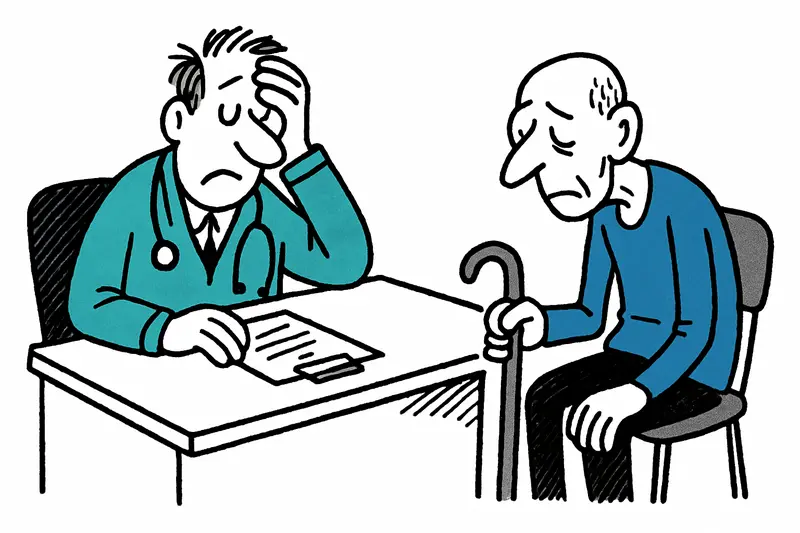
Six Months Too Late: When Waiting Becomes Fatal — What IB‑Salut Must Now Answer
A man in Palma died of cancer in 2023 — after months of waiting for a specialist appointment. IB‑Salut acknowledges mistakes and offers compensation. What does this mean for the island?
An avoidable end: why six months of waiting can become a cause of death
The case that has recently caused quiet outrage in Palma, as reported in Mallorca Magic's report on the authority admitting an error after a patient died following a six-month wait, leaves a bitter sentence in the stomach: if an appointment had taken place earlier, fate might have turned out differently. The authorities at IB‑Salut now admit shortcomings — but the central question remains: how could six months pass between the first referral and the examination, even though the patient showed alarm signs repeatedly?
The chronology of the wait
On May 5, 2022, the man’s general practitioner referred him to the gastroenterology department at Son Espases hospital. The examination did not take place until November 15, 2022. During those six months the patient visited his GP at least nine times, suffered a collapse in the street and ended up once in the emergency department. Yet the specialist appointment was not brought forward. When the specialist finally examined him, the tumor had progressed so far that only palliative care was possible.
Key question and initial analysis: what failed in the system?
The guiding question of this case is not only “Who pays?”, but “Which gaps in care made this tragedy possible?” At first glance the failures repeat themselves: poor appointment management, a lack of prioritization despite clear alarm signs (weight loss, repeated emergency visits) and an apparently non-functioning communication between the GP, the emergency department and the specialist unit.
In the cafés of Santa Catalina or at the Plaça Major people increasingly voice the same worry: patients seem to vanish into waiting lists, not into files. The sound of telephone conferences in the corridors of Son Espases mixes with the heat of the Mallorcan summer — and with the question of responsibility.
What the expert report says — and what it omits
The medical report acknowledges that some cancers have silent phases and diagnoses can be difficult. At the same time it states: a weight loss of around twelve kilos within six months was a clear warning sign. Here a double weakness becomes apparent: medical triage apparently did not rate this parameter as urgent, and the administrative system did not trigger automatic escalation thresholds.
The report stays technical; the family side remains emotional. IB‑Salut proposes a payment of around €60,000. The widow and the two children demand €230,000 — a dispute over money, but also over recognition, justice and taking responsibility.
Aspects too rarely discussed
1) Data blindness: many waiting-time statistics are aggregated, anonymized and therefore useless for identifying individual patients at risk. A system that only looks at averages overlooks outliers like this man.
2) Responsibility of emergency departments: when patients repeatedly present to emergency rooms, the system should raise an alarm — not only document and discharge.
3) Social consequences: on Mallorca many people choose private supplementary insurance packages because they fear public waiting times, as documented in a Mallorca Magic report on rising waiting times for operations in the Balearic Islands. This divides care into what those who can afford it receive and what those who must wait get.
Concrete proposals — what IB‑Salut can change in the short term
It is not enough to admit mistakes and offer compensation. The system needs pragmatic changes:
- Introduction of escalation rules: automatic prioritization when documented weight loss, repeated emergency stays or multiple GP visits within a short time occur.
- Medication and symptom alerts: a digital flag that informs treating teams when a patient loses significant weight within weeks or shows repeated warning signs.
- Patient navigation: dedicated case managers who track appointments for at‑risk patients, keep in contact and intervene in case of delays.
- Transparency and independent audits: public reports on waiting times by urgency, not just by calendar weeks.
- Review of compensation frameworks: instead of flat offers, independent commissions should assess damage, preventability and family consequences holistically.
What relatives can do now
For people currently waiting for appointments the rule is: document. Date, time, symptoms, when the GP referred, all emergency visits — this can be decisive later. Be persistent: ask follow‑up questions, demand written referrals, and if necessary seek private clarification. And: neighbors’ voices matter — at the market, in the café, on the Camino de Sant Miquel you hear which gaps everyday life reveals.
A bitter wake‑up call for the island
The case is more than a single report. It is a signal: if administration, medicine and digital systems do not interact better, not only do families lose trust — chances die. IB‑Salut must now prove that errors lead to sustainable changes. Otherwise, in the end the compensation will be only cash instead of real safety for the next people who wait in the corridors of Son Espases or in the queues of specialist outpatient clinics.
At the market in Palma, between olive stalls and the clatter of cups, people already talk about more than politics or weather. They trade cards with doctors’ names, exchange experiences and hope that listening and asking will move more than chance in the future.
Frequently asked questions
What should I do in Mallorca if my specialist appointment keeps getting delayed?
How long is too long to wait for a hospital appointment in Mallorca?
Can repeated emergency room visits in Mallorca speed up a diagnosis?
What warning signs should make me insist on a faster medical review in Mallorca?
Is private insurance the only way to avoid long waits in Mallorca?
What is Son Espases hospital in Mallorca used for?
How can families in Mallorca protect a patient who is stuck on a waiting list?
What changes could help reduce dangerous waits in Mallorca’s public health system?
Similar News
Palma: Car Flips Over – Seniors Rescued, Questions About Traffic Safety
On a major arterial road in Palma, a car flipped onto its roof after a heavy collision. An elderly couple was freed and ...
Calvià opts for style over rowdiness – a plan for year-round, diversified tourism
Calvià wants to shake off Ballermann images by 2030 and boost hiking, sports, culture and gastronomy tourism. Hotels, th...
Autumn Is Coming — When the Rain System Will Cool Mallorca and What We Must Learn
AEMET warns: the chance of rain increases on Thursday and Friday — temperatures will fall. An opportunity to prepare our...
Eurowings in Palma: Expansion, Approval Chaos and the Reality Test for Island Planning
Eurowings is significantly increasing its presence in Palma and is even considering technical maintenance on site. The i...

A.M.Y.: Between Finca, Cornfield and Schoolyard – a 13-Year-Old Who Gets Mallorca Humming
With sunglasses, a rock guitar and the courage to sing over nagging voices: Amy Horber, 13, lives with her family on Mal...
More to explore
Discover more interesting content

Can Cap de Bou

Townhouse Lleo 72
