
Avian Flu: Balearic Islands Declared High-Risk Zone — Are the New Rules Enough for Poultry Keepers?
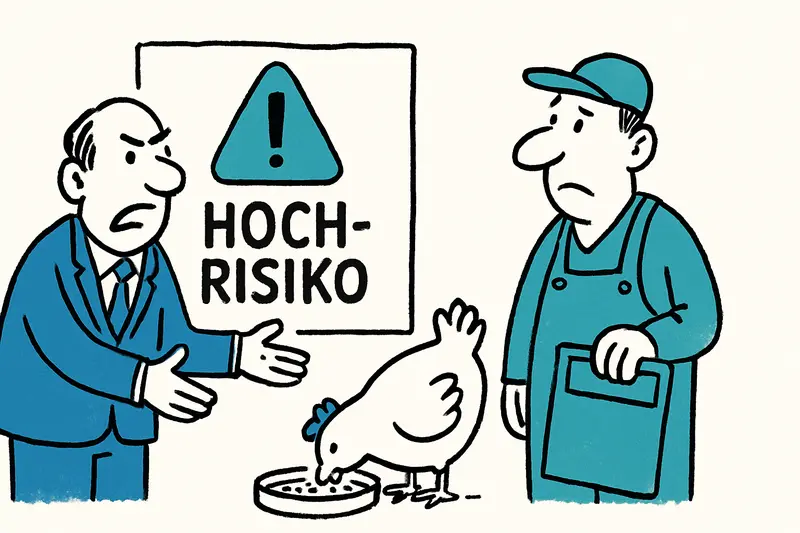
Since November 14, 2025, the Balearic Islands have been classified as a high-risk zone for avian flu. The measures aim for hygiene improvements and contact avoidance — but are they enough to protect islands like Mallorca?
Avian flu on the Balearic Islands: Quickly explained — and summarized
On November 14, 2025, Madrid officially declared the Balearic Islands a high-risk zone. Unlike on the mainland, this does not mean a general confinement order here, but it does impose binding requirements: protected feeding areas, a ban on livestock fairs, stricter hygiene and reporting obligations. For everyone who wanders the market in Inca in the morning or sips a coffee in one of the small harbor bars: these rules affect hobby keepers just as much as professional farmers.
The central question
Are these measures sufficient to protect livestock and avoid economic damage — or do gaps remain that will sooner or later cause problems? That is the guiding question being discussed in cafés and on community noticeboards.
What applies in practice — and what may fall by the wayside
Short and to the point: contact between domestic poultry and wild birds should be prevented as far as possible. Concretely this means: feeding only in protected areas, no open feeding spots on the beach or inland, no poultry shows, stricter stable hygiene, and reporting obligations for movements and flocks. At first glance this makes sense. But implementation is more complicated than what is written on paper.
Many hobby keepers in the suburbs keep chickens as both small livestock and companion animals. For them, nets, coverings or even complete stable conversions are not always possible. Sellers are already handing out flyers at the weekly markets in Inca — the concern is noticeable, though not panic. Authorities emphasize that the human health risk is low according to the WHO fact sheet on avian influenza; the main aim is to protect animal stocks.
Problems that are hardly discussed
A few aspects unfortunately often remain underexposed: What happens to feral pigeon and seagull populations that constantly shuttle between beach, harbor and compost heaps? How will controls be ensured for small holders on remote fincas when veterinary authorities have only limited capacities? And: how fair are potential fines against people who act out of ignorance or cannot afford technical solutions?
There is also the tourism dimension. Many visitors feed beach birds out of habit — behavior that now directly becomes a risk. Such actions usually fall outside formal controls and are difficult to sanction.
Concrete opportunities and solutions
Instead of only issuing bans, practical support measures would be necessary. Some proposals:
- Free or subsidized protective materials: nets, covers and simple modifications should be accessible to hobby keepers. A distribution campaign in each main town (Inca, Sóller, Palma, Manacor) would have quick effect.
- Mobile veterinarians and reporting points: dedicated transport services that visit small holdings and check conditions could reduce reporting barriers and build trust.
- Clear signage at beaches and markets: Visitors must be informed directly and in several languages that feeding is currently prohibited — not just a leaflet behind glass.
- Transparent fine schedule: Penalties should be deterrent but socially graduated; support offers for those in need would avoid unfair hardship.
- Community reporting via app: A simple reporting tool for unusual animal cases could shorten response times if promoted locally.
How enforcement will work — and what consequences may follow
Veterinary controls will be tightened, supported by ECDC guidance on avian influenza; owners must keep flock registers and report movements. Those who ignore the rules risk fines. But enforcement requires staff, time and local knowledge. In small municipalities authorities are often thinly staffed — that will determine the effectiveness of the measures.
My impression on the ground
Between harbor bars, the smell of freshly brewed coffee and the market cries in Inca, there is a matter-of-fact nervousness. Snatches of conversation: "I only have three hens", "Who pays for the fence?" — typical questions of island life. People react responsibly; some are unsettled, others seek advice from municipal veterinary services.
Conclusion: Caution is right — but help is missing
The rules are a necessary step. But without practical support and clearly communicated measures, gaps threaten: with wild birds, with low-income keepers and in tourist areas. Authorities must now prove that they not only regulate, but also help. Otherwise, well-intentioned caution will remain a patchwork that leaves the islands vulnerable.
Until then: stay calm, take the rules seriously — and help the neighbor who cannot build a fence alone. Our island community has often solved such challenges pragmatically. Now cooperation is needed again.
Frequently asked questions
What do the new avian flu rules mean for poultry keepers in Mallorca?
Can I still feed birds on beaches or in public areas in Mallorca?
How serious is the avian flu risk for people in the Balearic Islands?
What should small backyard chicken keepers in Mallorca do now?
Why are poultry shows and livestock fairs restricted in the Balearic Islands?
What are the avian flu rules in Inca for market visitors and small holders?
Will poultry keepers in Mallorca be fined if they do not follow the new rules?
What help is available for poultry keepers in Mallorca who cannot afford new protections?
Similar News

When coercive fines aren't enough: Could holiday rental owners soon face prosecution?
The island administration is stepping up action against unauthorized holiday rentals: high daily coercive fines up to €5...

Palma Airport on an Expansion Course — Who Decides How Much Growth the Island Needs?
Aena and Madrid are planning multi-million euro investments for Son Sant Joan and project higher capacities. Concern is ...
Who Gets Left Out? Why Overbookings Will Hit Many Mallorca Travelers This Summer
On hot check-in days at Son Sant Joan, frustrated travelers pile up. New figures from Reclamador.es show that a large sh...

When the Handyman Came: How an Engagement Ring Disappeared in Mallorca and What It Says About Trust
During a repair in Andratx a highly personal engagement ring went missing — a case that calls not only for punishment bu...
How Burglars Test Fincas in Mallorca — and What You Can Do About It
The Spanish National Police warn of a simple but effective trick: small markings on doors reveal whether a finca is occu...
More to explore
Discover more interesting content

Can Cap de Bou

Townhouse Lleo 72
