
Are the Balearic Islands the Southern Border of Europe? A Reality Check on Immigration
Are the Balearic Islands the Southern Border of Europe? A Reality Check on Immigration
The Balearic Islands are again calling for EU aid after a sharp rise in arrivals by sea. Conflicting priorities between Madrid and Palma collide. A look at the numbers, everyday reality and concrete solutions.
Are the Balearic Islands the southern border of Europe? A reality check on immigration
Why the debate between Palma, Madrid and Brussels is about more than numbers
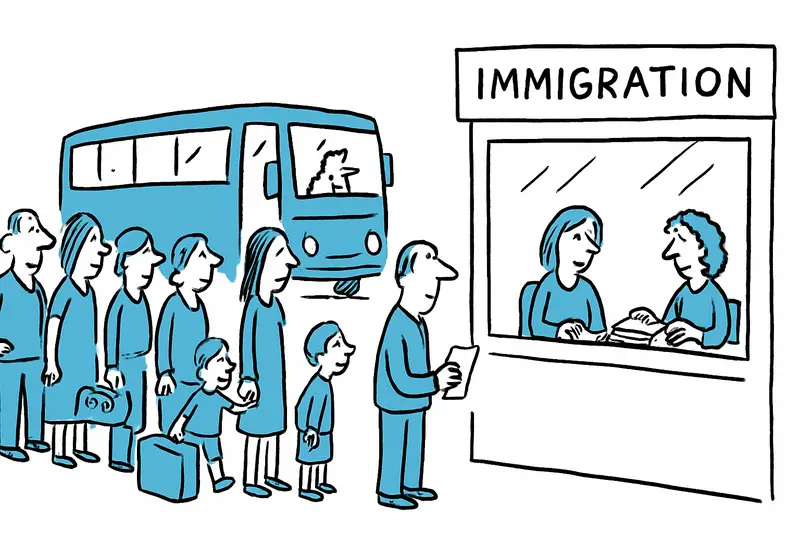
On Passeig Mallorca in the morning: a queue in front of the regional migration office, a jumble of voices, children climbing on suitcases, the rattling of a city bus – and behind locked glass windows staff sorting papers. This everyday scene now stands alongside stark figures: between January 1 and September 15, 5,627 people arrived on the islands by sea. The Balearic government says this exceeds capacities; Madrid points out that many of the newcomers are now formally registered and able to work. Who is right?
Key question: What concrete help do the Balearic Islands need – more European border support, additional funds for accommodation and integration, or a coordinated labor market and housing policy in which island, state and EU act together?
Critical analysis: The numbers alone do not explain where the bottlenecks arise. The arrival statistic (5,627 sea arrivals) meets a parallel development: an extraordinary legalization measure led to more than 13,000 people being recorded in the social security system by the end of August and about 34,000 applications submitted; nationwide, government figures state that over 337,000 people became subject to social security contributions. That means part of the migration is absorbed by the labor market – at the same time pressure grows on housing, schools and health services.
The political tension is plainly visible: Palma calls for more funds and increased support at the border, notably through EU instruments such as Frontex. Madrid, in turn, emphasizes the opportunities in the labor market and points to state responsibilities. In practice, municipalities with social services, local health centers and the police are the ones with the shorter end of the stick when arrivals rise sharply.
What is missing from the public debate: the voices of municipal administrations, social workers, small employers who suddenly register additional employees, and above all the people who arrive. Also hardly discussed are the small steps of integration: How quickly are applications processed? Are there transitional accommodations that do not remain provisional containers? How can vacant properties in municipal areas be used temporarily without violating tenants' rights? In addition, a transparent regional data basis on the capacity of health and education services is lacking – without it every political demand remains vague.
Concrete solutions: First, short term: coordinated task forces with representatives from the island administration, the interior ministry and the EU to arrange within days the distribution of arrivals, rapid tests, initial registration and accommodation. Second, medium to long term: a binding mechanism by which Madrid formally files EU support requests (for border protection or humanitarian funds) when islands exceed a defined burden threshold. Third, labor market policy: targeted support programs for temporary housing creation (renovation of vacant properties with fixed deadlines), combined with industry associations in tourism and construction so employment offers take effect quickly and infrastructural gaps are closed. Fourth, cooperation with origin and transit states focused on information exchange, search and rescue coordination and legal channels for seasonal workers.
Everyday observation: At Palma harbour, the next morning, a smell of petrol from a smuggler craft hangs in the air, fishermen wave, and a few officials hold lists on the quay. The people in the queue outside the authorities want nothing more than calm, structure, a ticket into a functioning everyday life. That is a good yardstick for any policy: it must be as concrete as the queue and as fast as the bus connections many new workers use every morning.
Punchy conclusion: The Balearic Islands do not face only a security problem but a puzzle of border management, social infrastructure and labor market integration. The call for EU aid is justified, but it must not be the only answer. Without clear lines of responsibility between islands, the state and Brussels any aid remains piecemeal. Practically, only one thing helps: prioritized, binding agreements, fast administrative processes and a joint agenda for housing and employment – otherwise the debate will continue as a fight over symbolism instead of delivering solutions for people's everyday lives on the islands.
Frequently asked questions
How are migration arrivals affecting Mallorca and the Balearic Islands in practical terms?
What kinds of EU or government support does Mallorca need to cope with new arrivals?
How does a surge in arrivals impact housing, schools, and employment on Mallorca?
What immediate steps are proposed to manage new arrivals on the Balearic Islands?
Why is there tension between Palma, Madrid, and Brussels over migration policy on Mallorca?
How can information sharing with origin and transit countries help migrants reach Mallorca safely and get jobs?
What would a migrant's path look like from arrival at Palma harbour to everyday life on Mallorca?
For visitors to Mallorca, what should they understand about the island's capacity and services during a surge in arrivals?
Similar News

"Expensive chaos" and many open questions: What clients can do when a lawyer suddenly stops responding
Several clients complain that a well-known German lawyer in Mallorca has been unreachable for months. Key question: What...

TV tip: 'The Last Problem' — Mallorca as the setting of a classic crime
A classic whodunit on Mallorca: A new miniseries set in spring 1959 brings storm, an isolated hotel and a dense web of s...
Nipping Sea Creatures: Why Bathers in Cala Major and Elsewhere Should Be Cautious
In Cala Major, bathers have reported being nipped by small fish. What is behind it, how can problems be avoided — and wh...
Forced eviction in Santa Catalina: When a 65-year-old slept in her car and showered on the beach — a question of responsibility
The story of Pilar López from Santa Catalina represents a problem affecting many Mallorcans: How can an island with a bo...
New traffic rules from October 1: What Mallorca visitors and locals need to know
From October 1, 2026, Spain will implement far-reaching changes to traffic regulations. Important for Mallorca: greater ...
More to explore
Discover more interesting content

Can Cap de Bou

Townhouse Lleo 72
