
Balearic Islands Plan Stricter Rules for Vapes and Energy Drinks – a Reality Check
Balearic Islands Plan Stricter Rules for Vapes and Energy Drinks – a Reality Check
The Balearic government wants to equate vapes with tobacco and ban energy drinks for under-18s. A key test remains: how is this actually enforced on the ground?
Balearic Islands Plan Stricter Rules for Vapes and Energy Drinks – a Reality Check
Key question: Does a sales ban for minors really reverse normalization?
The Balearic government has announced plans to legally align vapes with tobacco and to ban energy drinks for under-18s, given scientific assessments of caffeine by EFSA page on caffeine, although it previously refused a nationwide smoking ban on beaches and terraces as reported in Balearic Islands Reject Central Smoking Ban on Beaches and Terraces.
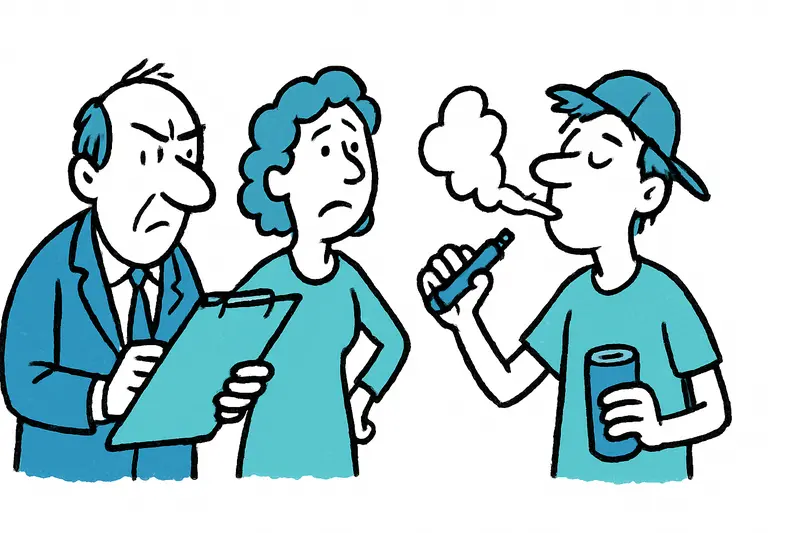
Critical analysis: A ban alone is only half the story. Sales bans work where there are controls, clear sanctions and a plausible enforcement strategy. In Mallorca we see young people on warm afternoons carrying energy drinks and passing vapes around in groups. Who reliably checks age in retail and at beach stalls? How does the weekly market in Santa Catalina react when a stall sells without ID, an issue raised in Balearic Islands reject smoking ban on beaches and terraces — what now? These questions have not yet been answered sufficiently.
A particularity of the island: many tourist spots have changing customer groups. Young visitors from abroad bring their own habits, online sales deliver goods directly to holiday accommodations, and at night bars and clubs become places where rules are harder to enforce. A sales ban for under-18s must therefore also consider tourist channels and online retailers, otherwise the problem simply shifts.
What is missing from the public debate: transparent figures and an implementation plan. It is little help to say that a product will be "equated" if it is not clear what penalties will apply to whom, how often spot checks are to take place and whether there will be technical aids such as ID scanners at points of sale. The role of manufacturers, wholesalers and online commerce is also barely discussed, as discussed in Smoking Ban in Mallorca: What the New Law Means for Terraces, Playgrounds and E‑Cigarettes.
Everyday scene from Mallorca: in the early evening on the Passeig del Born benches are full of teenagers with cans bearing garish labels in front of them. Further back on the promenade clouds of vape vapor pass by walkers. A taxi driver I actually know tells of young guests who time their trips so that the last purchase is made just before leaving for the airport – outside the control times of local prevention teams.
Concrete approaches so the law does not remain merely symbolic: First: mandatory age checks with certified ID scanners at points of sale, combined with training for checkout staff. Second: a binding rule for online retailers requiring age verification before delivery. Third: time-limited, targeted inspection campaigns during holiday periods that also check beach stalls and temporary markets. Fourth: cooperation with sports clubs and youth centers that not only inform but also provide alternatives – for example caffeine-free drinks at youth tournaments.
Fifth: clear sanctions that reduce the economic incentive to circumvent the rules. Fines must be set at levels that are felt by small retailers as well as chains. Sixth: accompanying measures for those dependent on these products – low-threshold counseling services present in schools and health centers so that a sales ban does not only produce displacement. Seventh: flavor and packaging rules that make targeted appeal to minors harder, for example by using neutral designs.
Another point: communication must not merely repeat ban texts. Young people respond better to authentic and local messages than to lecturing ones. Campaigns should include voices from island society – teachers from Llucmajor, coaches from Inca, youth leaders from Alcúdia – who show why giving up now makes sense and what alternatives exist.
What will not help: pure rhetoric of repression without support structures. If bans push young people into illegality, new risks arise: unsafe supply routes, untested substances, lack of health support; regulation must therefore always be accompanied by prevention and care, in line with WHO Q&A on e-cigarettes.
Conclusion: The planned rules are a necessary step but not yet a complete concept. What will be decisive is whether the government names concrete instruments: how controls will be organized, how online sales will be handled, what penalties will apply and how youth work will be financially strengthened. In Mallorca, where a loud summer evening in the harbor quickly becomes normal for younger people, pragmatic solutions are needed that work at the checkout, at the beach bar and online. Without them the initiative remains only half done.
A final thought: Legislation is one thing. The island society must do the other: talk to each other, strengthen local initiatives and ensure that young people find not only bans but perspectives.
Frequently asked questions
Are vapes and energy drinks being banned for minors in Mallorca?
How well can a sales ban for vapes and energy drinks be enforced in Mallorca?
What age checks could shops in Mallorca be required to use for vapes and energy drinks?
Will online sales of vapes and energy drinks also be restricted in Mallorca?
Where in Mallorca do teens most often come into contact with vapes and energy drinks?
Why is Santa Catalina often mentioned in discussions about sales checks in Mallorca?
What other measures are needed in Mallorca besides banning sales to minors?
How could Mallorca make a vape and energy drink ban work better during the tourist season?
Similar News

Who Bears the Burden? Mallorca Between Tenant Protection and Landlord Fears
Madrid's new housing decrees strengthen tenant rights — but on Mallorca concern is growing: will the law drive small lan...
On the Edge: What Mallorca's Airport Loses If a Major Low-Cost Carrier Falters
The company that operates numerous connections from Palma to France and domestically is negotiating with creditors to re...
Ballermann star Frenzy wins 'Villa of Temptation' and donates prize money to Mallorca animal rescue
Ballermann singer Frenzy won the German reality show and donated the remaining prize money — around €14,080 — to an anim...
70 Trees Removed on Avenida Jaume I: What's Happening in Santa Ponça?
On October 1 the final redevelopment phase on Avenida Jaume I in Santa Ponça begins: 70 trees and old streetlights are t...

When a Boundary Is Crossed: The Case of Isi Glück and the Responsibility of Venue Operators
The singer from Mallorca reports an assault backstage in Halle. A clear guiding question, analysis of missing protective...
More to explore
Discover more interesting content

Can Cap de Bou

Townhouse Lleo 72
