
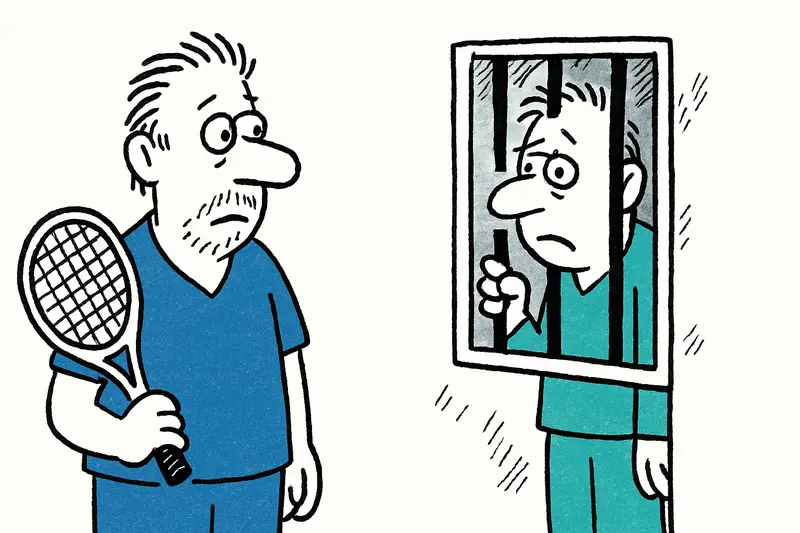
From the Centre Court to the Finca: Becker, Prison and the Dark Sides of an Island Dream
Boris Becker's new book opens a door to his time in Mallorca — and reminds us how celebrity properties, legal troubles and everyday island life collide.
Between Tennis Romance and Grinding Stone: an Island Story
If you walk up the hills in Artà on a spring afternoon, you hear cicadas, the clicking of fan wheels in olive groves and now and then the distant rattle of a small van. Right there, somewhere between dry stone and pines, once stood the finca of one of the loudest names in sport. In his book Inside, Boris Becker tells of retreat, reputation and the downfall — and makes visible for us a question that runs deeper than gossip: What does the story of a celebrity say about Mallorca's handling of ownership, law and social responsibility?
The Finca as a Symbol: Retreat, Risk, Legal Disputes
Purchased in 1997 and later entangled in ownership questions and financial disputes — the Becker finca is not an isolated case on the island. Many villas transform over the years from private retreats into legal construction sites. There are reasons for this: opaque ownership structures, investor networks and a local administration that sometimes has to balance heritage protection, tourism pressure and individual privacy. For residents, this means: changing neighbors, alternating truck deliveries, craftsmen, courts — and not least conversations in the corner café.
From Hotel Room to Cell: How Public Failure Echoes on Mallorca
Becker's account of his time in prison in England, the slide from celebrity life into the routine of a cell, is striking. The description of the first night in a cell, in its sobriety, feels almost archaic. On Mallorca such cases often produce mixed reactions: sympathy in some, satisfaction in others, and in between the question of how return can work. People like Becker remain visible — at gallery openings in Palma, at the ATP tournament in Santa Ponsa, on a walk by the harbor where gulls scream over the fishing boats, and in media coverage such as Boris Becker on Spanish television: Mallorca Memories and a Tip for Nadal. The island is both stage and home; that makes public mistakes louder, but also increases the possibilities for restitution.
More than a Personal Drama: Structural Questions
Talking only about individual fates would be insufficient. Becker's chapter also exposes structural questions: How do authorities respond to complicated ownership structures? How do banks, lawyers and buyers deal with risky properties? And how much protection should neighborhoods, the environment and cultural heritage demand from wealthy buyers? These are areas that often get lost in public debate because celebrity stories set the tone.
Concrete Opportunities: What Mallorca Could Learn
The island is small enough to implement effective measures. Three concrete steps would help: First, more transparency in real estate transactions — clearer proof of ownership and encumbrances would defuse many disputes early. Second, a local contact point for neighborhood conflicts around villa projects that offers mediation instead of escalation. Third, stronger programs for social reintegration and counseling for people with public prominence after court proceedings — not as special treatment, but as prevention against repeated problems.
Between Myth and Everyday Life: a Reconciliatory View
Becker also describes the quiet moments in Inside: a visit to an exhibition in Palma, laughing about Noah's work, conversations with his partner Lilian (as reflected in local coverage like Boris Becker en la televisión española: recuerdos de Mallorca y un consejo para Nadal). These are not PR highlights but small social anchors. For island residents this is a reminder: celebrities also go through normal, complicated life cycles. When the afternoon bell of the little church in Artà rings and a cyclist rides past the plaça, the finca is just one of many stories — but one from which something can be learned.
In the end the central question remains: How can Mallorca reconcile its attractiveness to the wealthy and famous with transparency, legal clarity and social responsibility? The answer is negotiated here, between olive trees and courtrooms — sometimes loudly, often in the whisper of a café by the harbor.
Frequently asked questions
What is Boris Becker's connection to Mallorca?
Why do some Mallorca fincas end up in legal disputes?
What does the Boris Becker story say about Mallorca's real estate market?
Is Artà a quiet place to visit in Mallorca?
Can you still see evidence of old finca disputes in Mallorca?
How does Mallorca deal with celebrity scandals and public setbacks?
What could help prevent property conflicts in Mallorca?
What is the best lesson from the Becker story for Mallorca residents?
Similar News
From Workshop to Luxury Villa: What a €19.5 Million House Reveals About Palma's Market
A historic town house on Carrer de la Pelleteria was converted into a 1,000-sq m residence and is on the market for €19....

FC Germania Mallorca: Why does the lead always slip away in stoppage time?
After the 1-2 at C.A. Pal ne da Tesa questions arise: are these coincidences, a shortage of personnel, or a deeper probl...
Hidden War Bunkers in Palma: Remember, Preserve, Reveal?
Beneath Palma's paving lie remnants of a forgotten shelter system from the Civil War. Consolidation, ethics and tourism ...

Death in the Gorge: Key Questions on the Safety of Rallies on the Ma-10
A Porsche plunged into a ravine during the 550 Challenge near Mortitx. Who bears responsibility, what safety gaps were r...

Eighth BAF surge: Why freight costs in Mallorca are rising now — and what it means for us
Fuel surcharges (BAF) for ferries between the mainland and the Balearic Islands rose by around eight percent in October....
More to explore
Discover more interesting content

Can Cap de Bou

Townhouse Lleo 72
