
Between Barrier Tape and the VIP Area: A Bouncer on Violence, Drugs and Responsibility
A long-serving bouncer recounts knives, the party drug Tusi and the daily balancing act at Palma's club doors. A critical assessment: who really protects guests and staff?
Between Barrier Tape and the VIP Area: A Bouncer on Violence, Drugs and Responsibility
Guiding question: How safe is Mallorca's nightlife — and who ensures it?
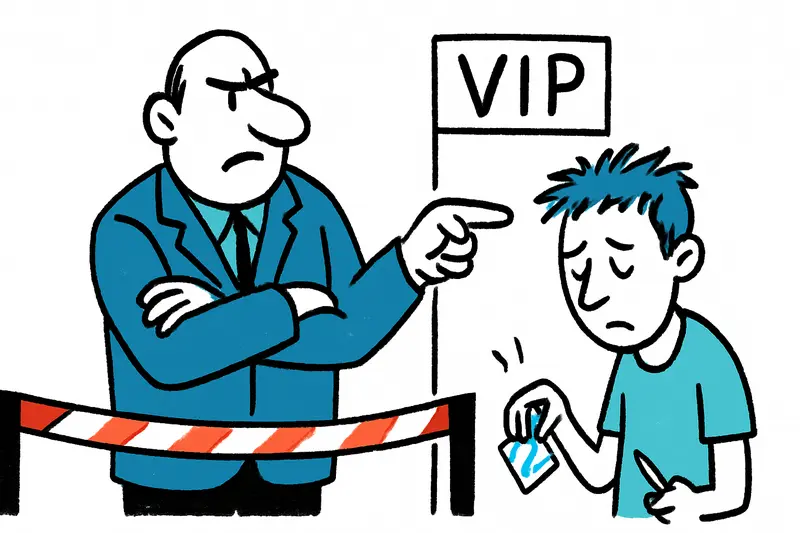
On a rain-slick evening on the Passeig Mallorca, somewhere between steaming street cafés and the wail of an ambulance, a man stands at the barrier tape and watches the queue. Scooters push by, tourists pull their jackets tighter. He is a bouncer, trained in martial arts, and tells of situations where a single look is enough to sense that the night could tip. His experiences raise a simple but uncomfortable question: who bears responsibility when party atmosphere turns into dangerous situations?
The man reports that his work is not just about a big arm and stern looks. It's about assessing, de-escalating and deciding. He talks about guests who appeared with knives, about people under the influence of a new party drug called Tusi who were barely controllable, about attempts to buy entry — and about celebrities who do not always play the role ascribed to them. Such stories sound like rumors at the bar; for him they are everyday reality.
Critical analysis: the accounts reveal three problematic levels. First, the direct danger from violence and weapons, documented in Brawl at Playa de Palma: Why a verbal exchange could have ended fatally. Second, the role of dangerous substances that promote aggression and dissociation, as reported in Seven People, One Trunk: Why Palma's Nights Are More Often Going Wrong. Third, the structural gap: clubs and staff often operate with improvised rules that vary from pubs to large discotheques. The result is a patchwork of responsibilities — bouncers act on site, the police respond after reports, and the health sector remains disconnected.
What is missing in the public discourse: there is a lack of concrete figures on incidents behind club doors, standardized training for security staff, and addiction-prevention services that are accessible at night. The perspective of employees is also underrepresented: few speak openly about trauma, exhaustion or the legal protection of their actions. Without these data and voices, the debate remains superficial.
A commonplace scene: it's shortly after two in the morning, an ambulance passes, and a bouncer at the entrance of a well-known club like Pachá or MegaPark leads a young man out. The man slurs his words and his nose looks oddly white-smeared — a scene staff describe frequently. At the door there are clear procedures: no violent behavior, no weapons, no open intoxication. But rules alone are not enough when drugs produce effects that make people unpredictable, and incidents can escalate into dramatic situations like Palma: Roof acrobat faces charges — How can we prevent such nighttime escalations?.
Concrete solutions: first, mandatory training and certification for door staff with modules on de-escalation, first aid, the legal framework and dealing with people under the influence of psychotropic substances. Second, a reporting system that collects incidents anonymously — this would allow authorities to recognize patterns and act preventively. Third, cooperation between clubs, police and health services: mobile health and counseling services during night hours, an anonymous hotline for staff and guests, better night-time lighting at entrances, and safe pickup zones for taxis.
Additionally: background checks for applicants, fair working hours and psychological support for staff. Bouncers are often the first point of contact for people in need; they need legal clarity, protection and resources so they are not left to make decisions that carry heavy legal and moral weight alone.
What could help immediately: targeted checks against weapons possession in front of clubs, awareness campaigns about the effects of new drugs like Tusi, clearly visible signs offering help outside, and cooperation with accommodation providers and taxi operators so that intoxicated guests are not left on the street alone, a lesson underscored by Magaluf: Escalation at the Bus Stop — What the Incident Reveals About Safety and Civil Courage.
Pointed conclusion: the nights in Mallorca are not a lawless space. People like the bouncer at the barrier often maintain a fragile balance, increasingly under harder conditions. If politicians, police, health services and club operators do not more clearly define their respective responsibilities and cooperate practically, the burden will remain with individuals who are neither heroes nor lawmakers. A bit more structure and less improvisation would not only ease the shift — they could save lives.
Final observation: when the gutters on the Passeig glitter and the last shift heads home, you see the same faces that sit in cafés during the day. Nightlife affects us all — not just those who dance.
Frequently asked questions
How safe is nightlife in Mallorca for visitors?
What should I do if I see violence or a weapon outside a club in Mallorca?
What is Tusi and why is it a concern in Mallorca nightlife?
What kind of training should bouncers in Mallorca have?
Are there better ways to improve safety around Mallorca clubs at night?
What should you do if someone seems heavily intoxicated outside a club in Mallorca?
Does Mallorca need more night-time health and addiction support?
Are clubs in Palma responsible for what happens outside the entrance?
Similar News
Near-miss on Lanzarote: Landing Ryanair Jet and Iberia Takeoff — what really went wrong
On Lanzarote there was a dangerous incident: A Ryanair flight (FR5910) from Dublin landed on runway 03 while an Iberia E...
Eurowings introduces new Premium Business seats on Mallorca routes
From December 1, selected Eurowings flights to Palma and other destinations will feature eight particularly generous sea...
Car on MA-13 near Inca in flames – a safety check for the island
A vehicle caught fire on the MA-13 towards Alcúdia on Tuesday afternoon. The driver was uninjured, the car was destroyed...

Real Estate in Mallorca: Fewer Buyers, Higher Prices — What's Behind It?
Sales on Mallorca are falling, yet prices continue to climb. Why fewer transactions do not equal relief — and what shoul...
Just Bought — Already Trouble: Water Damage in the Heiters' Villa and What Owners in Mallorca Should Know Now
A newly purchased sea-view property — and within days a water damage. What risks lurk in new properties in Mallorca, and...
More to explore
Discover more interesting content

Can Cap de Bou

Townhouse Lleo 72
