
Palma: Roof acrobat faces charges — How can we prevent such nighttime escalations?
An ejection in Palma ended late at night with a man climbing onto a club roof, property damage and an arrest. A nighttime recording, but the question remains: how can such incidents be prevented in the future?
Short night, big damage: ejection ends on the club roof
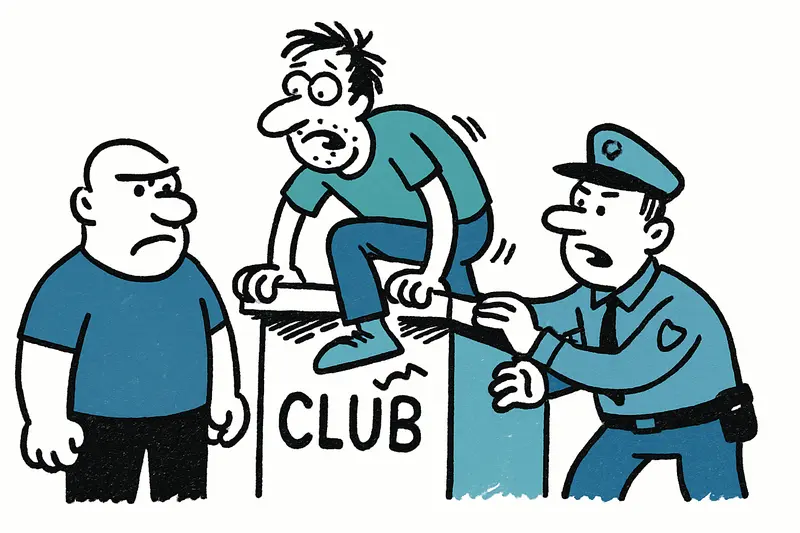
In Palma a normally warm, loud night suddenly became loud in a different way: bass still thumped from the bar, taxis honked nearby, a siren wailed — and above the roofs of a nightclub a rare spectacle unfolded. A man, according to witnesses previously escorted outside by bouncers, climbed back in via the flat roof and damaged the roof structure. Staff estimate several hundred to a thousand euros in damage; police later arrested the 20- to 30-year-old, as reported in Palma: Club roof climbing stunt exposes safety gaps.
Central question
How can Palma prevent an ejection from ending in property damage and an arrest? It sounds banal, but at the end of that night there were not only broken pieces and bizarre surveillance images, but concrete questions for operators, politicians and the neighbourhood.
What the recordings show — and what they don't show
The surveillance videos are clear: the man disappears briefly, reappears on the venue's flat roof, and parts of the roof panels shift while a metal beam bends. Staff on site reacted quickly: calls, a clear description, and later handing the video material to the police. Still, gaps remain — how could the man get onto the roof unnoticed? Was there an unsecured ladder or poorly fastened panels? And did alcohol or a quarrel at the door play the decisive role?
Background: nightlife versus safety
Incidents like these are not daily routine in Palma's old town, but they expose weak points. On loud summer nights, when streets are still full after 3 a.m., security concepts are often under pressure: staff are tired, doors are closed more frequently, emotions run high. The result can be short but potentially dangerous escalations — in the streets, at entrances, and yes, on roofs, as shown by Brawl at Playa de Palma: Why a verbal exchange could have ended fatally. For residents this means less sleep, for operators costs and reputational damage, and for the person involved possible criminal consequences.
Aspects that are discussed too little
A few points often fall through the cracks in public debate: first, architecture and construction details. Flat roofs without access restrictions simply invite climbing, a topic that also arose during debates about responsibility after a rooftop collapse, as discussed in Playa de Palma Trial: Who Bears Responsibility After the Rooftop Terrace Collapse?. Second, the relationship between bouncers and guests — how de-escalating is their approach? Third, prevention through neighbourhood cooperation — residents, operators and police could be better prepared if communication channels are clear. And fourth, how is video material handled? It helps investigations but raises data protection questions.
Concrete options and proposed solutions
There are practical measures that could help relatively quickly:
1. Structural security: Anti-climb elements on roof edges, lockable roof access points, permanently mounted panels and alarm sensors for unauthorized access. That is often cheaper than repeated repairs.
2. Staff training: Conflict management workshops for bouncers, clear protocols for dealing with returnees and immediate notification of the police if a person shows aggressive signals.
3. Cooperation with neighbours and authorities: A fast reporting channel between the club, resident associations and the municipal enforcement service can contain escalations and enable targeted prevention checks at hotspots; recent incidents, such as Nighttime escalation at Playa de Palma: When a mobile phone leads to a home takeover, underline that point.
4. Clear permit regulations: When issuing club permits, requirements for roof security or surveillance could be made mandatory — similar to fire safety conditions.
5. Public outreach and prevention: Information campaigns on respectful behaviour in the night-time economy and advice on where to get help if a conflict threatens.
What remains important
Authorities have opened criminal proceedings for property damage; the operators want the damage compensated. That is the immediate step. In the long term Palma needs an awareness that nightlife and safety belong together — not only because of repair costs, but because of the people who move through these nights. A strong safety culture protects nerves, roofs and the trust between clubs, guests and neighbours.
Personal observation: When you stroll through the streets around the old town on a warm evening — the air still smelling of sea and fried fish, a light Tramuntana breeze, occasional laughter — you rarely think of roof acrobatics. Maybe that's the point: a few simple precautions would prevent such an unusual night stroll from ending in trouble.
Frequently asked questions
How can clubs in Palma prevent someone from climbing back in after being ejected?
What should nightclub staff in Mallorca do if a guest becomes aggressive after being removed?
Why do summer nights in Palma sometimes lead to more security problems?
What kind of roof security makes sense for bars and clubs in Mallorca?
Is it normal for Palma nightlife venues to hand surveillance footage to the police?
What can residents in Palma do if nightclub noise and late-night incidents keep affecting their street?
Could stronger permit rules help prevent nightlife damage in Palma?
What should tourists in Mallorca know to avoid trouble during a night out?
Similar News

Release after bloody attack in Palma: Why the court's decision raises questions
An 18-year-old who allegedly inflicted a serious neck injury on a man at Plaza Gomila using a wristwatch wrapped around ...
Kidnappings in Inca: Three young men forced into car trunks and abused in the forest – a reality check
In Inca, three 18-year-old men were forced into car trunks by masked assailants at the Plaça des Bestiar, taken to a for...
Spreading Massification: The Brake That Still Has Much Work to Do
Marga Prohens announces limits on volume tourism. The measures sound harsh — but are they enough to save everyday life, ...

Through the Keyhole onto the Party Yacht: How Daniela Katzenberger Is Planning Her 40th on Mallorca
Daniela Katzenberger turns 40 and wants to celebrate it on the island — likely with a boat, cake and her mother. A relax...
By Boat Instead of the Road: Palma's Water Bus — a Reality Check
The 'Bus Nàutic' launches in two stages — but questions remain over interim operations, fares and environmental requirem...
More to explore
Discover more interesting content

Can Cap de Bou

Townhouse Lleo 72
