
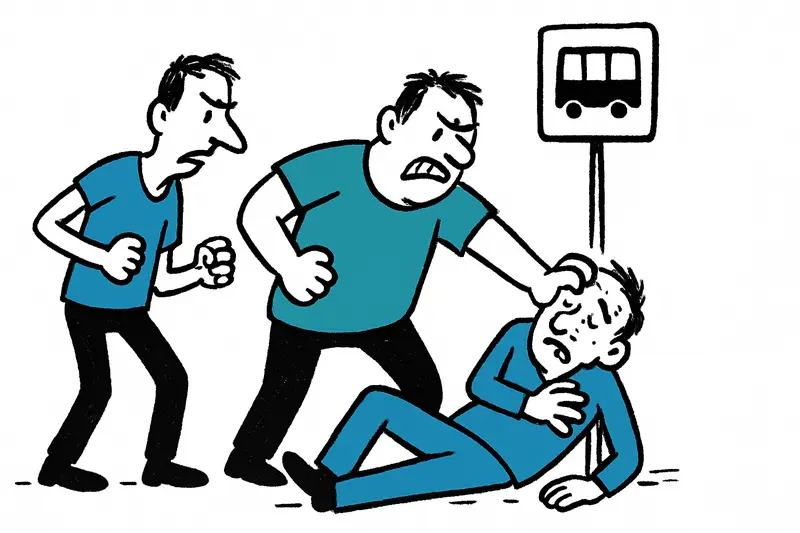
Magaluf: Escalation at the Bus Stop — What the Incident Reveals About Safety and Civil Courage
A physical harassment at a bus stop in Magaluf ended with a severely injured helper. The incident raises questions about prevention, police presence, and how tourist spaces are managed.
Bus stop in Magaluf: A brief moment, big impact
In the late afternoon a busy bus stop on the Magaluf promenade turned for a few minutes into a charged scene: screams, hurried footsteps, the distant hum of tuk‑tuk engines and then a young man sitting bleeding on the asphalt. According to witnesses, a 24‑year‑old man touched a 17‑year‑old holidaymaker on the back and buttocks. An 18‑year‑old local intervened — and was so badly injured that he had to be taken to hospital.
The first question: Why does offering help so often escalate?
At first glance the scene seems like a sad banality: tourists, heat, a babble of voices. But the real problem runs deeper. Spontaneous willingness to help from a neighbor or guest is not a reliable protection mechanism. When civil courage leads to physical confrontation, the question arises: how can people help without putting their own lives at risk?
More than just police: What has been missing so far
After such incidents there is an instinctive call for more patrols. That is necessary, but not enough. At stops like this tourism, incidents like a recent riot in Magaluf and everyday traffic meet — a mixture that demands structural answers: better lighting, clear escape and reporting routes, visible emergency buttons and targeted video surveillance can help defuse situations before they turn physical.
Procedural and social questions
Investigations into sexualized assault in Magaluf and bodily harm are ongoing after authorities arrested the alleged perpetrator. It often remains unclear how complex legal procedures become when minors, different nationalities and tourist stays intersect. Legal practice shows: cooperation between hotels, police and social services is crucial so that victims receive protection and support quickly — not weeks later.
Strengthening civil courage — but safely
The helper's injury makes clear: curricula for civil courage should not only praise bravery, but also provide tools. Courses for bar and kiosk staff, bus drivers and receptionists in de‑escalation, basic first aid guidance from the IFRC and safe intervention techniques would increase the chances that stepping in does not lead to severe consequences. Some hotels on the island already offer information leaflets — incidents such as a spa incident in Magaluf show why they are needed.
Concrete, locally feasible steps
From the perspective of the island community several measures would make immediate sense:
1. Visible presence: More patrols at peak times, flexibly deployed foot patrols along the promenade and at stops.
2. Infrastructure: Brighter lighting, clearly marked waiting areas, emergency call points and CCTV zones with signage in multiple languages.
3. Information: Multilingual notices, emergency cards in hotel rooms and short explanatory videos for guests on how to report incidents.
4. Training: De‑escalation and first responder courses for personnel in the tourism sector.
5. Reporting channels: Low‑threshold, confidential online and telephone reporting options, with the possibility of anonymous tips.
The role of the neighborhood
In the morning the stop is the clatter of buses, in the afternoon a mosaic of languages, in the evening a stage full of groups. Residents, kiosk owners and employees know the small escalations — many are alarmed, but not surprised. From this local knowledge organizational measures could emerge: evening patrols by local businesses, designated contacts for the Guardia Civil on site and simple protocols for how eyewitnesses can quickly pass on their observations.
Conclusion: Learn, not just punish
The incident in Magaluf is not isolated but indicates missing links between prevention, education and victim support. The debate must not focus solely on increased presence, but include concrete, locally implementable measures and training concepts. Only then can public spaces — especially in tourist hotspots — be made safer without stifling the island's lively, multilingual life.
Anyone who witnessed something is asked to contact the Guardia Civil in Magaluf. Medical and psychological assistance is now the priority for those affected. The task of the community remains: to draw lessons from the incident and design the stop so that cries less often end in injuries.
Frequently asked questions
Is it safe to use bus stops in Magaluf at busy times?
What should I do if I see a fight or assault in Mallorca?
How can tourists in Mallorca help in an emergency without making things worse?
What safety measures help prevent incidents at busy tourist stops in Mallorca?
What should hotels in Magaluf tell guests about safety?
Where should I report a serious incident in Magaluf?
What kind of training helps staff deal with conflict in Mallorca tourism areas?
Why do crowded places like Magaluf sometimes need more than police patrols?
Similar News
The End of the Cheap Ride? Why Mallorca Is Hit Harder by the Fuel-Price Shock
Gasoline and diesel average close to two euros per liter. What this means for commuters, supply chains and renters in Ma...
Relaxed liquid rules in Munich: What Mallorca travelers will notice
At Munich Airport the 100-milliliter rule will be lifted at all checkpoint lanes — thanks to new CT scanners passengers ...
For 45 Years on Mallorca — and Then This: How a Market Visit in Santa Ponsa Became a Lesson
A woman who has lived on the island for decades lost money and important documents at the Mercat Setmanal in Santa Ponsa...
10 percent surcharge on the beach: How legal and transparent is the extra charge at Playa de Muro?
A German part-time resident noticed days after a restaurant visit in Playa de Muro that the bill included a flat ten per...
Body near the Llevant Market: What this death says about our city
A man was found dead on Sunday afternoon near the Llevant Market. Police say the death appears natural. The scene raises...
More to explore
Discover more interesting content

Can Cap de Bou

Townhouse Lleo 72
