
Magaluf after the beach discovery: When partying becomes a danger zone
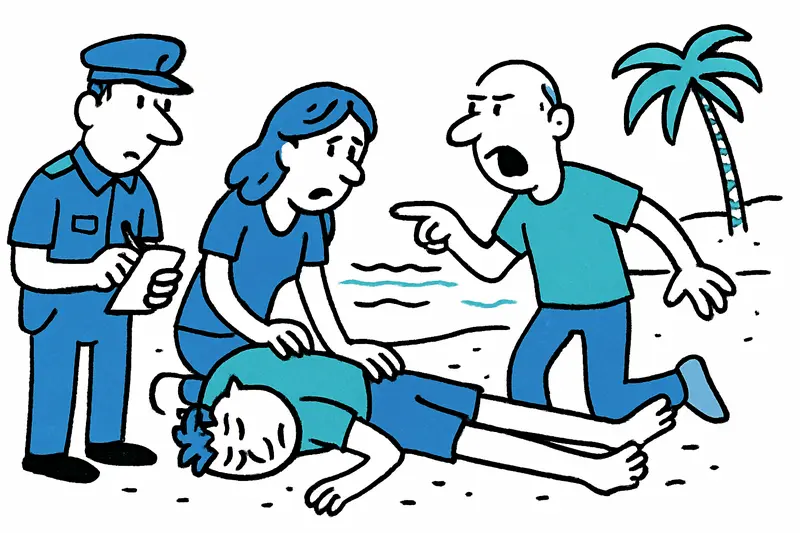
An unconscious victim on Playa de Magaluf has reignited the debate about safety in the party zone. Between legal constraints and practical gaps there is a lack of rapid assistance — and often the chance to clarify what happened is lost.
An early morning, an empty beach and many questions
It is that moment locals know well: streetlights cast yellow light on wet asphalt, garbage trucks rumble past the playa, and seagulls screech over the promenade. In such a dawn a 25-year-old holidaymaker was found unconscious on a sunbed. A police officer observed a man fiddling with the sunbed — he was arrested but later released after being presented to the examining magistrate. Investigations are ongoing. For many it sounds like déjà vu: an isolated incident? Unfortunately not; similar episodes — such as a Magaluf bus stop escalation — suggest a pattern.
What remains unclear — and why it matters
The woman says she met the man outside a club; he offered her a drink and shortly after she has no memory. She denies having taken drugs herself. The step from a police observation to solid evidence is, however, greater than many think. Blood and urine samples, traces at the scene, witness statements — all must be collected quickly and properly documented. This is where many investigations stall: in the noisy party night the clock runs against traceability, and every lost hour weakens possible evidence.
The reality in the party mile
Magaluf is loud: buses, beach bars, house music, laughter, calls. This soundscape and the anonymity of large crowds provide perpetrators with a favorable environment. Locals know the pattern — shop owners, cleaning staff and rescue personnel describe the same scenes: late at night people drift at the edge of perception, in the morning empty cups, abandoned sunbeds and sometimes affected people who receive medical examination too late are found, a situation similar to concerns raised in Ballermann in Focus: How safe is Playa de Palma really?.
The legal scissors: arrest versus continued detention
That the police were on the scene quickly is a positive sign. That a suspect was released after being brought before a judge, however, causes discontent. Why isn’t the observed handling automatically enough for longer-term measures? The answer lies in legal standards: without concrete toxicology findings or reliable witness statements, justifying continued detention is difficult. Judges must balance the right to liberty against the strength of the suspicion — this protects suspects but can unsettle victims. For practical advice on identifying and responding to drink spiking see NHS advice on drink spiking.
What is often missing from the debate
Police presence alone is not the solution. There is a lack of rapid medical-forensic services on site. A missed hour can destroy the chance to detect sedatives; more detail on forensic evidence collection and what to expect during a medical examination is available at what to expect during a forensic exam. Nor is the role of the hospitality sector systematically used: bartenders, bouncers and hotel staff are often the first to notice danger — if they were properly trained and instructed.
Pragmatic approaches instead of helplessness
Magaluf needs concrete measures that help immediately and are legally sound. Proposals that should now be on the table:
Mobile night units: Medical teams that patrol at night to secure blood and urine samples and provide first aid. Time is a crucial factor here.
Training programs for hospitality staff: Clear action steps for bartenders and bouncers — from safely caring for an impaired person to quickly alerting authorities.
Visible prevention notices: Posters and screens in bars, hotels and beach access points with simple rules: never leave drinks unattended, emergency numbers, places for help.
Targeted video surveillance: Cameras at critical points and better lighting, positioned discreetly so they do not destroy the atmosphere but can provide evidence.
Community sponsorships: Local volunteers who act as contacts at night — not as police, but as trusted helpers for unsettled guests; recent violent episodes, such as a brawl at Playa de Palma: why a verbal exchange could have ended fatally, illustrate the stakes.
Finding balance: safety without deterrence
Tourism is life in Magaluf. But hospitality must not be confused with carelessness. Every effort to improve safety must be designed so it does not deter visitors, while setting clear limits for perpetrators. The challenge is to make protective measures visible but friendly.
In the end there is a simple but urgent question: do we want to keep the island as a place of carefree nights — or accept that the early hours remain a silent danger? The answer should be: no to danger. Concrete, well coordinated and quickly implemented. Because often not only the judiciary decides justice, but also how quickly and competently help is provided.
Investigations into the incident are ongoing. Out of consideration for those involved we refrain from naming individuals.
Frequently asked questions
Is Magaluf still a safe place to party at night?
What should I do if I think my drink has been spiked in Mallorca?
Why do police cases involving nightlife incidents in Magaluf often take time to resolve?
What should partygoers in Mallorca do if a friend suddenly seems confused or unconscious?
Are there better safety measures Mallorca could use in party areas like Magaluf?
What is the best time to get medical help after a suspected incident in Magaluf?
How can visitors stay safer during a night out in Magaluf?
Why do locals in Magaluf call some early-morning scenes a warning sign?
Similar News

Caro Robens: 15 kilograms lighter — and again in the crossfire of online comments
Bodybuilder Caro Robens, who lives in Mallorca, has lost 15 kilograms. Her success on Instagram was met with applause — ...

Meager Industry in Mallorca: How the Island Can Be More Than Just Tourism
The industrial sector in Mallorca is shrinking, productivity is falling and firms remain tiny. The key question: can the...
Pre-Nit de l'Art: Galerie Mensing invites to a special evening with Tom Boston
Before the big art night, Galerie Mensing opens its doors: pop art, champagne, a DJ and a hand-signed print by Tom Bosto...
Sea view and more seats: Cappuccino Grand Café reopens in Port d'Andratx
After a long renovation, the Cappuccino Grand Café on the Port d'Andratx harbor promenade has quietly reopened. Larger t...

Enric Mas wins the Vuelta – a triumph that resonates in Mallorca
Mallorcan Enric Mas has won the 82nd Vuelta — the first Spanish overall victory since 2014. Cyclists and neighbors on Ma...
More to explore
Discover more interesting content

Can Cap de Bou

Townhouse Lleo 72
