
Cliff Jump in the Serra: When Adventure Undermines Conservation
Cliff Jump in the Serra: When Adventure Undermines Conservation
A base jump in a restricted area of the Serra de Tramuntana has alarmed conservationists. Who bears responsibility — the jumpers, organizers or the authorities? An assessment with proposals.
Cliff Jump in the Serra: When Adventure Undermines Conservation
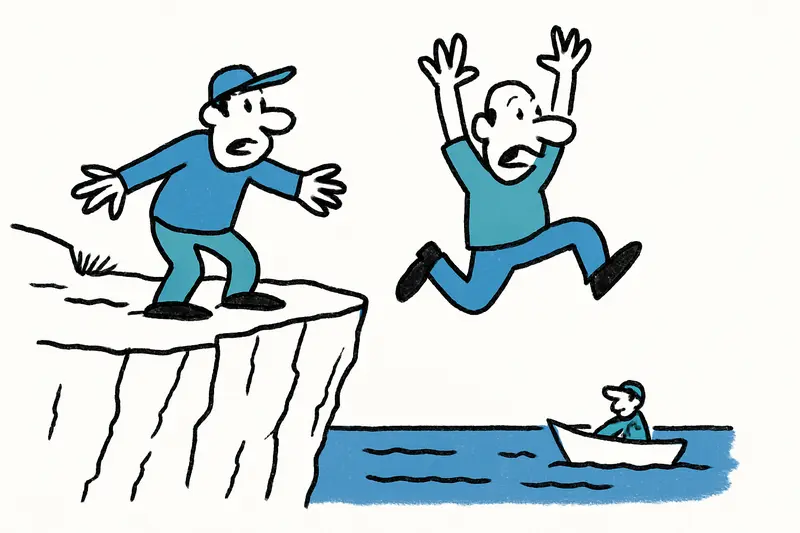
The sea gurgles at the shore, cups clink at a street café on the Passeig Mallorca in Palma, and in the mountains the wind whistles through the pines: this is how a spring afternoon on the island normally begins. Then a video appears on social media — a person runs to a cliff edge, jumps, opens the parachute, and a boat picks them up. When Dares Turn Deadly: Examining Cliff Jumps on Mallorca's East Coast
Key question: Who protects the nests when cliffs become playgrounds?
The question is not rhetorical: near the jump site is a well-known osprey nest, a species considered endangered on Mallorca. Last year only eleven breeding pairs were counted. In the protected area recreational and sporting activities are prohibited according to the management plan — nevertheless images of jumps, climbing stunts and drone footage repeatedly appear in feeds and reels. Why do such actions take place in restricted zones, and what needs to change?
Critical analysis: Three problem areas stand out. First: awareness versus attention. For many extreme athletes spectacular spots are part of the appeal; for businesses social-media-ready images are advertising. Second: control versus resources. The ban in the management plan is clear, the personnel capacity to monitor the kilometer-long rock sections is not. Third: regulatory gaps. Organizers operate in a gray area between adventure offerings and commercial services — the question of permits, risk assessment and liability often remains open.
What is missing in public discourse: concrete numbers on controls and sanctions. How often have park rangers observed violations in recent years? Which fines were imposed? There is also a lack of clear information on how close the reported jump site actually was to the osprey nest — scientific distance data would help to better classify possible consequences for the breeding. And: the perspective of the providers is mostly missing. Not to coddle them, but to find practical solutions. Bendinat accident: Unnoticed under the cliffs for hours — jetski rescue at midday
An everyday scene that makes the problem tangible: on a Tuesday midday in Sóller a woman sits on a bench, her dog sniffs at olive leaves, two young men beside her discuss their planned climbing tour — no one mentions nests or restricted zones. On the way back the radio briefly opens the local news and one hears the voice of a conservationist worried about disturbances during the breeding season. This gap between what happens on the mountain and what reaches towns is typical.
Concrete approaches: First, prevention instead of just punishment: better signage at access points, digital notices in hiking apps and clear map sets for outdoor providers. Second, cooperation with organizers: mandatory training, codes of conduct and a simple reporting requirement for commercial activities near sensitive areas. Third, targeted monitoring: seasonal deployment plans by park management, increased boat and air patrols during the breeding season — a practice highlighted after a high-profile Helicopter over Cala Deià: Rescue in the Tramuntana and the Uncomfortable Questions, and the use of geo-fence technology that can signal GPS alerts when restricted areas are entered or filmed. Fourth, transparent sanctions: published cases and fines create deterrence and allow public assessment of the measures' effectiveness.
Practically this also means: if a company is identifiable in a posted video, it must be checked whether it violated management rules — not as populism, but to clarify who bears responsibility. At the same time authorities should set up a contact point for tips from the public and for quick preliminary checks; today tips often get lost across different channels or take too long.
What conservationists demand — stricter controls and clear rules — meets with understanding. But without accompanying offers for athletes the conflict will not shrink. Mallorca has plenty of legal climbing opportunities, designated paragliding zones and certified operators. The challenge is to make these alternatives more visible while protecting the reserves with simple, effective measures.
Conclusion: A viral video can serve as a wake-up call. It shows how quickly human curiosity and digital marketing collide with ecological caution. Solutions are on the table — better information, cooperation with businesses, targeted controls and technical measures. If we do not want breeding sites of rare species to become the backdrop for likes, authorities, providers and users must act together. In short: protecting nests means drawing boundaries — and at the same time offering attractive, legal alternatives so that adventure does not come at the expense of biodiversity.
Frequently asked questions
Is cliff jumping allowed in protected areas of Mallorca?
Why is cliff jumping near Mallorca's cliffs a conservation issue?
When is the best time to avoid sensitive wildlife areas in Mallorca?
What should I check before planning adventure sports in Mallorca?
Are there legal alternatives to cliff jumping in Mallorca?
What wildlife is affected by cliff activity in Mallorca?
Can social media videos lead to problems in Mallorca's protected areas?
What are park managers doing to protect cliff nesting sites in Mallorca?
Similar News
Large-scale Anti-Tourism Graffiti at Cala Mendia: Protest or Vandalism?
On the morning walkers discovered an approximately 50-meter-long slogan against tourism on the wall above Cala Mendia. W...
Bomb threat before Jet2 flight in Tenerife: A reality check for security protocols
A passenger reported a bomb in luggage shortly before departure in Tenerife. Evacuation, baggage checks, delays — and ma...
Who is stripping Mallorca's coast bare? Why entire slopes are being removed for villas
On Mallorca steep slopes are again being removed to make way for luxury construction sites. Who bears the responsibility...
Robber Falls While Fleeing in Sant Agustí: Who Takes Responsibility?
During a purse-snatching in Sant Agustí, a non-commissioned officer chased the suspect; the man jumped from a bridge and...

Bomb threat on board? Why the Tenerife incident concerns us in Mallorca
A passenger on a Jet2 flight from Tenerife to London triggered an evacuation and intensive security checks. The result: ...
More to explore
Discover more interesting content

Can Cap de Bou

Townhouse Lleo 72
