
Fed up with dog fouling: Shop owner in Palma responds with protest signs
Fed up with dog fouling: Shop owner in Palma responds with protest signs
In Palma's center a shop owner posts signs because sidewalks and facades are being fouled by dog feces and urine. A local report with a key question, analysis, everyday scene and concrete proposals for solutions.
Fed up with dog fouling: Shop owner in Palma responds with protest signs
A silent protest in the Carrer del Baró de Santa Maria del Sepulcre – and the question: who will really clean up the problem?
Key question: Why does dog fouling remain such a persistent problem in a busy shopping district of Palma despite visible complaints?
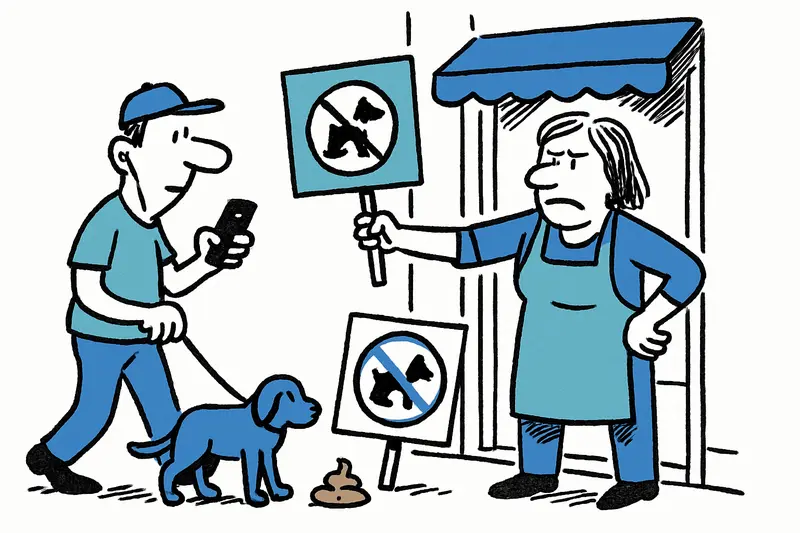
In the early evening, when the awnings are lowered and the warm light flickers in the shop windows, the Carrer del Baró de Santa Maria del Sepulcre smells not only of espresso and fried fish. Occasionally you notice the sour smell of urine on the building walls and the unpleasant sight of droppings on the cobblestones. A shop owner has now placed small signs on and in front of her business: not a proclamation, but a clear request to dog owners — please do not just leave your animals' droppings behind. It is less an outburst of anger than a visible sign of exhaustion — similar to the incidents described in Posters, Provocation, Polarization: How Mallorca's Streets Become a Campaign Ground.
The scene is everyday: delivery vehicles stopping briefly, older regular customers with bags, youngsters strolling by. Among them, dog walkers with smartphones in hand, sometimes with bags, often without. The owner mainly describes the evening and night hours as problem times, when the streets are quieter and cleaning intervals are less frequent. The signs are meant to show: this behavior disrupts business life. For now they remain hanging — as an appeal and as silent documentation of what has increased over recent months.
Critical analysis
Several levels come together. First: a lack of responsibility among some owners. This is not a new phenomenon, but in dense, tourist-used neighborhoods it weighs more heavily because dirt and smell immediately deter customers. Second: municipal cleaning cycles are aimed at main avenues and squares, not narrow shopping streets that are used differently in the evenings. Third: enforcement — fines, on-site checks — does not operate comprehensively. A sign does not change behavior sustainably; it only makes visible that someone has had enough. Similar public messages have sparked debate elsewhere, for example New xenophobic graffiti at Playa de Palma – How is the island reacting?.
Who bears responsibility? Morally: the pet owners. Practically: the city administration for cleaning and sanctioning. For public impact: neighborhood groups and business associations that could draw attention to the problem. The issue is therefore neither solely social nor solely administrative — it needs all three levels at once.
What is missing in the public discourse
We talk a lot about regulation and penalties, but hardly about everyday aids: Where are more public dog bag dispensers in this district? Are there enough bins that are emptied in the evenings? Who is visibly taking care of odor removal on facades? In conversations with residents I often hear the phrase: “Ednal, we report it, but nothing changes.” This kind of resignation rarely appears in official debates; it remains a footnote in meeting minutes. For concrete initiatives see Palma launches campaign for clean streets and responsible dog ownership.
Concrete proposals for solutions
1) More visible enforcement: In the short term, mobile checks during peak times — evenings and nights — could reduce the number of offenders. 2) Equipment on site: dog bag dispensers and additional bins, well positioned and emptied regularly. 3) Physical protection for facades: easy-to-clean coatings or a basic cleaning program for particularly affected walls; it costs money, but helps the appearance. 4) Neighborhood initiatives: a local sponsorship where shopkeepers, residents and the municipality coordinate scheduled cleaning weeks. 5) Clear communication: a short, concise campaign in several languages — Mallorca is multicultural — that respectfully but firmly calls for more consideration.
These proposals are not magic bullets. But combined, with visible benefits for passersby and customers, they can change habits. A sign alone signals frustration; the active interplay of education, provision and enforcement could work better in the long run.
Everyday scene from Palma
Imagine: it is half past nine, the Calle is getting quieter, a cleaning crew drives by and wets the curb with buckets. An older woman walks her small dog, she has a bag, picks up and greets the shop owner. A few meters further a group of guests stops, discussing dinner. In this brief encounter lies a solution: visible, routine cleanliness and the example of individuals can be contagious — if enough actors take part.
Conclusion: The shop owner's signs are a wake-up call, not a final plea. They show that parts of the neighborhood are no longer willing to silently accept constant neglect. Those who want to preserve quality of life in Palma's old town must not only sanction, but also provide options, make enforcement visible and support daily pragmatism. Otherwise anger turns into resignation — and that is what the signs say most clearly.
Frequently asked questions
What is the weather usually like in Mallorca in early summer?
Is Mallorca warm enough for swimming in spring?
What should I pack for a trip to Mallorca in warm weather?
Is Mallorca a good destination outside the peak summer months?
What is Port de Sóller like for a day out in Mallorca?
Why do people visit Deià in Mallorca?
Is Valldemossa a good place to visit if you like historic villages?
What is the best way to plan a calm Mallorca itinerary?
Similar News

Rental Car Theft in El Arenal: What This Incident Reveals About Our Gaps
A teenager steals a running rental car in El Arenal, flees on foot, climbs over walls and is caught by the Guardia Civil...

Red Rope in Palma's Library: What Helps Against Selfie Tourism — and What's Missing
Palma's city library cordoned off an area with a red rope to keep selfie tourism away from reading and working activitie...

Fort San Carlos: Museum, Harbor Dispute — and a Conflict That Demands Answers
The military museum at Fort San Carlos sits right on Palma's harbor, with unexpectedly quiet rooms filled with cannons a...
Old Town Under Pressure: When a Doorway Becomes a Sleeping and Shower Place
For months a woman has been living with a parasol, a clothes rack and personal belongings next to the social welfare off...

When Shopping Weighs Heavier: Mallorca Demands a Tax Pause on Food and Fuel
Rising prices are putting pressure on households and agriculture. The Balearic Islands are calling for temporary tax rel...
More to explore
Discover more interesting content

Can Cap de Bou

Townhouse Lleo 72
