
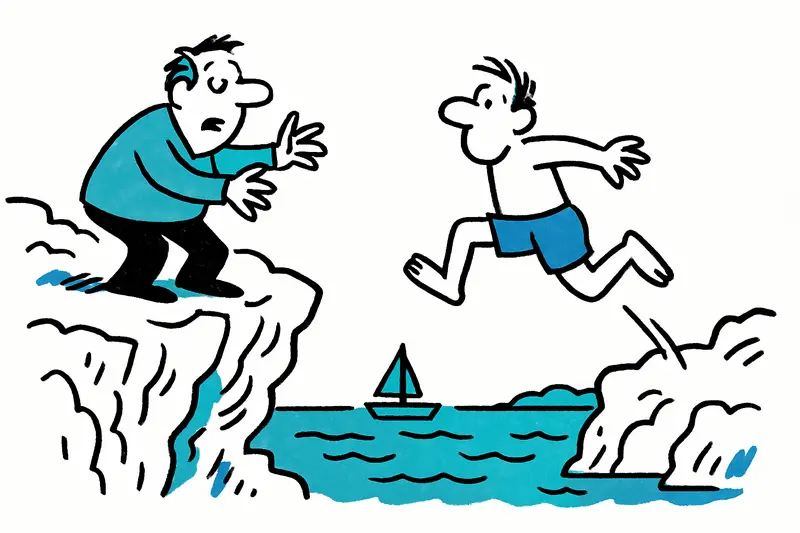
When Dares Turn Deadly: Examining Cliff Jumps on Mallorca's East Coast
Between Cala Millor and Porto Cristo the cliffs form a postcard backdrop — and sometimes a death trap. Why do so many people jump, what role does the rescue chain play, and what would need to change?
Why do Mallorca's cliffs become a test of courage — and who ultimately pays the price?
On hot afternoons the east coast between Cala Millor and Porto Cristo looks like a painted postcard: blue sea, pine trees smelling of resin, the distant hum of motorboats and the chirring concert of cicadas. Among it all people stand on the edge of the rocks, laughing, sizing each other up, filming — and jumping. The question that remains is not just rhetorical: why do so many people risk their lives for a brief adrenaline rush?
Numbers that resonate
Since the season began, rescuers on the east coast have recorded more than 25 incidents related to cliff jumping, two of them fatal. These are not anonymous statistics; they are families left shocked, shifts that become ordeals for rescue teams, and coves that suddenly become hard to reach. On site this means: helicopter noise over the pines, inflatable dinghies in the waves and divers searching for obstacles — often under blazing sun and sometimes in poor visibility. Local coverage of dangerous cliff jumps on the east coast has documented similar cases.
The mechanics of a dare
The reasons are complex. Alcohol and partying are part of it — one beer too many, a 'come on' from the group, and inhibitions drop. Peer pressure can turn a simple slap-before-jump gesture into a small ritual. Then there is the desire for spectacular images: a clip, a like, and the adrenaline-hungry audience applauds in the feed. Those who don't join in quickly seem like party poopers.
Dangerous misjudgments are widespread: clear water does not mean sufficient depth, shadows hide rocks, currents can push people back toward the rock face. A ten-meter-high jump generates forces that can cause internal injuries or spinal fractures. Such damage is not always visible — until the emergency call is made.
Often overlooked: the rescue chain as a critical factor
What many debates neglect is the time between the accident and medical care. Many coves are only accessible via narrow, steep paths or by boat. A call for help happens quickly — the rescue does not. Teams must first make their way in, coordinate boats or helicopters, stabilize the injured. Those minutes are critical. Such complications were tragically illustrated by a fatal rescue attempt in Son Bauló. Added to this is the physical and psychological strain on professional and volunteer personnel: long operations, traumatic scenes, exhausted resources that are then missing elsewhere.
How municipalities respond — and why it's not enough
Authorities have taken measures: higher fines, more cameras at popular spots and increased patrols. Information signs and campaigns under the motto 'Think before you dive' are visible. Important, yes. But all this often misses those who decide in the crucial moment — intoxicated holidaymakers, groups deciding on impulse, or influencers chasing clicks. Fines have an effect only after the risk, not before. Similar incidents, such as the deaths in Tenerife, show that warnings alone may not prevent tragedies.
What could really help — realistic proposals
More presence is necessary but not sufficient. Measures must reflect the reality of coastal use. Concrete suggestions:
1. Precise on-site information: Signs that not only show bans but provide specific information on water depth, hidden rocks and currents — complemented by QR codes linking to short explanatory videos in several languages, accessible before a jump.
2. Responsibility of landlords and guides: Short safety briefings at key handover, in the welcome folder or as a pop-up during online booking. A two-minute notice in the apartment can do more than the next ticket.
3. Community-driven hotspot maps: Local fishers, dive schools and guides could mark dangerous spots. A map vetted by locals with current information on tides and visibility would be more practical than generic warning signs.
4. Social media cooperation: Influencers working on the island should be included in prevention campaigns. Those who share spectacular images can also take responsibility for the message — an honest clip that explains risks is often more effective than a warning sign.
5. Expanding rescue capacity: Fast boats for hard-to-reach coves, coordinated helicopter deployments and regular psychological support for emergency personnel are investments in fast and humane aid.
An appeal to reason and community
The coves along the east coast remain beautiful — but only if we treat them with respect. If you drink, don't jump. If you film, don't provoke. And municipalities, landlords and the tourism industry must inform about dangers in a more realistic and binding way. Ultimately it's about decisions in the concrete moment: a quick glance at the water's surface is not enough. More is needed — from information and infrastructure to a culture that does not glamorize risk.
The cicadas on the cliffs keep their familiar rhythm. They don't care about likes, but they do care about one thing: that we enjoy the sea as it should be — beautiful, livable and safe. Fun yes, but with sense. So that no postcard becomes a tragedy.
Frequently asked questions
Is cliff jumping on Mallorca's east coast really dangerous?
What makes people jump from cliffs in Mallorca even when it's risky?
Can you tell if a cliff jump is safe just by looking at the water?
What should I avoid if I'm spending a day near Mallorca's cliffs and coves?
Why are rescue operations on Mallorca's east coast so difficult after a cliff-jumping accident?
What warnings or rules are in place against cliff jumping in Mallorca?
Is Cala Millor or Porto Cristo a risky area for cliff jumping in Mallorca?
What is the safest way to enjoy Mallorca's cliff-lined coves?
Similar News

Maribel: Five Decades of Service – Housekeeper from Peguera Celebrated with a Special Honor
Over 50 years in the hotel business: María Isabel “Maribel” Molinos was honored in Palma at the Nit del Turisme by Unive...
Orange Alert over Parts of Mallorca: Are We Prepared?
Dark clouds and an announced wet spell have triggered an Orange alert in parts of Mallorca. A reality check: what's miss...

Sundair & Co.: Sale speculation and what it could mean for Mallorca
Rumors about a possible sale of the airlines Sundair and Fly Air 41, which belong to Schauinsland-Reisen — and whether b...
Anne Wünsche in Mallorca: A job offer with a catch — who fits the role of personal assistant?
Influencer Anne Wünsche has left Berlin and is urgently looking for a full-time personal assistant in Mallorca. Why the ...
Daily from New York: Palma Between Boom and Strain
United will increase the Newark–Palma route to daily flights in 2027 using Boeing aircraft (231 seats). What does the in...
More to explore
Discover more interesting content

Can Cap de Bou

Townhouse Lleo 72
