
Bendinat accident: Unnoticed under the cliffs for hours — jetski rescue at midday
A 30-year-old tourist slipped down the steep cliffs below Hotel Bendinat and was only discovered hours later by walkers. The jetski rescue raises questions about warning systems and accessibility.
Bendinat accident: Unnoticed under the cliffs for hours — jetski rescue at midday
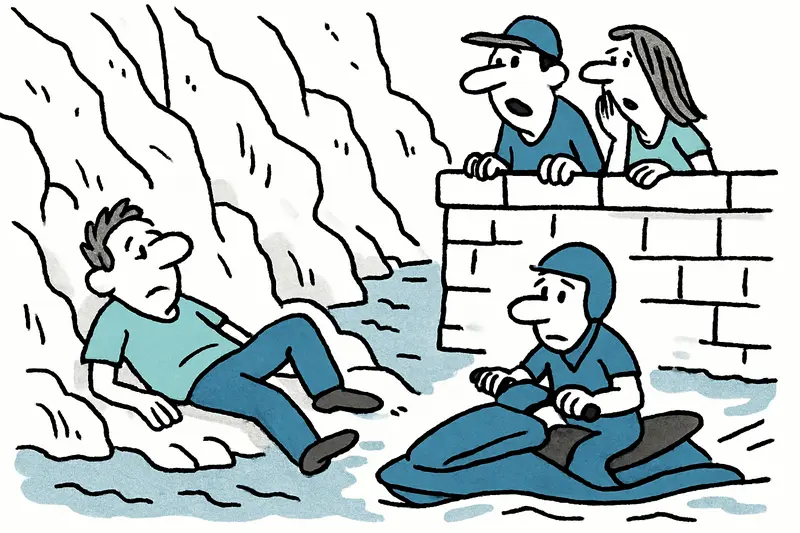
Early Monday morning a quiet stretch of coast at Bendinat turned into a life-threatening situation for a 30-year-old man. Around 6 a.m. he slipped at a difficult-to-access rock section from a height of about six metres and hit the jagged rocks. The spot is directly below Hotel Bendinat, is hardly visible from the promenade and was deserted in the cool morning hour — only seagulls, the faint roar of the surf and a few anglers on the rocks.
It was not until around noon that a group of tourists heard calls for help. "At first we only heard voices and then saw someone lying on the rocks," says a holidaymaker from Austria, later named as a first aider. The group immediately alerted the rescue services.
Quick but unusual rescue: jetski instead of stretcher over the promenade
The recovery proved difficult. The promenade offers no direct access to the narrow rock tongue, and the paths are slippery in places — especially in damp morning mist. Firefighters and emergency medical services therefore decided to reach the injured man by sea. A doctor from the emergency rescue SAMU 061 rode a jetski to the rocks and stabilised the man on site. Secured to a spineboard, he was taken to a nearby sheltered cove where firefighters and lifeguards brought him ashore.
The measures had an effect: in critical condition the man was transported to Son Espases University Hospital. Shortly after the transfer there were no detailed statements about his health condition.
What remains to be asked after the rescue?
After such an incident several questions remain open. Why was the man in such a secluded rock area early in the morning? Could better signage or a fence have kept people away? And how can it be ensured that in future accidents no one is left unattended for hours? Similar fatal incidents have prompted debate, for example Dead Tourist at Playa de Palma: An Accident Raises Many Questions.
The authorities have launched an investigation. Residents and rescuers report that visitors often underestimate the cliffs. Particularly treacherous is the combination of smooth rocks, cold water and the morning solitude: anyone out alone has little chance of quick help in an emergency.
Aspects that are rarely openly discussed
The debate about such accidents often remains superficial: warning signs yes or no. Less attention is paid to structural questions: public information duties of hotels, the treatment of hard-to-see coastal sections on tourist maps and the technical equipment of rescue teams for hard-to-reach spots. This concern is echoed in coverage of other coastal incidents such as When Dares Turn Deadly: Examining Cliff Jumps on Mallorca's East Coast. Mobile coverage in narrow coves also plays a role; a random network dead spot can turn an emergency into a prolonged disappearance.
Also interesting is the role of passers-by. Without the alert group of holidaymakers and their decision to call the rescue services, the outcome could have been much worse. This raises the question of how to encourage more people to act in emergencies — without putting themselves unnecessarily at risk.
Concrete proposals — small measures, big impact
From conversations with firefighters and lifeguards several practical approaches can be derived:
Targeted signage: Multilingual, clearly visible warning signs at promenade access points and parking bays, supplemented by pictograms for international visitors.
Mark danger spots: Hiking and coastal maps (including digital ones) should clearly mark rock sections that are hard to see. QR codes on the signs could display emergency information and the nearest rescue position.
Seasonally adjusted presence: In the shoulder months more patrolling lifeguards or boat reserves could be on standby — not only in the high season.
Use technology: Drones for rapid reconnaissance, permanently charged jetskis in sensitive sections and better equipped beach kiosks with emergency kits could save minutes that decide between life and death.
And last but not least: Hotels, landlords and tour operators should explicitly inform their guests about dangerous coastal sections — in the local language and in English.
Looking ahead
It is fortunate that the holidaymakers in Bendinat were attentive and set the rescue chain in motion. But the case should not be written off as an isolated incident. The combination of hard-to-reach cliffs, early morning quiet and missing warning systems is a well-known risk factor in Mallorca — and deserves more attention than it has received so far. Other emergencies, such as Critical Bathing Incident at Arenal: Call for Better Protective Measures, underline how quickly situations can worsen.
The island lives from the sea, the roar of the waves and the silent coves. But that idyll can be deceptive. A few extra signs, a QR code or seasonal boat readiness could prevent people from lying unnoticed between the rocks for hours in the future.
The authorities are currently reviewing the marking of the danger site. For residents and rescuers the question remains how vigilant we all want to be — especially on days when the wind is weak, the surf only murmurs and you think: nothing will happen here. It is precisely then that sometimes it does.
Frequently asked questions
Are the cliffs in Bendinat, Mallorca safe to walk near?
What should I do if I see someone injured on the rocks in Mallorca?
Why are Mallorca cliff areas more dangerous early in the morning?
How do rescuers reach people trapped on Mallorca’s rocky coastline?
Is Bendinat a good place for a coastal walk in Mallorca?
Do tourists in Mallorca need to be warned about hidden cliff areas?
What role did bystanders play in the Bendinat rescue?
What can hotels and tour operators do to improve coastal safety in Mallorca?
Similar News
First Day, First Consequences: What Palma's Rent Freeze Really Means
A new decree stops a planned eviction in Palma — but what really changes for tenants and landlords? A reality check with...
When Housing Becomes a Matter of Survival: Mallorca Between Rental Frenzy and Everyday Life
The case of 87-year-old Maricarmen showed that on Mallorca many people's lives are poised between affordable and uninhab...
Autumn in Mallorca: When Melancholy Gets a Window
Why autumn quietly tightens here — and how to make use of the mood: walks, culture, candles and the light from Palma to ...
Near-miss on Lanzarote: Landing Ryanair Jet and Iberia Takeoff — what really went wrong
On Lanzarote there was a dangerous incident: A Ryanair flight (FR5910) from Dublin landed on runway 03 while an Iberia E...
Eurowings introduces new Premium Business seats on Mallorca routes
From December 1, selected Eurowings flights to Palma and other destinations will feature eight particularly generous sea...
More to explore
Discover more interesting content

Can Cap de Bou

Townhouse Lleo 72
