
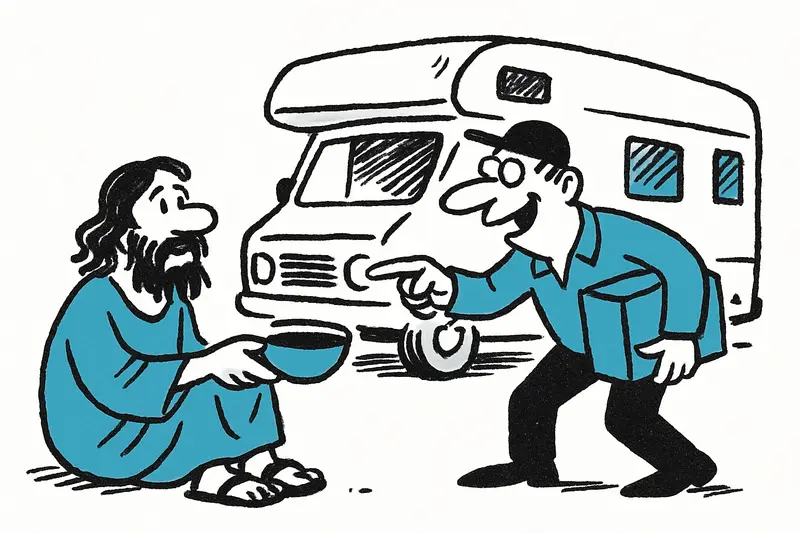
Between Mockery and Help: What the 'Jesus Brother Bauchi' Case Reveals about Mallorca
Between Mockery and Help: What the 'Jesus Brother Bauchi' Case Reveals about Mallorca
A former squatter lives in a motorhome near Son Coll and is collecting donations. Reactions range from ridicule to compassion. What is missing in the debate?
Between Mockery and Help: What the 'Jesus Brother Bauchi' Case Reveals about Mallorca
Why do cries for help polarize so sharply — and what do the reactions say about our island?
A motorhome stands on a dusty rest area near Son Coll by Artà. The wind brings the scent of pine and wet stone; in the morning the cicadas still chirp, later delivery vans pass by. In this caravan lives 51-year-old Georg Berres, who often calls himself "Jesus Brother Bauchi," a situation reported in When Caravans Become the Last Address: How the Housing Crisis Is Changing Mallorca. In recent days he has asked for support: money for the essentials, non-perishable food, and some fuel for the small heating system. Some people gave; others reacted with scorn.
Key question: What does the mix of mockery, accusation and willingness to help tell us about how Mallorca deals with poverty, dropouts and social pressure?
In short: the discussion takes place on several levels that are rarely connected. First there is the personal level of the affected person: a man who describes himself as an outsider, who cares for animals and lives in a motorhome. Second is the background: a well-known squatting of a finca that stirred up resentment among parts of the population, a phenomenon also seen in reports such as Between Promenade and Cardboard Shacks: Can Pastilla on the Brink of a Social Crisis. Third is the public reaction on social media, where sympathy sits side by side with insults. These layers combine into a quick judgment — seldom into a balanced assessment.
Critical analysis: In comments I've read in recent days, legitimate questions mix with moral judgments. Some readers find it unfair that someone who once lived illegally in a house now begs for alms. Others see value in the care for street dogs that relativizes social stigma. What is often overlooked: poverty is not only individual failure; it is also linked to lack of access to affordable housing, precarious work and patchy social services — and this is especially true on an island under strong tourism pressure, as explored in Sky-high prices, tents, empty promises: Why Mallorca's housing crisis is no longer a marginal issue.
What is missing from the public discourse: concrete information and perspectives. There is a lack of clear pointers to available help — soup kitchens, food banks, municipal social services or low-threshold job offers — that people in need could be referred to. Also rarely discussed is the role of animal welfare and pet ownership: many people take responsibility for animals even if they have little themselves. For some this is precisely the reason they do not go to a conventional shelter — because these often do not allow animals.
Everyday scene from Mallorca: On a gray afternoon in Artà I often see delivery drivers carrying boxes of canned goods into small supermarkets, pensioners arguing on wooden benches about parking in the winter season, and a woman walking two dogs on a leash. Such observations show: the island is a kaleidoscope of people with very different securities, and in some places a park bench can become a final address, an issue described in Homelessness on Paseo Mallorca: When the Park Bench Becomes the Final Address. Those who need help here do not always have an easy path to it.
Concrete solutions: 1) Consolidate information: an easily accessible list of local support services on municipal websites and posted at social meeting points helps channel spontaneous donation appeals. 2) Expand low-threshold offers: day centers that allow people with animals, mobile social counseling that visits rest areas and caravan sites. 3) Networked support: cooperation between animal welfare organizations, food banks and social services so donations reach recipients in a targeted and sustainable way. 4) Work programs: short-term, flexible employment projects for small repairs, winter maintenance of public paths or support for community events. 5) Transparent donation channels: instead of giving money via private messages, use dedicated accounts or voucher systems so help remains planned and traceable.
For private individuals: those who want to help can donate locally — to food banks, registered animal welfare associations or municipal offices. If giving directly, ask beforehand: does the person need food, a fuel voucher, or is it about veterinary care for an animal? Small, targeted gestures are often more sustainable than spontaneous cash gifts without follow-up.
Another point: the debate about people like Berres also reveals the desire for clear rules. Many want an answer to how past norm-breaking actions should be handled — at the same time they expect humane support in emergencies. Bringing both together would be a civilizational aim: name responsibilities, offer help, create perspectives.
Concise conclusion: the mix of mockery and willingness to help is not unique to Mallorca, but on this island it meets particularly sharply. Anyone who reads anger and pity side by side at the roadside should not immediately take sides, but ask: which steps will actually move the person forward? A warm meal and a fuel voucher do not solve all problems — but they are often a beginning if backed by reliable services.
And a final practical thought: in a municipality like Artà, transparent distribution points for food and small vouchers would not be a luxury but a bridge — for people who are stranded, and for those who want to help but don't know how.
Frequently asked questions
What support is available in Mallorca for people who suddenly have no stable place to live?
Why do public appeals for help in Mallorca sometimes get such mixed reactions?
Can people in Mallorca with pets or dogs stay in normal emergency shelters?
What is the housing crisis in Mallorca doing to people who have fallen through the system?
What is special about the situation near Son Coll in Artà?
Why is Artà being mentioned in discussions about poverty in Mallorca?
How should you help someone asking for food or fuel in Mallorca?
What do social media reactions in Mallorca reveal about the island?
Similar News
Injured captain, big plans: Germania Mallorca before the away match in Consell
The newly founded FC Germania Mallorca travels to Consell on Saturday. Captain Bastian Müller is out injured, but coach ...
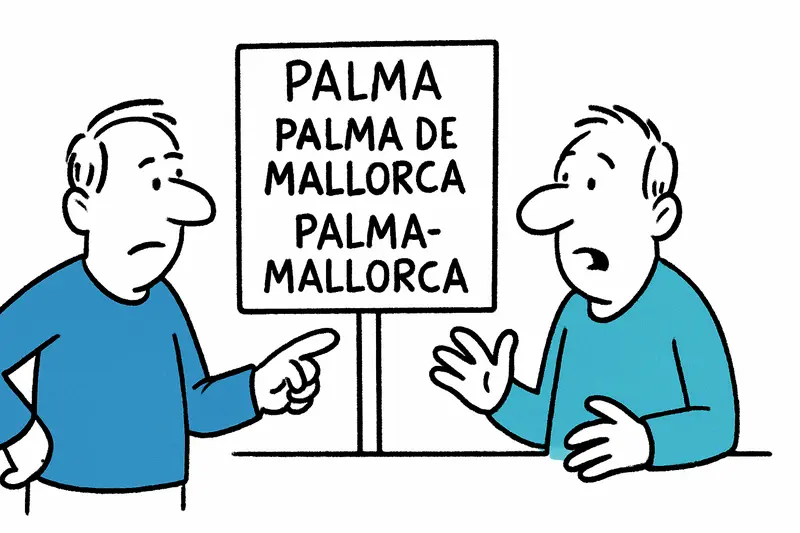
Palma, Palma de Mallorca, Palma‑Mallorca: What is it really about?
The debate over the city's name is more than grammar: it concerns identity, law and branding policy. A sober reality che...
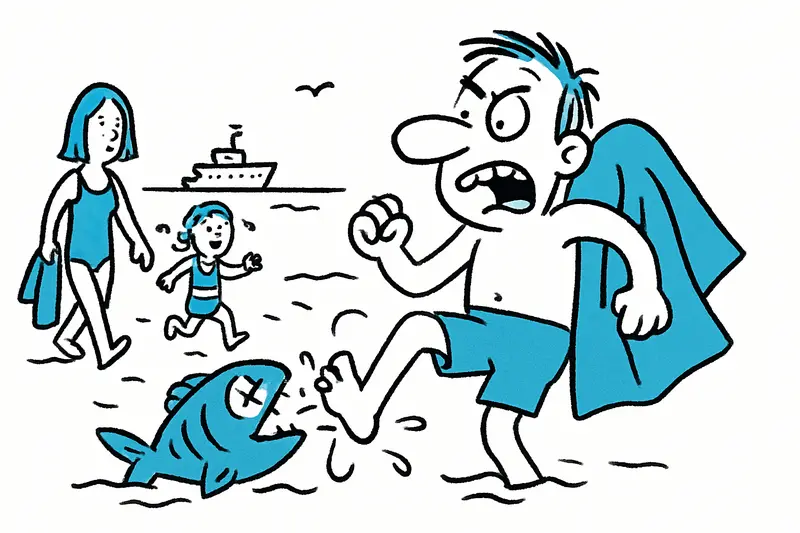
Warning to Bathers: Nipping Fish in Cala Major and Other Coves — a Reality Check
In Cala Major and several beaches around Mallorca, bathers report painful “nips”. Who are the animals, why are they gett...

Rental Car Theft in El Arenal: What This Incident Reveals About Our Gaps
A teenager steals a running rental car in El Arenal, flees on foot, climbs over walls and is caught by the Guardia Civil...
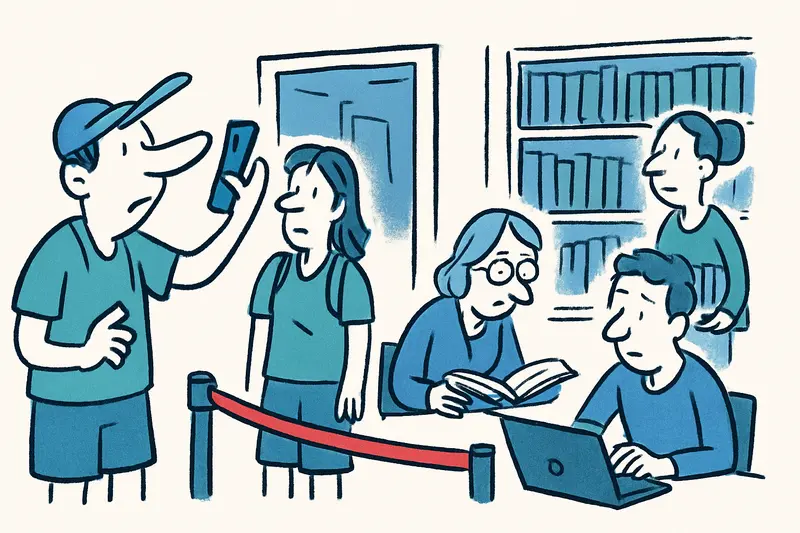
Red Rope in Palma's Library: What Helps Against Selfie Tourism — and What's Missing
Palma's city library cordoned off an area with a red rope to keep selfie tourism away from reading and working activitie...
More to explore
Discover more interesting content

Can Cap de Bou

Townhouse Lleo 72
