
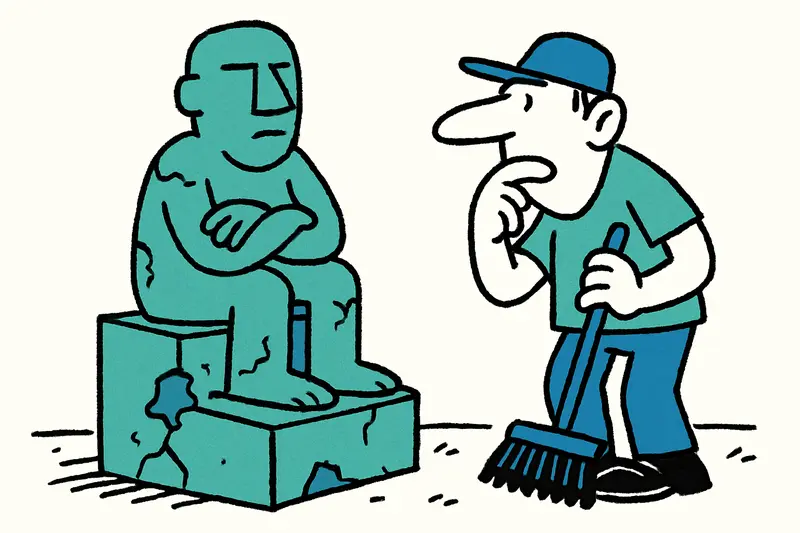
Palma's Open-Air Museum at Risk: Who Cares for the Sculptures?
Palma's Open-Air Museum at Risk: Who Cares for the Sculptures?
Palma is an open-air museum — yet many sculptures are weathering, dirty or disappearing into the greenery. An inventory of what is missing and how the city can save its outdoor art.
Palma's Open-Air Museum at Risk: Who Cares for the Sculptures?
Key question: How long will Palma leave its public art to decay — and what would be needed to save it?
Standing on a cool December morning at Parc de la Mar neglected: Who will save Palma's living room at the foot of the cathedral?, you hear distant hammering from construction workers, the cawing of gulls over the lake and the quiet conversation of retirees sitting on low benches looking at the cathedral. Between plane trees and young mastic shrubs there are bronzes and stones, sometimes clearly visible, often half in shadow. This scene could be cheerful. Instead it tells of a lack of care.
Over the years Palma has become a vast open-air museum: works by local and international sculptors appear on Via Roma, Passeig Mallorca, Jaume III, the Rambla or on Plaça de la Porta del Camp. Some pieces — from delicate metal constructions to massive concrete forms — look proud, others appear neglected: crumbling concrete, faded paint, graffiti and overgrown plinths.
Critical analysis
The problem has several facets. Technically, many materials are not designed for eternal exposure. Concrete, certain plastics and some coatings age visibly when not regularly maintained. Added to that is mechanical wear: dogs marking plinths; children climbing sculptures; deliberate damage. A third factor is placement: some works stand under dense foliage The Silent Guardians of Palma: When Protected Trees Are in Danger or next to parked cars, so they are hardly noticed and get dirtier faster.
Organizationally, a comprehensive plan seems to be missing: there is no publicly known inventory with condition reports, no clearly prioritized maintenance agenda and only sporadic reactions after vandalism. Cleaning crews remove graffiti more often than before — that is good — Palma Cleans Up — Who Pays, What Remains? but restoration and preventive care often fall by the wayside. When a large concrete sculpture begins to expose rebar, that is already a serious condition that is expensive and complicated to fix, similar to cases described in Collapse at Palma's City Wall: What Needs to Happen Now.
What is missing from the public debate
People often talk about new acquisitions or festivities — but too rarely about sustainable maintenance. There is a lack of transparency: How many works belong to the city? Who is responsible? What budget is allocated? Preventive measures are also hardly discussed: material-appropriate coatings, regular inspections, lighting concepts or educational measures so residents and tourists behave more respectfully.
Everyday scene from Palma
Imagine Jaume III on a Saturday: people with shopping bags, a food truck at the edge, young people heading to cafés. A little-noticed golden sculpture stands there, almost invisible between shop windows and street cafés. Those who notice it may take a photo. Most walk past. That an artwork is part of daily life and at the same time remains invisible shows a paradox: art is present, but not cared for.
Concrete proposals
1) Inventory and condition report: A timely survey of all public works — location, material, year, ownership, current condition — is the foundation. This list should be publicly accessible and regularly updated.
2) Prioritized maintenance plans: Not every sculpture needs immediate costly restoration. A traffic-light system (critical, conspicuous, good) helps concentrate resources. In critical cases, conservators should be commissioned promptly.
3) Regular budget and fund: A fixed annual budget in Palma for the preservation of public art, complemented by sponsorship from companies or foundations, prevents constant postponement of measures.
4) Material-appropriate protection measures: Anti-graffiti coatings, UV-resistant varnishes, drainage around plinths or raised bases that keep out dog waste and water pay off in the long run.
5) Location and lighting review: Some works benefit if they are relocated or better lit. A good location can make a sculpture a meeting point and increase public attention — which protects against vandalism.
6) Communication and education: QR codes with information, guided walks, collaboration with schools — those who know the background treat art with more respect.
7) Responsibility and enforcement: Clear responsibilities at city level, faster response times to damage and stricter penalties for deliberate destruction are needed. Equally important: involve dog owners, provide more trash bins and put up informative signs.
Concise conclusion
Palma owns a valuable public collection — it is part of everyday life and shapes the cityscape. But an open-air museum that weathers and disappears is a missed opportunity. What is needed is less ceremonial unveiling and more ongoing work: inventory, funding, expertise, good locations and a bit of neighborhood care. Otherwise artifacts risk becoming only fragments in an administrative archive.
Anyone walking Palma's streets can start right away: keep your eyes open, take photos, report small damages to the city. It's not glamorous work, but it's practical. And incidentally: the better we care for this art, the friendlier, clearer and more distinctive our city will be for the people who live here — not just for postcards.
Frequently asked questions
Why is Palma’s public art starting to look neglected?
What kind of damage do outdoor sculptures in Mallorca usually suffer?
Who is responsible for maintaining Palma’s public sculptures?
What would help protect public art in Palma long term?
Where can you see public sculptures in Palma?
Is Parc de la Mar in Palma well cared for?
Can a sculpture in Palma be saved if the concrete is already exposed?
How can residents help protect Palma’s outdoor artworks?
Similar News
The Painter Who Invented Himself: How a Young Viennese Drew Mallorca
A hundred years ago a 19-year-old draftsman arrived in El Terreno. His diary and sheets, long known under the pseudonym ...
Released with Conditions: The Plus Ultra Suspicion and a Mallorcan Finca as Residence
A Dutch entrepreneur, sought in connection with the Plus Ultra case, was extradited to Spain after his arrest in Germany...

Haute Nuit in Puerto Portals: Fashion, Art and Indulgence by the Water
On October 2 the Lobster Club in Puerto Portals will be transformed into a stage for curated fashion, art and culinary e...
Magaluf: Watchtower Alarm – Lifeguards Pull Unconscious Beachgoer from the Water
After a drama in the late afternoon, two lifeguards at Magaluf beach rescued an unconscious 44-year-old man. He was stab...
Turquoise in the City: How dangerous is the color play of the Sa Riera?
The Sa Riera in Palma suddenly turned turquoise — a pretty motif, but behind the effect lies a discharge of saline waste...
More to explore
Discover more interesting content

Can Cap de Bou

Townhouse Lleo 72
