
Binissalem in Grape Fever: A Vermar Weekend of Mud and Must
When the alleys of Binissalem smell of grapes and roasted almonds, the Vermar has begun. A weekend full of laughter, muddy shoes and freshly pressed must — and a reminder of how alive Mallorcan traditions remain.
Binissalem in Grape Fever: A Weekend Filled with the Scent of Grapes and Fresh Must
When on a warm late-summer day the sun still shines on the cobbled streets and a light breeze drifts in from the vineyards, everyone knows: Vermar is back. Already at the town hall the faint smell of wood and grapes welcomes the first guests. Winemakers in dusty shoes, neighbors carrying trays full of Pa amb oli, and children dashing through the streets with colorful buckets — a scene that feels the same every year and yet never gets boring.
Saturday: Grape Fight from 12:00 PM — Chaos with a Smile
Saturday is the exuberant day. On the square near the church the big grape fight starts at about 12:00 PM. People in old shirts, red stains on arms and knees, the squeaking sound of bursting berries everywhere — and in between constant laughter, occasional shouts of "¡Olé!", the clatter of wooden crates. Children and teenagers throw themselves into the fray with real gusto, adults laugh, take photos and look for their next opponent. It is not an elegant spectacle but a big, fruity mess that somehow sanctifies: community through mess.
Alongside the fight, local bands play on small stages — guitars, an accordion, a drum — mixing Mallorcan folk songs with familiar pop tunes. Whoever gets thirsty in between will find stalls with cool drinks and simple tapas; the roasted almonds spread their sweet-nutty aroma and provide small energy boosts. A tip: old clothes, a water bottle and a bag that can get dirty.
Sunday: Traditional Grape Stomping from 5:30 PM — Mud, Music and Must
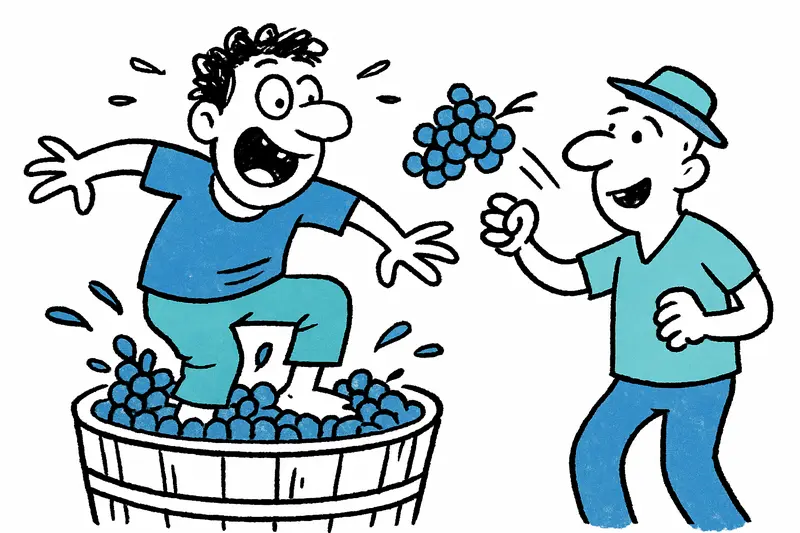
Sunday is quieter but by no means less beautiful. On the church square the traditional grape stomping begins at 5:30 PM. Here everything is a little slower, the movements have a rhythm: locals tread the grapes in large tubs while the crowd applauds and smartphones flash. The squeak of must underfoot, the occasional "Oooh" at a particularly juicy grape — it's raw, muddy, real. And that's exactly why the first tasting glasses draw long queues: mild, fruity, with a delicate floral note depending on the grape variety. For a detailed account of the Plaça Major stomping see Grape Stomping in Binissalem: White Smocks, Red Soles and a Village That Crushes Together.
Those who want to look more closely stay by the winemakers. Some patiently explain the difference between Manto Negro, Callet or Prensal Blanc, others tell how the vintage went — heat, rain, the little surprises of nature. These conversations are the heart of Vermar: expertise, pride and the desire to keep local culture alive come together here. In the evening folklore groups and a DJ take over the street music; lanterns cast warm light on dancing couples and exhausted, happy visitors. Local producers and cellars, such as Bodegas Sa Cabana: An Intense Wine Experience in Binissalem, often host tastings and explain their methods.
Between the highlights there is a full supporting program: stalls with the region's wines, handicrafts, children's craft corners and plenty of Pa amb oli, and there are also special food events like Ja Era Hora: Gastrofest fills Binissalem parking lot with flavors and music. Practical tips for visitors: parking is scarce, especially on Saturday at midday — better to take the bus, bike or go on foot. Strollers often have a hard time on the cobbles; a baby sling can be worth its weight in gold. The main events are usually free, special tastings cost extra and often sell out quickly.
Why is Vermar important for Mallorca? Because such festivals build a bridge between tradition and the present. They bring tourists and locals together, support small wineries and local businesses, and give young people a space to breathe new life into old customs. In times when much is fast and digital, stomping grapes feels almost revolutionary: you feel the earth, hear the squeak of the berries and laugh with people you didn't know yesterday. Read more about the town on the Binissalem Wikipedia page.
My advice from many years of Vermar experience: pack a sun hat, an old shirt, comfortable shoes and a spare shirt. Take time to talk with the producers — they tell the most fascinating stories about weather caprices and local grape varieties. And for those who just want to watch: come on Sunday evening when the heat eases, the air becomes sweeter and the first sip of must tastes better than any Instagram filter.
So: hat on, shoes tied and off to Binissalem — Vermar awaits with muddy moments, warm encounters and a glass of freshly pressed must.
Frequently asked questions
What is Vermar in Binissalem like?
When does the grape fight in Binissalem start?
When is the grape stomping in Binissalem?
What should I wear to Vermar in Binissalem?
Is Vermar in Binissalem suitable for children?
How do you get to Binissalem for Vermar?
Do you have to pay to attend Vermar in Binissalem?
Why is Binissalem so closely linked to wine culture in Mallorca?
Similar News

Release after bloody attack in Palma: Why the court's decision raises questions
An 18-year-old who allegedly inflicted a serious neck injury on a man at Plaza Gomila using a wristwatch wrapped around ...
Kidnappings in Inca: Three young men forced into car trunks and abused in the forest – a reality check
In Inca, three 18-year-old men were forced into car trunks by masked assailants at the Plaça des Bestiar, taken to a for...
Spreading Massification: The Brake That Still Has Much Work to Do
Marga Prohens announces limits on volume tourism. The measures sound harsh — but are they enough to save everyday life, ...

Through the Keyhole onto the Party Yacht: How Daniela Katzenberger Is Planning Her 40th on Mallorca
Daniela Katzenberger turns 40 and wants to celebrate it on the island — likely with a boat, cake and her mother. A relax...
By Boat Instead of the Road: Palma's Water Bus — a Reality Check
The 'Bus Nàutic' launches in two stages — but questions remain over interim operations, fares and environmental requirem...
More to explore
Discover more interesting content

Can Cap de Bou

Townhouse Lleo 72
