
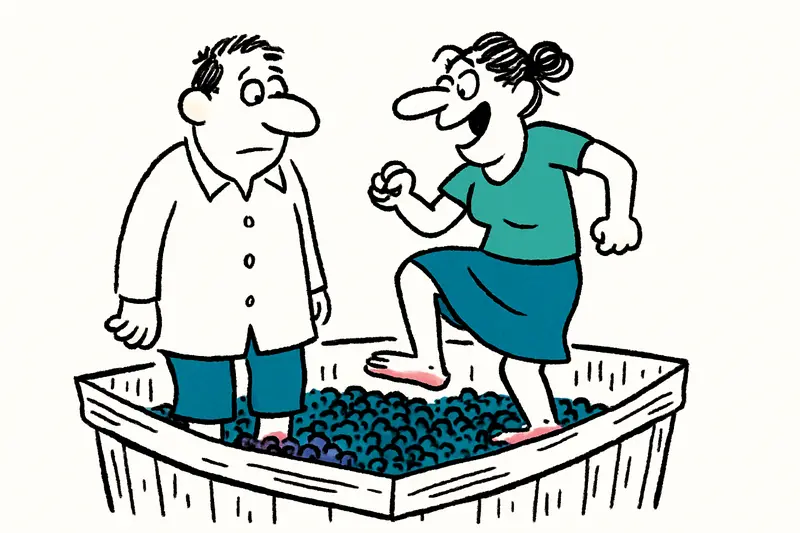
Grape Stomping in Binissalem: White Smocks, Red Soles and a Village That Crushes Together
13 tons of grapes, white traditional outfits and a purple throng: the grape stomping on the Plaça Major is as much a part of Vermar as the scent of freshly brewed coffee. A festival for the senses — and for the community.
Grape Stomping in Binissalem: When the Plaça Major Becomes a Sea of Must
Yesterday the old town of Binissalem turned into a sweet chaos: around 13 tons of grapes were piled up, and anyone who came to the Plaça Major encountered more feet than heels. The air smelled of ripe berries, of coffee from a stall and occasionally of charcoal from a grill. Children pressed their noses against the barriers, grandmothers shouted encouragement, and somewhere a small band played the usual slightly off-key Mallorca tunes — exactly what makes Grape Stomping in Binissalem so endearing.
Start at 5:00 PM — white smocks, rolled-up trousers and go
Today it continues: 5:00 PM is the meeting time. Participants put on white traditional outfits, roll up their trouser legs and step into a purple sea of must. It's less a show than a collective, messy tradition. You don't have to be a winemaker to take part. Good spirits are enough. And a tip: clean socks are a myth on this evening.
Why use feet, and what happens to the must?
Grape stomping is not mere fun. The freshly pressed must is further processed — usually on site or in the small cellars nearby. Many of the grapes end up in local wineries and return the following year as wine. For Binissalem this is a practical ritual: it links tourism with traditional craftsmanship and supports the small producers who still work here with heart.
Community, scent and giggles
The soundscape is typical for a village festival: a buzz of voices, laughter, the clinking of glasses, a guitar that isn't quite in time. Between it all the distinct smell of grapes, a hint of espresso and the salty breeze when later in the evening the roofs keep the day's warmth. Such shared experiences are a glue on Mallorca: they bring locals, returnees and visitors together — or in this case into a vat.
Take part or watch — both are worth it
Those who want to join need little: few inhibitions, a towel and preferably a change of trousers. For spectators: arrive early — the best spots at the barrier are taken quickly. Bring a camera, but expect grape stains to be good but fleeting memories. After the stomping the yield is shared: must is tasted, stories are told, and often there are small contests with prizes that shine less than the red soles of the participants.
Getting there, parking and a walk through the lanes
The grape stomping is part of the municipality's Binissalem in Grape Fever: A Vermar Weekend of Mud and Must. Parking is scarce, so a short walk through the village is recommended: narrow lanes, ceramic shops with dusty shelves, and cafés where later you can sip pinkish grape juice. The route is pretty — you see houses with traditional balconies, hear laughter from courtyards and occasionally smell fresh pastries.
Why the festival matters for Mallorca
Local festivals like this are more than folklore. They keep knowledge alive, strengthen the economic base of small producers and create meeting places where the island retains its appeal. At the grape stomping tradition meets hospitality — and that's an image that suits Mallorca well: lively, genuine and a little sticky.
Conclusion: Loud, chaotic, often sticky — and therefore a small piece of island happiness. Anyone coming at 5:00 PM today will not only take photos home but will likely stay for a glass of must and a conversation.
Frequently asked questions
What is grape stomping in Binissalem, Mallorca?
When does the grape stomping event start in Binissalem?
Do you need to be a winemaker to join grape stomping in Mallorca?
What should I wear to grape stomping in Binissalem?
Is grape stomping in Mallorca just a tourist show?
What is the best way to get to Binissalem for the grape festival?
What can visitors expect at the grape stomping in Binissalem?
Why is Binissalem important for wine culture in Mallorca?
Similar News

First Day, First Consequences: What Palma's Rent Freeze Really Means
A new decree stops a planned eviction in Palma — but what really changes for tenants and landlords? A reality check with...
When Housing Becomes a Matter of Survival: Mallorca Between Rental Frenzy and Everyday Life
The case of 87-year-old Maricarmen showed that on Mallorca many people's lives are poised between affordable and uninhab...
Autumn in Mallorca: When Melancholy Gets a Window
Why autumn quietly tightens here — and how to make use of the mood: walks, culture, candles and the light from Palma to ...

Near-miss on Lanzarote: Landing Ryanair Jet and Iberia Takeoff — what really went wrong
On Lanzarote there was a dangerous incident: A Ryanair flight (FR5910) from Dublin landed on runway 03 while an Iberia E...

Eurowings introduces new Premium Business seats on Mallorca routes
From December 1, selected Eurowings flights to Palma and other destinations will feature eight particularly generous sea...
More to explore
Discover more interesting content

Can Cap de Bou

Townhouse Lleo 72
