
Parking ticket chain at Son Espases: When patients are closer to the ticket than the consultation room
Parking ticket chain at Son Espases: When patients are closer to the ticket than the consultation room
Around Son Espases University Hospital, parking fines for patients and relatives are piling up. Who is responsible — the city, the hospital or traffic enforcement? A reality check with concrete, practical proposals from daily life.
Parking ticket chain at Son Espases: When patients are closer to the ticket than the consultation room
Guiding question: Who protects patients from fines when parking space is lacking?
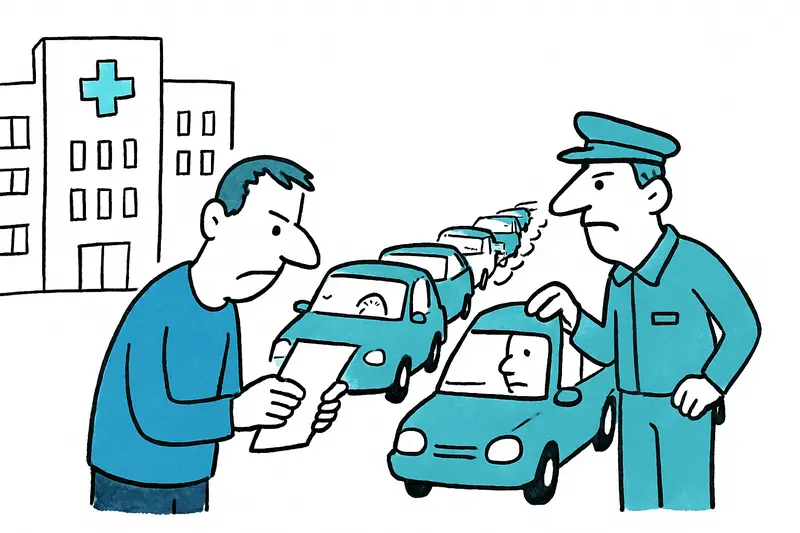
It's a morning like many others at the access road to Son Espases: heavy traffic on the Avinguda de Son Espases, an ambulance, the beeping of a small car, and people with medical records walking faster than their legs want to. Between the hospital doors and the sidewalk cars are often parked, sometimes only for 10 minutes — but that's enough to attract enforcement and, in the end, a parking ticket. Residents and visitors report fines of up to 200 euros, as detailed in Beyond the Parking Lottery: Son Espases and the Daily Parking Chaos. That causes anger and despair.
The situation is symptomatic of a recurring tension: medical urgency meets municipal enforcement of parking rules. There are clear regulations, but public spaces in front of a hospital are not ordinary parking areas. On a rainy afternoon you can see fathers lifting toddlers out of a car seat, elderly women with walkers, a young woman who doesn't want to miss her appointment near the emergency entrance — and later the ticket on the windscreen. These everyday scenes make it clear: this is not just about illegal parking, but about access to health services. Hospital pressure is documented in At the Limit in Son Espases: Operations on Standby — How the System Can Breathe Again.
Critical analysis: enforcement of parking rules seems strict, while the causes of the problem are too seldom addressed. Three levels stand out: first the capacity — the official number of public visitor parking spaces at the hospital cannot absorb all peak situations at short notice. Second, signage and communication — newcomers do not always find clearly marked short-stay zones for drop-off and pick-up. Similar problems with electronic parking signage have been reported in False readings in Port de Sóller: When the parking sign paralyzes harbor life. Third, traffic management and public transport connections — for many appointments the car is the only practical option because bus services are inconvenient or impractical when carrying luggage or accompanying someone.
What is missing from the public debate is a differentiation between deliberate long-term parking violations and urgent, short-term parking by patients, relatives or people with reduced mobility. Discussions often revolve around “tickets yes or no” — less often about organizational shortcomings. There is a lack of a voice that clearly states: those who cannot park risk delays to healthcare; those who are expected to follow rules need practical alternatives.
Concrete solutions that can be implemented immediately: first, a clearly marked short-stay zone in front of the main entrance — signposted, monitored, but with a 10–15 minute courtesy period for dropping off patients. Second, coordinated short-term parking permits for outpatient appointments, issued by the hospital to patients with reduced mobility. Third, a coordinated shuttle service from the nearest park-and-ride on the MA-13 on weekdays, especially in the mornings and afternoons when most appointments take place. Fourth, better signposted delivery and emergency routes so drivers do not park on sidewalks out of uncertainty.
Technical and organizational measures can complement this: sensors showing free visitor spaces, a real-time display on the clinic website, and temporarily available staff parking spaces that can be opened when patient numbers are high. Legally, the city administration could examine graded warnings — for example a warning on the first occasion, with hefty fines only for repeat offenses. Important is: enforce, yes, but with proportionality.
Who must act? It's a triangle of hospital administration, the city of Palma and the police authority. The hospital can communicate quickly and issue temporary permits. The city can adjust traffic signs and short-stay regulations. The police decide the level of enforcement. All three must cooperate, otherwise the cat-and-mouse game at the entrance will continue.
What has so far been underrepresented in the debate: the perspective of hospital staff who juggle the situation daily, and that of the neighborhood suffering from diverted traffic. Nor is there enough discussion about accessible mobility — barriers create not only fines but also access problems to medical care. Residents also cite safety concerns in nearby facilities, as reported in Parking Garage on Carrer Manacor: When Fear Becomes Part of the Walk to the Car.
A concrete, quickly implementable plan could look like this: the clinic immediately sets up a 15-minute short-stay zone and informs all upcoming patients by SMS; the city creates the legal basis for temporary visitor parking within a month; and the police department agrees with the clinic on a transitional arrangement that treats first offenses with a warning. In parallel, the clinic could test a two-week pilot shuttle.
On the street in front of Son Espases you occasionally hear the rustle of parking tickets — but also relieved sighs when a mother quickly brings her son to the outpatient unit. Such scenes show: it's not about abolishing rules, but making them more humane and purposeful. When someone steps out of the car in the morning, they don't want to break a regulation — they want an examination, a visit, an appointment.
Conclusion: parking fines are an instrument of traffic safety, but in front of a hospital they must be part of a finer strategy. Son Espases needs pragmatic, quickly implementable measures and clear agreements between clinic, city and police. Only then will people's health remain the priority — and not the fine on the windscreen.
Frequently asked questions
Can you get a parking ticket outside Son Espases in Mallorca even if you are only stopping briefly?
What should patients in Mallorca do if they need to be dropped off at Son Espases?
Is parking at Son Espases in Mallorca especially difficult at busy times?
How can Mallorca hospitals make parking near Son Espases fairer for patients?
Are there accessible parking options for people with reduced mobility at Son Espases in Mallorca?
Could a shuttle service help with parking at Son Espases in Mallorca?
Who is responsible for parking rules outside Son Espases in Palma?
What is the best way to avoid a parking fine when visiting Son Espases in Mallorca?
Similar News
Injured captain, big plans: Germania Mallorca before the away match in Consell
The newly founded FC Germania Mallorca travels to Consell on Saturday. Captain Bastian Müller is out injured, but coach ...

Palma, Palma de Mallorca, Palma‑Mallorca: What is it really about?
The debate over the city's name is more than grammar: it concerns identity, law and branding policy. A sober reality che...

Warning to Bathers: Nipping Fish in Cala Major and Other Coves — a Reality Check
In Cala Major and several beaches around Mallorca, bathers report painful “nips”. Who are the animals, why are they gett...

Rental Car Theft in El Arenal: What This Incident Reveals About Our Gaps
A teenager steals a running rental car in El Arenal, flees on foot, climbs over walls and is caught by the Guardia Civil...

Red Rope in Palma's Library: What Helps Against Selfie Tourism — and What's Missing
Palma's city library cordoned off an area with a red rope to keep selfie tourism away from reading and working activitie...
More to explore
Discover more interesting content

Can Cap de Bou

Townhouse Lleo 72
