
Parking Garage on Carrer Manacor: When Fear Becomes Part of the Walk to the Car
Residents report drug use, excrement and intimidation in the municipal parking garage on Carrer Manacor. The city administration promises cameras — but is that enough?
Parking Garage on Carrer Manacor: When Fear Becomes Part of the Walk to the Car
Guiding question: Why does an everyday walk to the car suddenly become a place many avoid?
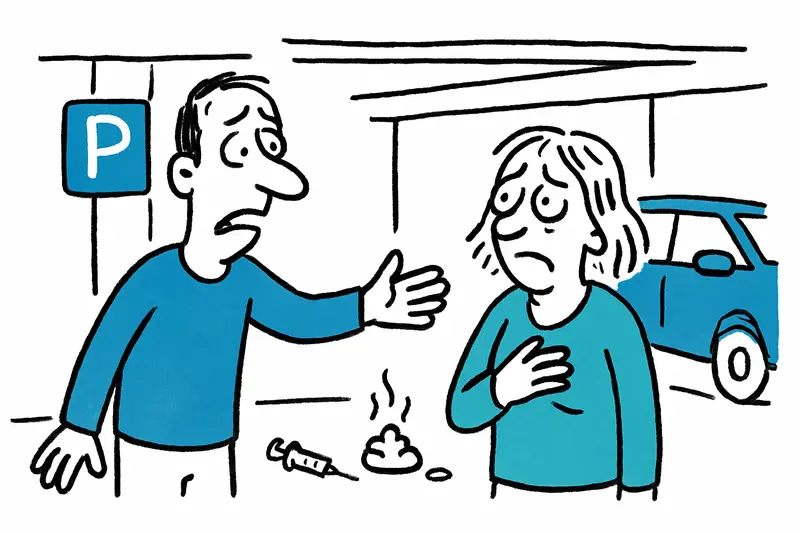
Early in the morning, when the corner bakery is just putting the first croissants into the oven and the garbage truck rumbles down the Passeig, some residents make their way to the parking garage on Carrer Manacor. What should be a short descent to their car has become for some an unpleasant, sometimes frightening experience: people sleeping in the garage, used syringes on the floor, stench and apparently also aggressive situations.
In short: residents and users describe the garage as a place where hygiene, safety and control are lost. The municipal parking company is said to have already announced the installation of additional cameras, while officials emphasize — according to conversations with residents — that their options are limited. The residents' demand is clear: a lockable access for the residential area and more presence, especially outside business hours.
Critical analysis
More cameras are a visible but often insufficient step. Cameras document what happens, but they do not automatically prevent contamination or drug use in secluded niches. A parking garage is not a suitable living space; when people seek shelter there for extended periods, it is a symptom: there is a lack of sleeping places, low-threshold help and regular social care. Security issues are publicly discussed as a matter of technical upgrades, while the social dimension is too easily overlooked, as reported in Beyond the Parking Lottery: Son Espases and the Daily Parking Chaos.
What is missing in the public discourse
The conversations focus on individual protective measures — cameras, lockable doors, cleaning. Hardly anyone asks for numbers: How many people regularly use the garage at night? Which help have they so far refused or received? And who takes responsibility if a user is threatened? Without this data, the debate remains superficial, as other local cases show in Pere Garau: Market and delivery traffic — why the coexistence became dangerous. Also rarely discussed is the role of social services: How often have street workers been called, what services are available for people with addiction problems and the homeless in Palma during the night?
An everyday scene from Palma
A Monday morning: pedestrians hurry past Carrer Manacor, voices mingling with the honking of buses. A mother pushes her pram, pauses briefly at the garage gate, looks in, pulls her jacket tighter and walks on. A couple with shopping bags takes the elevator; from the parking deck one hears distant voices, then a faint clattering — perhaps a can. Those few seconds are enough to describe the feeling: it's not a concrete threat that's the problem, but the unpredictability of the place.
Concrete approaches to solutions
- Immediate measures: better lighting, regular cleaning shifts, clearly visible emergency call buttons and sensors at secluded entrances. These steps help against neglect and get help to users faster.
- Short term: a lockable door for the area reserved exclusively for residents; controlled access permissions (ID, small chip card) prevent the parking deck from becoming a night shelter.
- Medium term: cooperation between the parking operators, the local police and social services — coordinated night patrols and visit cycles by street workers.
- Long term: expansion of shelter spaces and addiction support in Palma, binding protocols for municipal properties identified as "problem areas", and a transparent reporting and response system for residents' complaints, with wider planning debates such as From Lluís Sitjar to a Parking Lot: Palma Plans 131 Parking Spaces – Relief or Relocation?.
Why this matters
A parking garage is not a private parking lot behind closed gates; it is part of the urban fabric. When people seek refuge here and others become afraid, this touches on bigger questions: how does Palma deal with poverty, addiction and the shortage of housing? Security measures without social services are a bandage on an open wound.
Concise conclusion
Anyone who nervously runs down the steps in the morning to reach their car as quickly as possible only experiences the consequence of a complex problem. Cameras and cleaning services are necessary — but insufficient. Palma needs a plan that combines safety and social assistance. Otherwise the parking garage on Carrer Manacor will remain a warning sign: a place where the city administration reacts piecemeal while leaving the deeper causes untreated.
Frequently asked questions
Why can a parking garage in Palma feel unsafe at night?
What makes people avoid the Carrer Manacor parking garage in Palma?
Are cameras enough to improve safety in a Mallorca parking garage?
What should residents ask for if their parking garage in Palma feels unsafe?
Is it normal to find people sleeping in a parking garage in Palma?
What time of day does the Carrer Manacor garage feel most uncomfortable?
What long-term solutions are being discussed for parking garage problems in Palma?
How should a resident behave if a parking garage in Mallorca feels threatening?
Similar News
After Being Admitted to Hospital Again: Heinz Hoenig and the Questions We Should Ask in Mallorca
Long-time Mallorca resident Heinz Hoenig was admitted to hospital again. A clear “what next?” is missing from the covera...
Yellow Alert: Is Mallorca Prepared for the Next Rain Band?
Aemet has issued a yellow alert for the south, southwest and the island's interior. Thunderstorms and heavy rain are for...
Kegel brothers trial postponed: Why Mallorca must wait for a verdict
The trial of 13 German holidaymakers will not begin until May 2028. The long wait raises questions — for victims, defend...
Chaos on Palma's Runway: Why the Summer at the Airport Was So Disrupted
This summer laid bare where Palma airport is faltering: only just over half of departures were on time and seven percent...
Cocaine Offer on Ham Street: Why the Open Trade Should Ring Alarm Bells
In the middle of Pare Bartomeu Salvà a tourist was offered a packet of cocaine as part of a sunglasses deal. A short int...
More to explore
Discover more interesting content

Can Cap de Bou

Townhouse Lleo 72
