
Seizure on Board: How a Ryanair Plane in Linz Became an Enforcement Case
Seizure on Board: How a Ryanair Plane in Linz Became an Enforcement Case
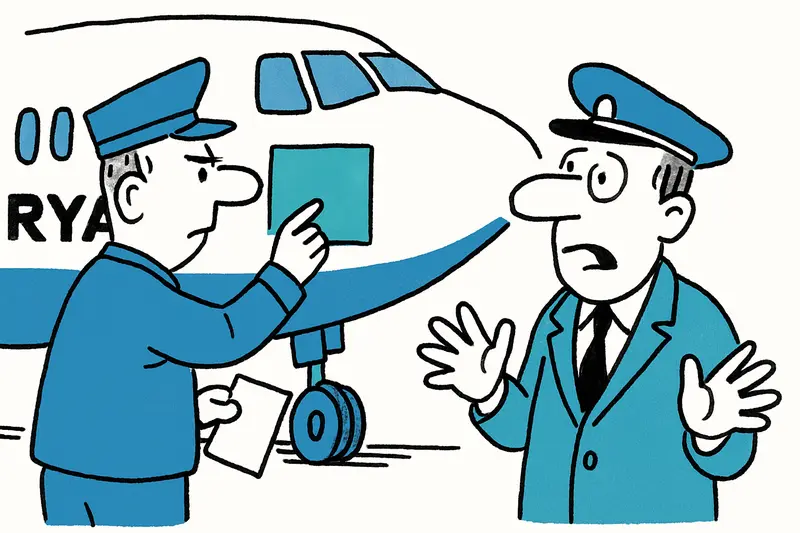
A bailiff is said to have affixed a seizure notice to a Ryanair Boeing in Linz after a passenger did not receive compensation. What does that mean practically for travelers and how do such enforcement actions work?
Seizure on Board: How a Ryanair Aircraft in Linz Became an Enforcement Case
Key question: How can a single compensation claim escalate so far that a bailiff approaches an aircraft — and what does this mean for holidaymakers in Mallorca?
The short version: A bailiff reportedly attached a seizure notice to a Ryanair aircraft at Linz Airport after a passenger's compensation claim apparently went unpaid. The dispute began with a long delay in summer 2024 and a comparatively small sum that is said to have grown to several hundred euros due to costs and interest. The airline denies that an aircraft was "taken out of service"; it refers to an administrative sticker and stresses that the aircraft in question is still in operation.
Critical analysis: On paper this sounds like a curious story from legal practice — in reality it exposes gaps in enforcement and consumer law. Related incidents, such as a female martial artist incident on a Ryanair flight and a case where a Ryanair aircraft was dazzled by a laser during approach, underline how operational challenges can complicate enforcement. Here are the central points: First, enforcement against movable property: an aircraft has value, but it is not a typical seizure object like a company car in a yard. Second, the enforceability of small claims across borders: one customer may win a claim but then apparently fail in the practical enforcement route. Third, the target of the enforcement action: why was there an attempt to collect the sum directly from the pilot? Cashless processes and aviation logistics make such actions odd — and embarrassing for all involved.
What is missing from the public debate: There is a lot of talk about the picture with the sticker, less about the underlying problem for travelers. Hardly anyone discusses how quickly and reliably EU-wide compensation claims (under the EU passenger rights (Regulation (EC) No 261/2004)) can actually be enforced if the airline does not pay. Also under-discussed is who bears the costs of coercive measures and how airports are allowed to organize such official actions. And: the practice of encountering a pilot on site as a "reachable contact person" shows how little enforcement bodies are prepared for aviation-specific particularities.
A small slice of Mallorca everyday life for context: On a windy morning along Passeig Mallorca, between coffee steam and the distant hum of an airport bus, taxi drivers and the receptionist of a small hotel talk about exactly these stories. Small incidents, such as a Ryanair plane turned back after takeoff due to toilet problems, add to the conversation. "There isn't a car in front of the hotel you can simply tow away," says one, while seagulls screech above the trees. Such conversations reflect a basic skepticism: rights on paper are good, their practical enforcement is often complicated.
Concrete solutions: 1) Create fast, EU-wide binding enforcement channels for passenger rights — for example via standardized seizure records that airports must register digitally. 2) Handle small claims through a conciliation and escrow mechanism: airlines would have to provide proof for pending claims or deposit into an escrow fund until cases are resolved. 3) Better training and binding procedural rules for bailiffs and airport staff so that official actions comply with aviation law and do not endanger operations. 4) Transparency obligations: when a bailiff marks an aircraft, the minimally necessary information should be public and traceable — without jeopardizing trade secrets.
Practical question: Must an aircraft marked with a seizure sticker remain grounded? No — in the present cases the marking does not automatically stop operations. But the economic consequence is still tangible: if the amount remains unpaid, compulsory auctioning can ultimately follow. For airlines this means reputational damage and legal risks. For those affected the question remains whether they will actually receive their money in the end.
Conclusion: The scene in Linz is more than a curious photo — it is a wake-up call. Passenger rights are important, but their enforcement must not depend on chance. Mallorca needs reliable travel partners and regulated procedures so that annoyances between departure and arrival do not end in bizarre enforcement actions. Whoever provides remedies here not only protects individual passengers but the trust in travel overall.
Frequently asked questions
What should I do if my Mallorca flight is delayed and I think I am owed compensation?
Can an airline in Europe ignore a passenger compensation claim?
Is Mallorca flight compensation under EU law easy to enforce?
What should I pack for a winter trip to Mallorca?
Can you still swim in Mallorca outside the main summer season?
What does a seizure notice on an aircraft mean at an airport?
Why are airport enforcement actions so complicated in cases involving airlines?
What can Mallorca travelers learn from airline enforcement disputes?
Similar News
Rental Car Theft in El Arenal: What This Incident Reveals About Our Gaps
A teenager steals a running rental car in El Arenal, flees on foot, climbs over walls and is caught by the Guardia Civil...

Red Rope in Palma's Library: What Helps Against Selfie Tourism — and What's Missing
Palma's city library cordoned off an area with a red rope to keep selfie tourism away from reading and working activitie...
Fort San Carlos: Museum, Harbor Dispute — and a Conflict That Demands Answers
The military museum at Fort San Carlos sits right on Palma's harbor, with unexpectedly quiet rooms filled with cannons a...
Old Town Under Pressure: When a Doorway Becomes a Sleeping and Shower Place
For months a woman has been living with a parasol, a clothes rack and personal belongings next to the social welfare off...
When Shopping Weighs Heavier: Mallorca Demands a Tax Pause on Food and Fuel
Rising prices are putting pressure on households and agriculture. The Balearic Islands are calling for temporary tax rel...
More to explore
Discover more interesting content

Can Cap de Bou

Townhouse Lleo 72
