
Magaluf Between Party and Police: Why an Arrest Operation Doesn't Tell the Whole Story
Magaluf Between Party and Police: Why an Arrest Operation Doesn't Tell the Whole Story
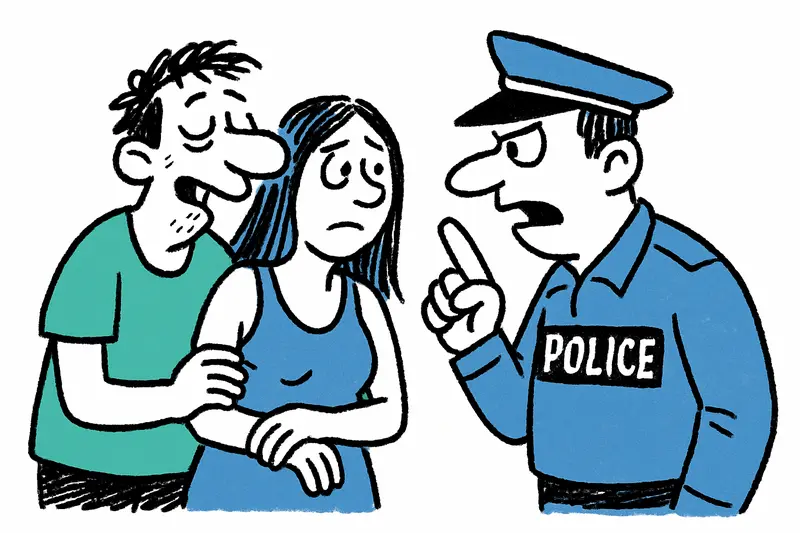
An early morning in Magaluf: A French tourist is arrested after the Guardia Civil intervenes on suspicion of sexual violence — and later released because the alleged victim told paramedics the encounter was consensual. A reality check on what is often overlooked in such cases and how the island should handle them.
Magaluf Between Party and Police: Why an Arrest Operation Doesn't Tell the Whole Story
An early intervention — and a quick change of account at the hospital
In the first hours of a mild morning along Magaluf after the beach discovery: When partying becomes a danger zone's promenade: the clubs' music still echoes through the streets, taxi doors slam, and a few empty beer cans roll across the sand. There the Guardia Civil stepped in and arrested a 26-year-old Frenchman after a witness reported seeing an apparently very drunk girl being pressured. The woman was taken to Son Espases in Palma for examination — and there she stated she had had consensual sex and did not want to press charges. The arrested man was then released.
The central question is both simple and difficult: How does a society respond when public protection needs and the wishes of the person involved diverge? The incident highlights an everyday but complicated intersection between prevention, law enforcement and individual autonomy.
Critical analysis: The police acted quickly on a tip from an eyewitness — which is often necessary in a party zone like Night raid at Playa de Palma: assessment, questions and what's missing. But speed alone does not solve the core problem. Intoxication complicates the assessment of consent and capacity. Initial medical findings, statements to paramedics and the later withdrawal or retraction of a complaint are not uncommon. Investigators face a dilemma: arrest to halt a potential crime, or wait and risk that a possible offence continues.
What is often missing from public debate is a sober distinction between suspicion, legal assessment and the emotional state of those involved after a traumatic event. Many headlines talk about perpetrators and victims, but fewer discuss forensic time windows, the responsibilities of forensic pathologists and the burden that an examination places on intoxicated people. The perspective of the witness is also rarely explored further: observing something does not automatically mean it was interpreted correctly. In the heat of a party night, situations can look very different when participants are sober.
A commonplace scene I often see: shortly after three in the morning Calle Punta Ballena is still crowded, security staff drag visitors away, and ambulances push through the throng. These are the same places where the next morning tourists lie on benches with sunburn and headaches — and the same streets where a misunderstanding can quickly become a report.
Concrete solutions: First, standardized, victim-centered initial protocols at beaches and party locations. When paramedics and police work together, interpreters and victim advocates should be available so statements are not distorted by language barriers. Second, mobile forensic units or trained teams in clinics like Son Espases that can assess intoxication, evidence and timing of sexual contacts professionally without retraumatizing the person involved. Third, clear training for police forces in resort areas — how to take reports, how to secure a scene without making premature arrests. Fourth, multilingual awareness campaigns in bars, taxi ranks and on beaches: consent is essential even at parties. Fifth, support measures for witnesses — anonymous reporting options and better on-site guidance.
What could be implemented immediately: more bilingual victim advocates on duty at night who can be present during examinations and inform those involved about rights, procedures and medical options. Also helpful: a fixed checklist for officers handling sexual offences with alcohol involvement — from evidence preservation to respectful documentation of statements.
Concise conclusion: Magaluf is not an isolated case but a hotspot where partying, alcohol and tourism collide. The swift intervention of the Guardia Civil can be necessary, as in Operation 'Chanquete' in Palma: A Clampdown on Trafficking — and What's Still Missing. But the response must go deeper than the surface. We need better procedures, more translators and advocates, and a public discussion that not only sensationalizes but explains: why arrests happen, why statements change and how the island can deal with these situations practically, humanely and in accordance with the rule of law.
Frequently asked questions
Why do police act so quickly in Magaluf when a nightlife incident is reported?
Can a sexual assault complaint in Mallorca be withdrawn after a hospital examination?
How does alcohol affect consent in Magaluf nightlife situations?
What should I do if I witness something worrying on a Mallorca beach or promenade?
What happens if someone is taken to Son Espases after a night out in Mallorca?
Why can witness reports be important but still not tell the full story in Magaluf?
What help should be available for people involved in a nightlife incident in Mallorca?
Is Magaluf just a party resort, or does it also need stronger safety protocols?
Similar News

More Electric Cars in the Balearic Islands: Sales Rise Sharply
Between January and August, 14,185 vehicles without petrol or diesel propulsion were sold — an increase of more than 40 ...
Autumn in Mallorca: What Truly Remains of Summer
The days grow shorter, the evenings cool — and yet more of summer lingers than you might think: sounds, recipes, people,...
Rescue operation at Tolleric: Why nighttime cliff parties become dangerous
A British holidaymaker fell about ten meters at the cliffs of Tolleric during the night, later climbed back up and was r...
Car accident on the MA-1: Mother and daughter on a bicycle struck by a fellow countryman – Who protects cyclists here?
On the MA-1 between Portopí and the Cala Major exit, a mother and her daughter on a bicycle were struck by a car. A para...
Smoke over the UIB: Who is responsible for the fire on the roof?
On Saturday afternoon a fire broke out on the roof of the Arxiduc Lluís Salvador building at the University of the Balea...
More to explore
Discover more interesting content

Can Cap de Bou

Townhouse Lleo 72
