
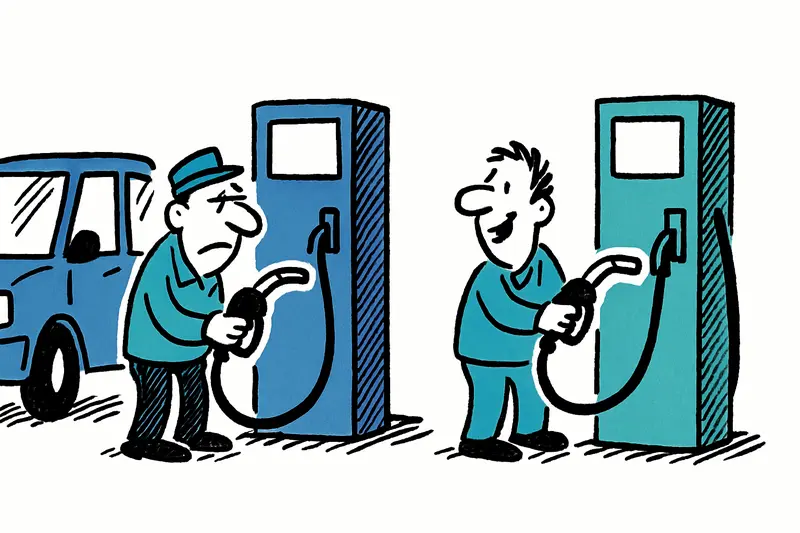
Two Pumps, Two Worlds: Why Mallorca Pays Differently at the Pump
Two Pumps, Two Worlds: Why Mallorca Pays Differently at the Pump
Why does diesel or petrol cost significantly less in Mallorca than in Germany, even though fuel arrives by tanker? A critical analysis looking at taxes, demand and everyday life on the island — plus solutions for greater transparency.
Two Pumps, Two Worlds: Why Mallorca Pays Differently at the Pump
A critical look with a clear key question
Key question: Why is the liter price at the pump in Mallorca, despite island logistics, significantly lower than what drivers have to pay in Germany?
When I stand at a Friday morning market stall in Santa Catalina and hear the vendors' voices, I simultaneously smell petrol from the nearby roundabout: scooters, rental cars, delivery drivers, all passing a small petrol station on the Avinguda. Right now, prices flash there that many a German commuter would find anachronistic. The figures from March 11 paint the picture: in German regions, Super E10 was around €2.01/liter, diesel about €2.13/liter. On the Balearic Islands, 95‑octane petrol was noted between €1.72 and €1.78, diesel mostly €1.65–1.72. These are real gaps — and they raise the question of whether only markets are at work here or whether politics, taxes and everyday life also play a role.
Briefly analysed: three levers pull on prices.
First: taxation. A large part of the retail price in Germany consists of excise duties, VAT and CO₂ costs that end up with the end consumer. Spain levies different rates on fuel than Germany; this automatically results in a lower base for price formation. That explains why a global oil price shock does not reach Mallorcan drivers to the same extent as German ones.
Second: demand, structure and competition. Mallorca is strongly shaped by tourism; petrol stations compete along access routes to ports and airports. Chains and local operators must set prices so that rental companies, landlords and locals are all served. Competition along certain roads — think of the MA‑10 approaches or the N‑340 before Cala Millor — pushes consumer prices down.
Third: price transmission and consumption patterns. In Germany diesel prices react especially strongly because commercial consumption (transport companies, construction, agriculture) is high. A price increase hits large fleets there and therefore passes through to the market price more quickly. In Mallorca the share of diesel in everyday cars is smaller; delivery fleets are smaller and partly organised seasonally. This dampens the immediate price surge.
What is often missing in the public discourse
The debate tends to focus on global headlines — conflicts, oil prices, Hormuz risks. That is important and understandable. But it is rarely discussed how strongly state levies and regional market structures filter or amplify price increases. Also underexposed: the role of long‑term contracts of large buyers and the time‑delayed effect of spot market movements on islands. While tourists take selfies at the Plaza de Cort, tariff clauses in trade contracts are already helping to decide how big the jump in the final price will be (see Why Food Is So Much More Expensive in the Balearic Islands — A Reality Check).
An everyday scene in Mallorca illustrates this well: around 6 p.m., when workers leave the neighbourhoods in Palma and delivery vans head for the lanes of La Llotja, I observe a taxi driver paying for 40 liters and briefly wondering about prices in Germany. He calculates that even a full 60‑liter tank here can be up to €24 cheaper than at many German pumps. The conversation ends with a shrug and the comment: "Good for the tourist, good for us, but not an explanation for everything." (Local price reports underline the variation; see Cheap refueling in Son Bugadelles: €1.408 per liter — what neighbors should know now.)
Concrete solutions and what politicians and consumers can do
1) More price transparency: Mandatory information at pumps should clearly break down what share is taxes, network costs and margin. For consumers the picture would be immediately clearer.
2) Strengthen regional price monitoring: A publicly accessible, daily portal for the Balearics could help detect price spikes faster and make seasonal patterns visible.
3) Promote infrastructure for alternative drives: fast chargers along tourist routes, complemented by local incentives for electric vehicles, reduce dependence on the fossil market.
4) Review fleet and logistics contracts: Municipalities and associations could review collective contracts for public procurement or bus operators to cushion price peaks.
5) Conduct an open tax policy debate: If mobility is socially and economically relevant, the question must be allowed of how consumption taxes are designed so that they do not disproportionately burden households or the regional economy (as discussed in Eco-tax in Mallorca: Extra Costs, Frustration — and What Is Truly Missing).
What this specifically means for Mallorca
The island currently benefits from a favourable price situation — this is an advantage for tourism and everyday life. At the same time, vulnerability to external shocks remains. A combination of transparency, smarter infrastructure and regional coordination would make the island more resilient without necessarily preventing short‑term price increases.
Concise conclusion
The difference between pumps in Palma and stations in German cities is no coincidence but the result of tax policy, demand profiles and local market mechanics. Anyone sitting at Plaça de Weyler enjoying the harbour view sees only the pump — not the tax formula behind it. Politicians and consumers can do a lot to make price fluctuations less painful: greater openness about price composition, stronger regional monitoring and investments in alternative mobility are better tools than waiting for the next oil price report.
Frequently asked questions
Why is petrol in Mallorca often cheaper than in Germany?
How much do fuel prices usually vary in Mallorca?
Is it normal for diesel to behave differently from petrol prices in Mallorca?
When is the best time to refuel in Mallorca if prices change often?
Why do petrol stations near Palma and tourist routes sometimes have lower prices?
Do fuel prices in Mallorca affect tourists as much as locals?
What can Mallorca do to make fuel prices less sensitive to outside shocks?
Should I expect Mallorca fuel prices to stay lower than in Germany?
Similar News
Palma, Palma de Mallorca, Palma‑Mallorca: What is it really about?
The debate over the city's name is more than grammar: it concerns identity, law and branding policy. A sober reality che...

Warning to Bathers: Nipping Fish in Cala Major and Other Coves — a Reality Check
In Cala Major and several beaches around Mallorca, bathers report painful “nips”. Who are the animals, why are they gett...

Rental Car Theft in El Arenal: What This Incident Reveals About Our Gaps
A teenager steals a running rental car in El Arenal, flees on foot, climbs over walls and is caught by the Guardia Civil...

Red Rope in Palma's Library: What Helps Against Selfie Tourism — and What's Missing
Palma's city library cordoned off an area with a red rope to keep selfie tourism away from reading and working activitie...

Fort San Carlos: Museum, Harbor Dispute — and a Conflict That Demands Answers
The military museum at Fort San Carlos sits right on Palma's harbor, with unexpectedly quiet rooms filled with cannons a...
More to explore
Discover more interesting content

Can Cap de Bou

Townhouse Lleo 72
