
Suitcase sets off alarm: What the incident at Palma Airport reveals about our security culture
Suitcase sets off alarm: What the incident at Palma Airport reveals about our security culture
An unattended suitcase in the afternoon triggered the anti-terror protocol at Palma Airport. Why such scenes happen and how we can make them less nerve-wracking.
Suitcase sets off alarm: What the incident at Palma Airport reveals about our security culture
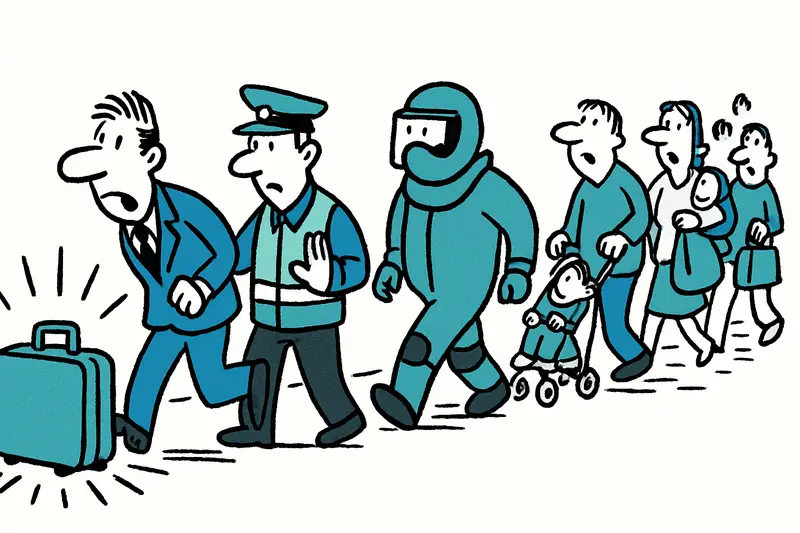
On New Year's afternoon, around 4 p.m., an abandoned suitcase briefly turned the departure hall of Palma Airport into a stage of collective tension: announcements over the loudspeaker, police officers in yellow vests, bomb disposal experts, and people with bags and prams being redirected at a snail's pace. Aena later confirmed that the anti-terror protocol had been triggered and a man was arrested.
Key question
Why does leaving a piece of luggage escalate so quickly into a major security alert — and how can we prevent routine from turning into panic?
Critical analysis
Airports are loud, hectic places. Between duty-free shops, rolling suitcases and loudspeaker announcements, mistakes happen. A suitcase that exceeds carry-on dimensions and therefore cannot pass through security is usually not a crime; the tension around such checks has been noted in Ryanair Hand Luggage Checks: Between Efficiency and Frustration at Palma Airport. But if a person leaves the suitcase and hurriedly runs to the gate, suspicion arises immediately. Security forces then have to act according to protocol: cordon off, inspect, call in specialists — which costs time and nerves. The result is stressed travelers and significant operational disruptions, a dynamic explored in Palma: Why the security checks become a test of patience.
What is missing from the public discourse
The public conversation often focuses only on the visible drama: bomb disposal experts, an arrest, long queues. High-profile incidents like the Hidden in the lavatory: the Zurich stowaway and what it means for Mallorca travelers also shape perceptions. Less attention is paid to why travelers behave the way they do in such moments — time pressure, language barriers, lack of knowledge about the rules. Rarely discussed is how often false alarms are provoked by unclear signage, insufficient staff presence or contradictory instructions. Anyone who shops regularly in Palma or drives to the airport along Avenida Gabriel Roca knows the peak times: in those moments a bit more information is decisive.
Everyday scene from Palma
Imagine the scene: buses roar on the parking level outside, a taxi drops off, inside it smells of freshly brewed coffee from the kiosk. A Russian-speaking family anxiously counts boarding passes, an older Mallorcan pauses at the duty-free, young couples scroll through their phones. Amid these everyday noises a misunderstanding is enough — a wrong word, an oversized suitcase, late boarding — and normal hustle tips into a state of alert, as in Carry-On Dispute at the Emergency Exit: Why a Loud Row Reveals More Than Bad Manners.
Concrete solutions
1) Visible information campaign: clear pictograms at entrances and on signs, notices in several languages and short video loops on screens with the main baggage rules. 2) More staff during peak times: a staff member directly at the X-ray machine who actively points out oversized luggage immediately reduces misunderstandings. 3) Rapid intervention zone: a small area near security where luggage can be temporarily stored and logged prevents the automatic activation of the highest alarm level for allegedly unattended baggage. 4) Behavioral prevention measures: advertising campaigns, boarding checklists and clear consequences for negligent behavior (not as punishment, but as a deterrent) help reduce repeat incidents. 5) Better communication between the operator and security forces: standardized decision trees for when technical experts need to be called in can save unnecessary deployments.
Why this is not just a question of cost
It's about trust. If travelers feel that every little thing can lead to a panic measure, their behavior changes: more haste, more uncertainty, more risky behavior. On the other hand, security personnel are bound by strict protocols — they act not out of overreaction but out of responsibility. The challenge is to bring both together: effective security without unnecessary escalation.
Pointed conclusion
The incident in Palma was not a spectacular attack — but a clear wake-up call. If we want to prevent airports from becoming a nerve test for travelers, we need less panic and more planning: clear guidance, sufficient staff at peak times and pragmatic interim solutions for luggage. Then loudspeaker announcements remain a notice about delays and not the start of a major exercise.
Frequently asked questions
What happens at Palma Airport if a suitcase is left unattended?
Why do security alerts at Palma Airport escalate so fast?
What should I do if my luggage is too large for carry-on rules at Palma Airport?
How can travelers avoid misunderstandings at Palma Airport security?
Is Palma Airport especially busy at certain times of day?
What are the best tips for packing before flying from Mallorca?
What does the security response at Palma Airport usually involve?
Why do small mistakes at airports in Mallorca sometimes cause so much disruption?
Similar News
Palma, Palma de Mallorca, Palma‑Mallorca: What is it really about?
The debate over the city's name is more than grammar: it concerns identity, law and branding policy. A sober reality che...
Warning to Bathers: Nipping Fish in Cala Major and Other Coves — a Reality Check
In Cala Major and several beaches around Mallorca, bathers report painful “nips”. Who are the animals, why are they gett...

Rental Car Theft in El Arenal: What This Incident Reveals About Our Gaps
A teenager steals a running rental car in El Arenal, flees on foot, climbs over walls and is caught by the Guardia Civil...

Red Rope in Palma's Library: What Helps Against Selfie Tourism — and What's Missing
Palma's city library cordoned off an area with a red rope to keep selfie tourism away from reading and working activitie...

Fort San Carlos: Museum, Harbor Dispute — and a Conflict That Demands Answers
The military museum at Fort San Carlos sits right on Palma's harbor, with unexpectedly quiet rooms filled with cannons a...
More to explore
Discover more interesting content

Can Cap de Bou

Townhouse Lleo 72
