
Black Ice and Snow in Germany: Why Mallorca Travelers Are Left on Hold
Black Ice and Snow in Germany: Why Mallorca Travelers Are Left on Hold
Snow and black ice in Germany delayed numerous connections to Mallorca at the start of the week. Why de-icing, staff shortages and poor communication lengthen waiting times — and what travelers on the island can practically do now.
Black Ice and Snow in Germany: Why Mallorca Travelers Are Left on Hold
Key question: Why are de-icing and warnings not enough — and what practical steps can those affected take on site?
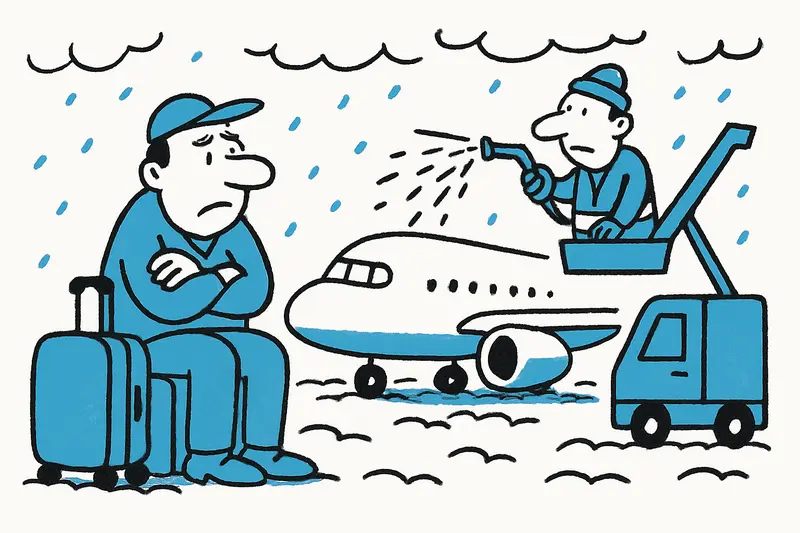
The start of the week in Germany brought up to 15 centimeters of fresh snow and widespread risk of black ice. For travelers who wanted to fly to Mallorca or return from the island, the snowfall had tangible consequences: at airports like BER and Nuremberg, aircraft piled up on Monday and departures were delayed by several hours in some cases because planes had to be de-iced before takeoff and ground staff worked under difficult conditions, as described in Hours-long delay at BER – what Mallorca travelers need to know.
In short: the technical process of de-icing takes time, access roads to the airport are more slippery, and even well-meaning airport advice to allow more time does not solve the problem for individual passengers. When boards show 180 minutes of delay, families with children on suitcases, commuters in suits and pensioners in heavy coats end up crowded together in waiting halls — at train stations and in Palma you then see the first affected guests who postpone connections at restaurants or wait at the bus stop.
Critical analysis: de-icing is expensive and labor-intensive, but it cannot be sped up arbitrarily. Aircraft must be completely free of ice and snow before departure, otherwise safety is at risk. At the same time, weather events create a cascade effect: delayed landings block stands, there is a lack of space for parallel de-icing operations, and ground staff themselves arrive later for their shifts. Airports with tight apron space and few de-icing vehicles hit capacity limits faster. All of this together explains why, from the travelers' perspective, waiting is often the only option — even though on social media and in chat groups the impression frequently arises that airlines simply did not plan properly. This perception is echoed by incidents such as Delayed Mallorca–Berlin Flight: Landing in Hanover, Continued by Bus.
What is too often missing from public debate: first, the perspective of ground crews. These teams work for hours in low temperatures and on slippery ramps; their capacity is limited. Second, the role of access infrastructure: slippery roads and train cancellations amplify the delays. Third, the quality of information — not only whether a flight is delayed, but concrete guidance on rebooking, hotel options or reimbursements is often communicated only on request. And fourth: travelers' rights are not familiar to a large part of the public; many do not know when rebooking, meals or reimbursement are due.
Concrete everyday scene from Mallorca: In the afternoon in Palma, on the Passeig Mallorca, a young couple with two oversized suitcases sits in front of a café. They arrived at Son Sant Joan airport but learned that their return flight to Munich has been delayed by several hours. Amid the noise of buses and the conversations at the tables, their phones keep ringing: WhatsApp messages from the airline, a call from the taxi company wanting to postpone departure. In such moments it becomes clear how stressful this weather situation is for people on the move — and how limited visible help on site often remains.
Practical recommendations for those affected: 1) Check flight status continuously — not only the airline app but also the airport's announcements; many airports operate live tickers. 2) Build in buffers: in severe weather it can be worth traveling to the airport a day earlier if possible. 3) Keep travel documents and receipts ready: later reimbursements or claims under EU Regulation 261/2004 require proof. 4) Review flexible tickets and insurance: some fare types allow free rebooking; trip cancellation or interruption insurance can provide additional protection. 5) In case of long waits: ask about meal or hotel offers — both from the airline and at the airport service desk. 6) On the island: those picking up guests from the airport should allow for waiting time or use an app to be notified instead of staying unnecessarily close to the curb.
Concrete solutions that authorities and operators should initiate: better coordination between rail/bus operators and airports on extreme-weather days; plan additional de-icing capacity during peak times; transparent, automated information chains that not only provide delay minutes but also actionable recommendations and contact options for rebooking; and an easily accessible collection of travelers' rights in multiple languages at all service points.
A look back: in early January the winter storm "Elli" already caused restrictions to air traffic, as detailed in Severe storm halts Palma Airport: Why delays hit inter-island services and travelers especially hard. Such events recur — they are now part of travel planning in the cold season. That makes it all the more important that airports and airlines not only react in the short term but systematically work on capacity, information and customer protection.
Punchy conclusion: technology and safety come first — that is clear. But safety must not become an excuse for poor information. For travelers this means: inform yourself early, plan buffers, collect receipts. For those responsible this means: not only clear and de-ice, but communicate and coordinate. Otherwise the end result will be the image of a long queue in a hall — and the certainty that the same problems will repeat at the next snowfall.
Frequently asked questions
Why do Mallorca flights get delayed when there is snow in Germany?
What should I do if my Mallorca flight is delayed for several hours?
Can I get meals or a hotel if my Mallorca flight is delayed by bad weather?
Should I go to the airport earlier in Mallorca when bad weather is forecast in Germany?
How does black ice in Germany affect airport operations for Mallorca travellers?
What rights do Mallorca passengers have during winter flight delays in the EU?
Is Palma Airport affected when flights from Germany are delayed by snow?
What is the best way to handle a delayed pickup at Mallorca Airport?
Similar News

More water than last year: Mallorca's reservoirs breathe easier
September rain refilled the Tramuntana's reserves: overall fill around 35 percent, Cúber at 40.42 percent, Gorg Blau at ...

Three Luxury Hotels in Banyalbufar: Lots of Money, Many Questions
A Danish investor plans three exclusive accommodations in Banyalbufar — including the historic Son Valentí. The announce...
2.1 tonnes of cocaine on sailing yacht off Spain's coast – a reality check for the coastguard
A 14-metre yacht was seized with 2.1 tonnes of cocaine. Who monitors the ports, how does the international hunt succeed ...

Heat Bonus in Mallorca: 100 Euros Extra for Outdoor Staff at MarSenses
MarSenses pays employees who worked outdoors in August an extra €100 as recognition. Lighter uniforms, reduced hours for...
Renovating in Mallorca: What You Really Can Do Without Neighbour Consent
Many think they can do whatever they want in their apartment. That's partly true — but only as long as structural elemen...
More to explore
Discover more interesting content

Can Cap de Bou

Townhouse Lleo 72
