
More Blue Flags — but what's really behind them? A reality check for Mallorca's beaches
More Blue Flags — but what's really behind them? A reality check for Mallorca's beaches
The Balearic Islands report 33 beaches with the Blue Flag — an increase of one. What the award means, which beaches have returned and why the quality label doesn't answer all questions.
More Blue Flags — but what's really behind them? A reality check for Mallorca's beaches
Key question: Do Blue Flags really strengthen environmental protection and everyday safety — or can problems be papered over with a small pennant?
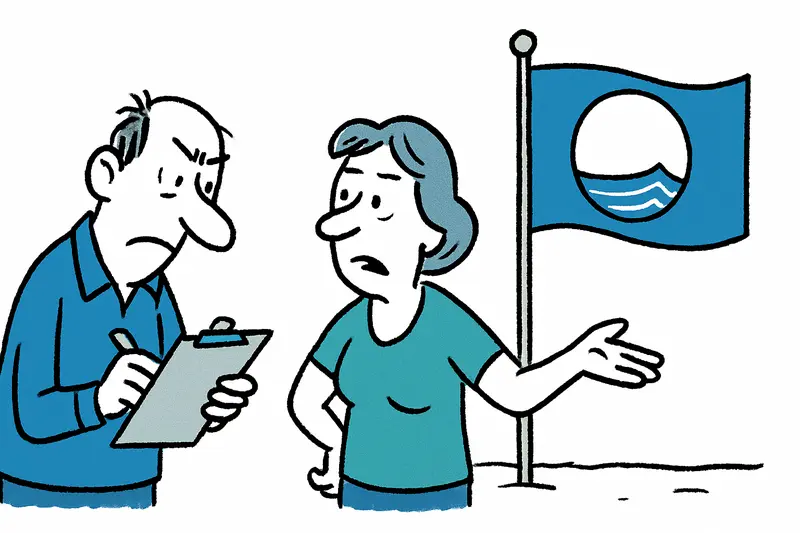
The tally is simple: this year the Balearic Islands are said to have 33 beaches flying the Blue Flag, one more than last year; in addition there are 14 marinas (Fewer Blue Flags in Mallorca: What Does That Say About Our Beaches?). On Mallorca, among others, Cala Major in Palma as well as Es Port and Es Dolç in Ses Salines are back on the list. Praise is noted for lifeguard services at Playa de Muro and for improved access in Alcúdia. At the same time, some municipalities did not apply for the award, and critics complain that participation fees act as a ticket to the tests.
Sounds good, but my impression from a stroll along the beach is ambivalent. On a cool morning along Palma's Paseo Marítimo I hear delivery vans, the clatter of chairs in a still-closed chiringuito and I see a young family heading for the sand. A small Blue Flag flutters on a palm tree, lifeguard towers gleam new. At the same time I sometimes smell diesel from parked buses, and in a shallow bay there are isolated pieces of plastic that the wind hasn't blown away. This is the real Mallorca: beautiful scenes and tangible construction sites side by side.
Critical analysis: The Blue Flag programme stands for environmental standards, safety and sustainable use of the coast. Those are sensible criteria. But the award is not a cure-all. First: who pays the participation fee, and to what extent does that influence the chances of smaller municipalities? If tests are only open to applicants, a selection bias arises: well-connected or wealthier places become visible, smaller coves remain invisible, a problem explored in Who counts us on the beach? When sensors decide how Mallorca is distributed — the same applies to marinas: the list names 14 sport harbors, but what about private moorings?
Second: the flag measures conditions at a specific point in time and certain indicators. It does not replace continuous investment in sewage systems, waste management or long-term personnel planning for lifeguard services. The mention of Playa de Muro as an example of good lifeguard service is important, but a strong summer service must be maintained outside the high season or at least sustainably financed so that standards do not apply for only three months.
Third: transparency is often lacking: what are the actual costs (fees, personnel, infrastructure) and who bears them? These figures rarely appear in public debate. Even less discussed is how the tests interact with burdens such as microplastics, mass-tourism peaks and climate change. A Blue Flag says nothing about what a beach will look like in ten years.
What is missing in the discourse: closeness to citizens and everyday perspectives. In conversations with beach vendors, older residents and sailors I hear questions about long-term upkeep, water checks outside the season and fair access for locals. Some municipalities obviously do not apply for the award — for cost reasons or because other priorities are set. That too often remains a footnote in official reporting.
Concrete solutions: first, the awarding practice should become more transparent. A public breakdown of fees, criteria and inspection intervals would be a start. Second, funding programs could specifically support small and coastal municipalities so they can participate without high barriers. Third, a two-stage process makes sense: short-term inspections for the award plus binding lists of medium-term measures (sewage, waste, accessibility) that must be anchored in budget plans. Fourth: regional cooperation instead of competition — a network of municipalities could share lifeguard services, equipment and know-how, instead of each beach paying alone.
A practical example would be a pilot project at a small cove: free participation in the inspection procedure for two years, combined with shared financing for an accessible ramp and a waste collection point. Results could then be made public — creating reliable knowledge instead of just a list of pennants.
An everyday image to close: on a late afternoon at Playa de Muro you can see lifeguards polishing their station, neighbors walking home with shopping bags, and young people briefly touching the sea on their way to the bus stop. The Blue Flag is there and has a calming effect. But it must not be the only project we rely on. Otherwise it remains a pretty sign on the mast while the real problems keep working under the sand.
Conclusion: The additional Blue Flags are not a blemish — they show that standards are being met in many places. The reality check is clear: the island needs more transparency, fair access to the inspection process and sustainable financing. Then the pennant will have real substance, and not only good PR for the summer.
Frequently asked questions
What does a Blue Flag actually mean for a beach in Mallorca?
Are Mallorca beaches with Blue Flags always cleaner and safer?
Is it a good idea to swim in Mallorca in early or late season?
What should I pack for a beach day in Mallorca beyond sunscreen and swimwear?
Why do some Mallorca municipalities not apply for Blue Flags?
Is Playa de Muro a good beach for families in Mallorca?
What is special about Cala Major in Palma, Mallorca?
Are Es Port and Es Dolç in Ses Salines worth visiting on Mallorca?
Similar News

When the Wallet Becomes a Danger: Attack in Peguera and Lessons for Mallorca
In Peguera, two women are said to have stolen the wallet from a 75-year-old German couple. When the victim intervened, t...
Plata stays Plata: Young people take over, Llonguets remain
A small bar on Carrer de l'Argenteria will continue: Tolo Serra hands the place over to young Mallorcans at the end of t...

Unnoticed in the Luggage Compartment: How a Boy Traveled More Than 100 Kilometers in a Team Bus
A minor traveled in the undercarriage of a team bus for more than 100 kilometers until his cries for help were heard. A ...

Cap Vermell Grand: Second Michelin Key – a Gift for the East
The Cap Vermell Grand in Capdepera has been awarded its second Michelin key. For the region this elevates the luxury off...
Eurowings lets four aircraft carry names – a friendly idea that also reaches Mallorca
Eurowings is launching a campaign: four Airbus A320s are to carry the first names of people who help others in everyday ...
More to explore
Discover more interesting content

Can Cap de Bou

Townhouse Lleo 72
