
Occupied Bank Branch in Son Roca: Who Takes Responsibility for the Housing Shortage?
Occupied Bank Branch in Son Roca: Who Takes Responsibility for the Housing Shortage?
A former bank at the corner of Cap de Formentor and Cap Enderrocat has housed changing families for years. The scene reveals more than a single squatting problem: it is a symptom of missing answers on Mallorca.
Occupied Bank Branch in Son Roca: Who Takes Responsibility for the Housing Shortage?
A vacant bank premises in the middle of Palma has stood open for years — most recently a family with children lives there
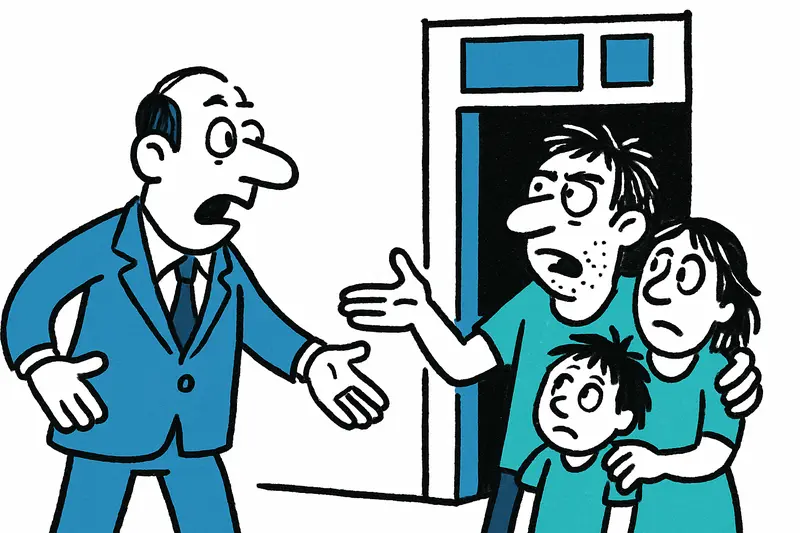
At the corner of Cap de Formentor and Cap Enderrocat the building sits quietly, the sundials on the facades casting long afternoon shadows. Through the broken entrance door you can see sofas, beds, a table and a flickering TV. Toys lie scattered on the asphalt. Neighbors watch the activity over coffee in the small bakery on the corner, buses rumble past, and in the evenings the building feels more a part of the street than ever before.
The central question is simple and urgent: who bears responsibility when vacant spaces become emergency shelters — the city, the owners, or society as a whole? And which answers are missing in the debate while a family with school-age children seeks improvised safety?
The fact is: in the former bank office several different groups have lived there in recent years. According to neighbors, a family of around four adults and two minors currently stays there. There appears to be electricity, but no running water. The residents are described as unobtrusive; they do not make noise, say locals, and everyday life with children's play and evenings watching television has become routine here.
Viewed critically, this case reveals several problem areas at once. First, many properties remain unused for long periods — bank or commercial premises after closure, apartments without tenants. Vacancies put pressure on an already tight housing market, while there are no mechanisms to make these empty spaces socially or locally usable; this dynamic contributes to situations such as families dividing apartments on the Balearic Islands. Second, the legal and bureaucratic handling of occupations is complicated: quick solutions for affected families are rare, as illustrated when Manacor cleared a makeshift settlement of eleven rented units, which leads to prolonged situations in which improvised living arrangements arise.
What is often missing from the public discourse is the perspective of the people behind the broken doors. How did they end up here, which avenues have they tried — rental listings, social services, relatives? Also seldom heard are the specific obstacles to repurposing vacant properties: who is legally responsible for connecting water, who for utility disconnections, what reporting obligations for long-term vacancies really exist? And finally: what role do financial institutions or owners play when they leave properties fallow for long periods?
A scene from everyday life: it is a Tuesday noon, a light breeze smells of the sea, a bicycle bell rings, a mother pushes a child's bike past the corner and casts a cautious glance at the open door. A neighbor from the house across the street says, "They spend the day here, the children go to school, we hardly notice them." This observation reflects a quiet habituation — no protest, no declarations of solidarity, rather an avoidance behavior: people look, register, and move on; similar tensions have been reported in cases of squatters in Santa Margalida causing trouble in half-finished housing blocks.
Concrete solutions must act both in the short term and structurally. In the short term, the administration could check how families without water connections can be helped immediately — mobile drinking water supplies, hygiene stations, access to social services and school enrollment for the children. Mediation by local facilitators between owners and residents can prevent escalation and create transitional solutions.
In the long run, binding instruments against long-term vacancy are needed: a public inventory of empty properties, legal incentives or sanctions when owners leave property unused for years, and grant programs that make conversions to social housing easier. Equally important are affordable rental models, accelerated building approvals for small housing units, and transparent communication about who owns properties and what obligations follow.
Politics and administration must take local voices more seriously — not only when images appear in newspapers, but continuously. For Son Roca this means: define clear responsibilities, let social services do outreach work and show owners ways to end vacancies responsibly without suddenly pushing working families into the street.
To be blunt: if the response to housing shortage is only police action or lengthy eviction procedures, we miss the chance to turn an emergency into a sustainable solution. The bank branch on Cap de Formentor may be just one building, but it is also a symptom — and an invitation to debate empty space, social responsibility and how Palma deals with its own spaces.
Conclusion: The occupied branch is not an isolated crime story, but a warning sign. Whoever acts now will decide whether the neighborhood will be shaped in future by improvised mutual aid or by systematic, planned solutions.
Frequently asked questions
What is the weather like in Mallorca in April?
Can you swim in Mallorca in April?
Is April a good time to visit Mallorca?
What should I pack for Mallorca in April?
What is Port Adriano like in Mallorca?
What can you do in Palma de Mallorca on a rainy day?
Is Mallorca warm enough for the beach in spring?
What are the best things to do in Mallorca in April?
Similar News
German tourist dies in Sa Calobra – a reality check for emergencies on Mallorca's beaches
A 40-year-old tourist died at the Torrent de Pareis. The emergency call, a doctor who happened to be present, a defibril...
Deadly Tractor Accident in Bunyola: What Needs to Be Done Now
In a work accident on an estate near Bunyola, a roughly 40-year-old man lost his life. His wife and a small child were o...
Head-first dive into the shallow part of Cala Fonoll: An accident and the unresolved question of responsibility
A young tourist dove into Cala Fonoll and was seriously injured. Key question: Why are clear warning signs missing at da...
Mistaken identity with fatal consequences: Brutal assault in S'Aranjassa — what's missing in the follow-up?
At S'Aranjassa a visitor to a finca was tied up, beaten and thrown out of a van. Three men have been arrested, including...
High heel slips, car accelerates: accident on Camí de Son Hugo
A woman lost a high-heeled shoe on the forecourt of the sports facility at Camí de Son Hugo. The car accelerated, mounte...
More to explore
Discover more interesting content

Can Cap de Bou

Townhouse Lleo 72
