
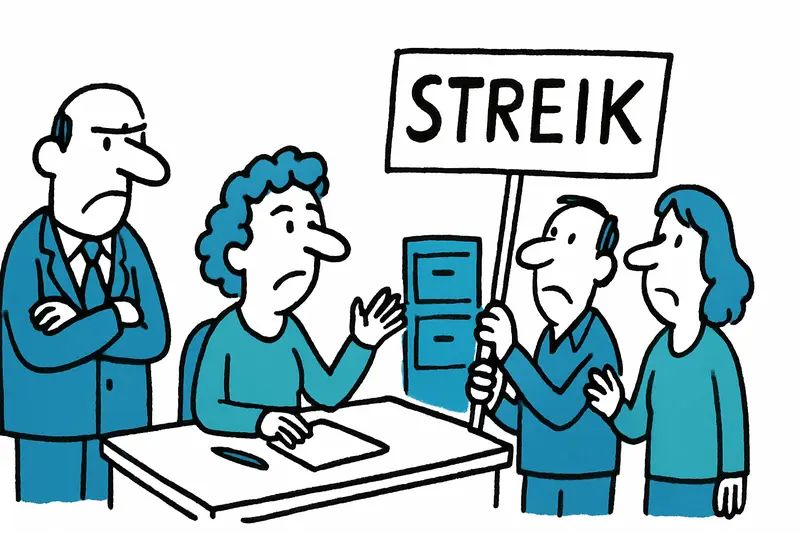
Partial Strikes at the Tax Agency: Why Mallorca's Offices Are Often Empty
Partial Strikes at the Tax Agency: Why Mallorca's Offices Are Often Empty
Employees of the Agencia Tributaria are staging hour-long work stoppages today. On Mallorca, high rents make the problem worse. A reality check: what this means for citizens and administration — and what solutions exist.
Partial Strikes at the Tax Agency: Why Mallorca's Offices Are Often Empty
Key question: Are hour-long walkouts enough to solve the underlying problems in the offices?
Today employees of Spain's tax agency AEAT stopped work between 11 a.m. and 12 p.m. The union CSIF cites classic reasons: too few staff, too much work, and insufficient pay. On the Balearic Islands an additional, very Mallorcan obstacle emerges: rents. Many civil servants do not consider moving permanently to the island — or after some time they move back to the mainland in frustration. Further partial strikes are announced for the end of May, and local reporting has noted widespread closures in civic offices: Strike paralyzes Palma's citizen offices — only emergency service at Plaça de Cort.
If you walk down Avinguda d'Argentina in Palma on a windy morning, you hear not only the distant rush of cars but also occasional whispers from people waiting for an appointment outside a tax office. An older woman clutches an envelope of receipts to her chest; a young self-employed person rummages through his papers in frustration. They all feel the delays when forms are processed late or refunds take time to arrive.
Critical analysis: Today's partial strikes are symptomatic, not the disease itself. One hour of stoppage puts targeted pressure on the administration, signals discontent and costs time — for colleagues and for citizens. But the deeper causes are structural: low pay meets a growing workload; technical modernization is underway but not fast enough to truly ease processes; and high rental prices prevent enough qualified staff from coming to or staying on Mallorca.
What is often missing from public debate is the perspective of long-term staff retention. There is discussion about single pay demands or temporary increases in staff, but rarely about retention anchors such as housing, childcare, commuter incentives or local training opportunities. Also underexposed is the burden on small businesses and freelancers who rely on quick tax decisions — from seasonal businesses that need refunds to craftsmen who must plan liquidity.
Concrete consequences on the island: delayed refunds can endanger the liquidity of small companies, appointments in cadastral and land registry services can delay real estate transactions, and for private individuals it means more trips to offices, more phone calls and more uncertainty. The hour of strike may seem small in numbers, but such delays accumulate and make daily life harder.
Everyday scene from Mallorca: Imagine an office early in the morning. The heating in one of the older public buildings is still ticking, outside seagulls chirp at the harbor. A young caseworker sighs as she processes her third application of the day because a colleague is sick and not replaced. Outside sits a man from the Tramuntana mountains who had to wait hours for the bus, an issue echoed during the recent Ten Days of Bus Strike in Mallorca: How Long Can the Island Endure It?. These scenes are not theoretical — they play out in Palma's administrative centers, in Inca, Manacor and beyond.
Concrete solutions: 1) Housing allowances or temporary staff accommodation for hard-to-fill positions on the islands. 2) Targeted base salary increases combined with clear career and training pathways to make the profession attractive to young people. 3) More home-office and hybrid models where data protection and process security allow — this reduces commuting pressure and makes island positions more appealing. 4) Accelerated digitalization focusing on process simplification rather than only new portals: fewer forms, more automated checks, clearer deadlines. 5) Cooperation between the state and local institutions (e.g. Consell (island council), municipalities) for childcare and mobility support so social infrastructure matches needs.
Especially important: short-term strikes must lead into marathon negotiations that deliver concrete, verifiable steps. Otherwise they only produce further frustration on both sides — among employees and among citizens stuck between the doors.
What should happen now: Negotiation rounds must produce binding timelines — not just more positions on paper but firm commitments on staffing plans, transparent criteria for regional supplements and a roadmap for process simplification. Local authorities could provide immediate relief with small, pragmatic measures: extend opening hours on bottleneck days, offer mobile advisory services in affected municipalities and set up a hotline shift for urgent cases.
Conclusion: The hour of striking is a signal, not the root cause. On Mallorca it reveals an interplay of national administrative deficits and local living costs. Anyone who wants to stabilize the situation long-term must link personnel policy with housing and infrastructure policy. Otherwise in a few months we will see the same scenes again in front of the office: people with envelopes, exasperated caseworkers and the same question hanging in Palma's streets: why can no one find a way to stay here permanently?
Frequently asked questions
Why are Mallorca's tax offices often slow or short-staffed?
Do short tax office strikes in Mallorca affect everyday residents?
When are further tax agency strikes planned in Mallorca?
What should I expect if I have an appointment at a tax office in Palma or Inca?
Why is it hard to keep civil servants in Mallorca?
How do tax office delays affect small businesses in Mallorca?
What changes could make Mallorca’s tax offices work better?
Is digitalization enough to fix the problems at Mallorca’s tax offices?
Similar News
German tourist dies in Sa Calobra – a reality check for emergencies on Mallorca's beaches
A 40-year-old tourist died at the Torrent de Pareis. The emergency call, a doctor who happened to be present, a defibril...
Deadly Tractor Accident in Bunyola: What Needs to Be Done Now
In a work accident on an estate near Bunyola, a roughly 40-year-old man lost his life. His wife and a small child were o...
Head-first dive into the shallow part of Cala Fonoll: An accident and the unresolved question of responsibility
A young tourist dove into Cala Fonoll and was seriously injured. Key question: Why are clear warning signs missing at da...
Mistaken identity with fatal consequences: Brutal assault in S'Aranjassa — what's missing in the follow-up?
At S'Aranjassa a visitor to a finca was tied up, beaten and thrown out of a van. Three men have been arrested, including...
High heel slips, car accelerates: accident on Camí de Son Hugo
A woman lost a high-heeled shoe on the forecourt of the sports facility at Camí de Son Hugo. The car accelerated, mounte...
More to explore
Discover more interesting content

Can Cap de Bou

Townhouse Lleo 72
