
Pere Brunet i Campins has died: A man who helped shape the Tramuntana
Pere Brunet i Campins has died: A man who helped shape the Tramuntana
Pere Brunet i Campins has died at 80. The co-founder of the Grup Excursionista de Mallorca shaped club life, safety structures and the way people relate in the island's mountains.
Pere Brunet i Campins has died: A man who helped shape the Tramuntana
Mountaineering on Mallorca loses a defining figure
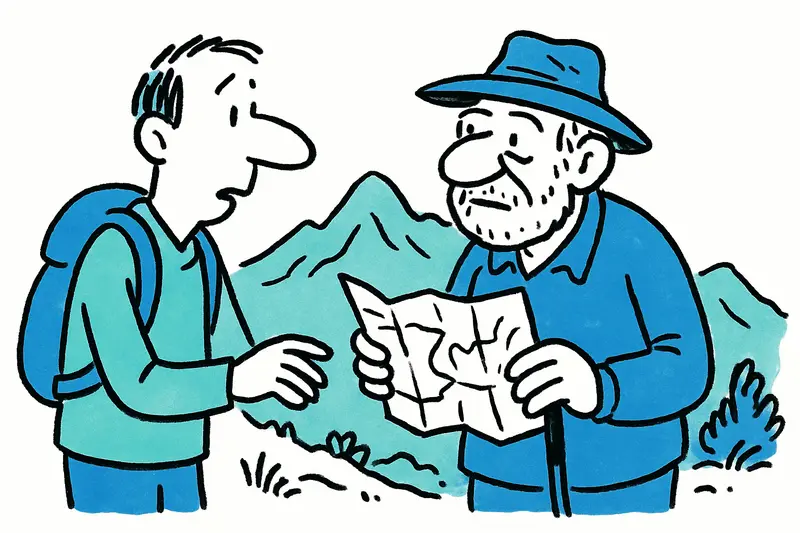
In the late afternoon, when the sun over the Serra de Tramuntana softens and the goats continue grazing quietly on the terraces, the news hangs in the mountains: Pere Brunet i Campins has died at 80. For many on the island he was not an abstract name from club records but a familiar part of the mountain world – someone you might have met on a narrow path, studying a map in front of a mountain café or telling stories at a coffee table in Sóller.
Brunet's path to the mountains was unexpected. As a youth he played handball, but from the age of 14 he was repeatedly drawn to the Tramuntana. These early tours laid the foundation for a lifelong relationship with rock and air. In the early 1970s he was among the handful who founded today's Grup Excursionista de Mallorca (GEM). The founding in April 1973 marked a new phase for the island: mountaineering became organized, knowledge was shared, routes made safer and communities made more visible.
Anyone who sees the first hikers in Banyalbufar in the morning or hears the climbing groups in Pollença's market square will find traces of Brunet's work: clubs offering courses; local groups exchanging maps and equipment; a culture in which older route caretakers mentor young people. Brunet was also instrumental in building what later became the Federación Balear de Montañismo y Escalada. After the first chair stepped down, Brunet took on responsibility and helped create structures that today are the backbone of organized mountaineering in the Balearics.
Many memories his companions have revolve less around records than everyday scenes: the calm voice when routes were discussed; the coffee after a key passage; the patient explanation of belaying techniques to young enthusiasts. Such work is also a reminder that rescues can end badly, as reported in Tragedy at Son Bauló: 67-year-old dies after rescue attempt. On the trails you could see his signature – not in writing, but in well-maintained approaches, in marked crossings and in a general attitude: mountains are for everyone, but they are to be respected, and even the recent discussion over Who installed the log benches in the Tramuntana — and who is liable? shows how community features matter.
This is why the news of his death is, from another viewpoint, also a kind of declaration of hope: it reminds us that the island has a living mountain culture that is passed on. Instead of pompous honors, concrete forms of passing on would be appropriate: more training opportunities for young alpinists, targeted funding for local route maintenance or small memorial plaques on selected paths that bear his touch. Incidents such as the Nighttime Misadventure in the Torrent de Mortitx: What the Mountain Rescuers' Operation Reveals underline the need for such training.
Everyday observation: On a Tuesday morning on the Camí de s’Arxiduc you can see parents with backpacks and older people sharing the same route, how hiking groups give each other tips and how children point out climbing spots with curiosity. Exactly in such moments Brunet's legacy lives on: not as a museum trophy, but as a lived summit and path community.
For Mallorca this means: loss yes, but also responsibility. Those who move here in the mountains benefit from an infrastructure and a culture shaped by people like Pere Brunet. A fitting prospect would be to transfer his commitment into local programs: route sponsorships, mentoring programs in clubs or regular path maintenance days where young and old come together.
The Tramuntana will keep breathing, the sheep bells will remain, and feet will again tread the stones of people who learned from someone like Pere Brunet to walk carefully and with respect. It is comforting to know that his legacy is not only in books but in every station wagon with a rope inside, in every map that is shared and in every laugh at a buvette at the end of an ascent.
When you next feel the wind on the coast of Deià or stand at the cliff edge in Valldemossa, think of those who made paths possible and remember incidents such as Dead at the Na Torta Viewpoint in Valldemossa: What's Missing in Tramuntana Search Operations? that challenge the community. A small gesture – a moment of silence, a photo, a donation to a local club – would be a good start to honor this man. That may be the most honest way to say thank you.
Frequently asked questions
What is the Serra de Tramuntana like for hikers in Mallorca?
When is the best time to go hiking in Mallorca?
Do I need special equipment for mountain walks in Mallorca?
Is it safe to hike the Tramuntana in Mallorca without a guide?
Why is Sóller important in Mallorca’s mountain culture?
What makes Banyalbufar a popular place for walkers in Mallorca?
What is the Camí de s’Arxiduc in Mallorca?
How are hiking clubs important in Mallorca?
Similar News
German tourist dies in Sa Calobra – a reality check for emergencies on Mallorca's beaches
A 40-year-old tourist died at the Torrent de Pareis. The emergency call, a doctor who happened to be present, a defibril...
Deadly Tractor Accident in Bunyola: What Needs to Be Done Now
In a work accident on an estate near Bunyola, a roughly 40-year-old man lost his life. His wife and a small child were o...
Head-first dive into the shallow part of Cala Fonoll: An accident and the unresolved question of responsibility
A young tourist dove into Cala Fonoll and was seriously injured. Key question: Why are clear warning signs missing at da...
Mistaken identity with fatal consequences: Brutal assault in S'Aranjassa — what's missing in the follow-up?
At S'Aranjassa a visitor to a finca was tied up, beaten and thrown out of a van. Three men have been arrested, including...
High heel slips, car accelerates: accident on Camí de Son Hugo
A woman lost a high-heeled shoe on the forecourt of the sports facility at Camí de Son Hugo. The car accelerated, mounte...
More to explore
Discover more interesting content

Can Cap de Bou

Townhouse Lleo 72
