
Kerosene Shortage and Mallorca: Who Pays the Price When Flights Are Cancelled?
Kerosene Shortage and Mallorca: Who Pays the Price When Flights Are Cancelled?
Are flights to Mallorca at risk of cancellation due to kerosene shortages? An airline warning hits the island's economy and travellers. Key questions, analysis and concrete proposals from Palma.
Kerosene Shortage and Mallorca: Who Pays the Price When Flights Are Cancelled?
Key question: How well prepared is Mallorca for possible fuel shortages, and what can authorities, airlines and businesses do right now?
On Passeig Mallorca this Tuesday vans are stacked up, a vendor is sanding an old wooden bench, and from the airport you can hear the deep tones of departing aircraft every few minutes. The reassuring everyday life is not accidental: for people who live and work here, on-time flights mean more than a holiday plan. When kerosene becomes scarce, it affects not only tourists but hoteliers, taxi drivers, restaurant owners and the island's supply chains.
The warnings from the sector that a blockade in the Strait of Hormuz could strain the supply of aviation fuel in Europe are concrete: a major low-cost airline openly speaks of preparations for "emergency measures" and possible cancellations, a large scheduled carrier says its reserves currently last until mid-June, and an EU official stresses the uncertain situation and the importance of coordinated action (see Ryanair Cuts Winter Flights — a Warning Signal for Mallorca). These statements must be taken seriously, but they immediately raise new questions.
Critical analysis: In the public debate there is currently no clear plan showing who would be prioritised and how. Airlines differ greatly in financial strength and storage capacity. Which flights would be affected first in a rationed supply — short tourist routes, long-haul flights with high cargo shares, or domestic connections? There are rough statements about reserves and delivery times, but little transparency about actual stock levels at relevant airports, for example on Mallorca (see Jet fuel shortage in Hamburg causes uncertainty for Mallorca travelers).
Another problem: the supply chain is sluggish. Even if the situation in the roads off the Persian Gulf eases, it takes weeks for kerosene to reach European ports and airports. The cited figure — around a 40-day delay after deliveries resume — is not trivial. On an island with seasonally high demand, such periods can lead to noticeable shortages if there is no planning.
What is missing from the public discourse: clear information for travellers about their rights in case of cancellations; a list of prioritisation rules that would apply to Mallorca; and a coordinated scenario between the airport operator, the Spanish state, regional authorities and the major fuel depots. Citizens expect clear statements, not just hints that "it could get tight."
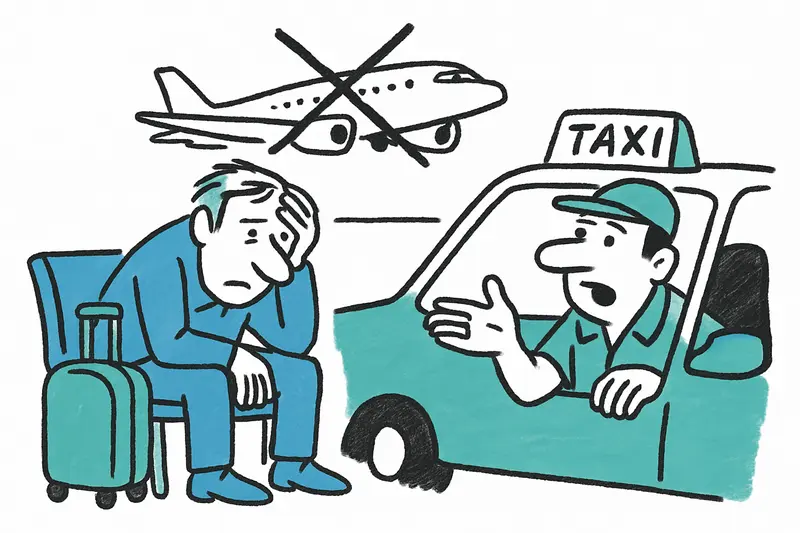
Everyday scene: In front of the café at Plaça Olivar a hotel receptionist and a taxi driver discuss the possible situation. "If flights are cancelled, hotels won't fill up, but the costs keep running," she says. He nods: "Then we lose business, the short trips to the airport won't help us anymore." Such conversations take place on many corners of Palma — sober and practical, not panicked, but full of questions.
Concrete solutions that could be implemented immediately: first, greater transparency: airports and regional authorities should publish daily reports on kerosene stocks — what is available and how long it will last. Second, prioritisation rules: a clear, fair order (e.g. humanitarian flights, medical transport, domestic connections, then international lines) will prevent arbitrary decisions in the heat of the moment.
Third, a decentralised Plan B: strengthen and coordinate ferry connections. Mallorca is reachable by sea — better coordination with shipping companies can offer travellers quick alternatives if short-haul flights are cancelled. Fourth, consumer information: hoteliers, tour operators and airlines must proactively inform about rebooking and compensation rules and set up local contact points for stranded people.
Fifth, short-term infrastructure: temporary increases in tank capacity at strategic airports in the Balearics would create a buffer. Sixth, medium-term: expand sustainable fuel sources and invest in logistics so the island is less vulnerable to geopolitical shocks.
Who pays the price? In an unregulated situation it is ultimately the smaller actors: local businesses, tourism workers, private travellers. Large airlines have more leeway, emergency plans and fleet flexibility. This very inequality must be publicly addressed so that support measures reach those who need them.
Our demand to decision-makers is simple: create reliability. Not with vague promises, but with concrete action plans that show how long stocks will last, which priorities apply and where people can find help. For Mallorca that would mean a combination of airport management, port logistics, the regional tourism authority and social infrastructure.
Final remark: the island lives from the flow of people. When that system falters, you notice it in empty street cafés, taxis waiting longer than usual for customers, deliveries arriving late. Preparation costs money, but chaos costs more — for businesses and for people. It is up to those responsible to put the instruments on the table now so that the sounds at the airport remain everyday life and do not become uncertainty.
Conclusion: The signals from the aviation sector are warning lights, not certainties. Mallorca needs transparent stock reporting, coordinated prioritisation, practical sea-route alternatives and clear information channels for those affected. Failing that, the cost of the shortage risks being distributed unfairly — and that would be bitter for the island.
Frequently asked questions
What happens in Mallorca if kerosene runs short and flights are cancelled?
How long can Mallorca airports keep operating if aviation fuel supplies are delayed?
Will tourists in Mallorca have any rights if their flight is cancelled because of fuel shortages?
Are ferry connections from Mallorca a realistic backup if flights are disrupted?
Which Mallorca businesses are most affected when flights stop or are reduced?
What should travellers in Mallorca do if their airline warns of possible cancellations?
Is Palma airport prepared for a kerosene shortage in Mallorca?
What would Mallorca need to reduce the risk from future aviation fuel shortages?
Similar News

When the Wallet Becomes a Danger: Attack in Peguera and Lessons for Mallorca
In Peguera, two women are said to have stolen the wallet from a 75-year-old German couple. When the victim intervened, t...
Plata stays Plata: Young people take over, Llonguets remain
A small bar on Carrer de l'Argenteria will continue: Tolo Serra hands the place over to young Mallorcans at the end of t...

Unnoticed in the Luggage Compartment: How a Boy Traveled More Than 100 Kilometers in a Team Bus
A minor traveled in the undercarriage of a team bus for more than 100 kilometers until his cries for help were heard. A ...

Cap Vermell Grand: Second Michelin Key – a Gift for the East
The Cap Vermell Grand in Capdepera has been awarded its second Michelin key. For the region this elevates the luxury off...
Eurowings lets four aircraft carry names – a friendly idea that also reaches Mallorca
Eurowings is launching a campaign: four Airbus A320s are to carry the first names of people who help others in everyday ...
More to explore
Discover more interesting content

Can Cap de Bou

Townhouse Lleo 72
