
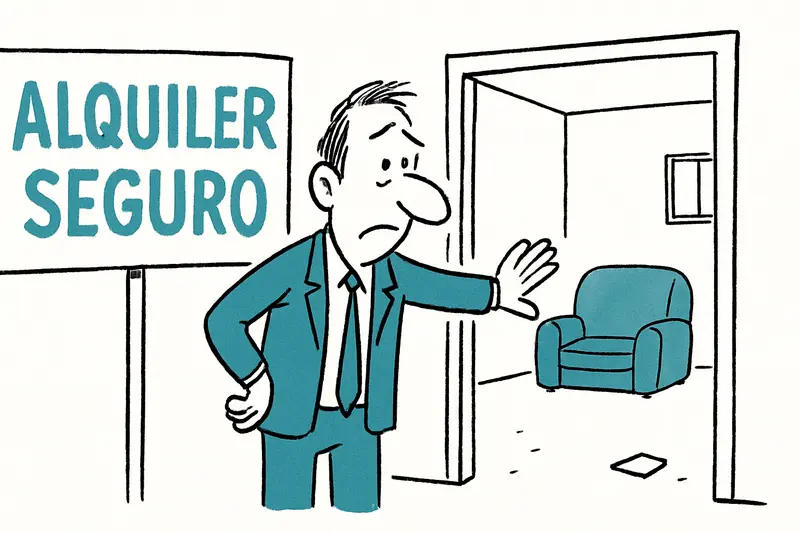
Alquiler Seguro: Many words, few apartments — what's missing?
Alquiler Seguro: Many words, few apartments — what's missing?
The Balearic program "Alquiler Seguro" was intended to put vacant apartments back on the rental market. Launched at the end of 2024, the measures have so far yielded only 82 apartments instead of the planned roughly 3,000. Why is the initiative failing — and how can landlords' trust be regained?
Alquiler Seguro: Many words, few apartments — what's missing?
Key question: Why has the "Alquiler Seguro" program returned so little housing to the market, even though the target was around 3,000 apartments?
On Palma's Paseo Marítimo, between the noise of construction and the smell of freshly brewed coffee, landlords hear the same concerns on repeat: fear of rent defaults, lengthy legal disputes and damage to the apartment. The Balearic government has apparently managed to do little about that: since the launch at the end of 2024, only 82 apartments have been placed through the program. A sobering result that likely explains President Marga Prohens' announcement of changes—but the question remains why the program started so weakly in the first place.
Critical analysis: design meets the real world
On paper, "Alquiler Seguro" sounded like a logical step: activate vacant apartments, increase supply, and relieve pressure on the rental market. In practice, bureaucratic obstacles, mistrust and unclear guarantees collide. Landlords say that financial incentives alone are not enough when there is no tangible safety net behind them. Many dread lengthy eviction procedures or tenants who don’t pay; the perceived risk seems greater than the additional state support.
Moreover, programs like this need visibility and easy access. If participation comes with unclear conditions, complicated forms or long waiting times, owners quickly opt out. On Mallorca, seasonality also plays a role: holiday rentals, private use and speculation repeatedly overshadow long-term rental plans, as long-term rentals in Mallorca are dwindling.
What is missing from the public debate
People often talk about numbers, but rarely about trust. Public debates focus on targets and budgets, not the everyday reality of a worried landlord in Son Gotleu or a property manager in Portals Nous. Neither is it sufficiently considered how quickly and reliably protection mechanisms must work for landlords to see participation as realistic risk management. Local mediation structures and the role of municipalities are also underexplored.
Everyday scene from Mallorca
On market day in Santa Catalina, neighbors discuss a vacant apartment in a side lane: the woman from the kiosk suspects the owner is waiting for better prices; an elderly man says the cost of possible repairs is too high. Conversations like these show that vacancy is not an abstract problem but part of the city's soundscape—visible on a dusty balcony railing, noticeable in less lively streets.
Concrete solutions
The announced changes should address the real obstacles. Proposals that could work quickly include:
1) State-provided rent default insurance with clear terms: An easily accessible insurance that pays quickly in the event of non-payment or damage, addressing landlords' primary financial concern.
2) Faster, transparent mediation and eviction procedures: Long processes deter people; clearly defined deadlines and specialized bodies could build trust without compromising the rule of law.
3) Simplified participation and a digital platform: A lean online process with checklists, FAQs and a personal hotline for the first steps would lower the entry barrier.
4) Local partnerships: Municipalities, neighborhood associations and housing offices should act as active mediators—they know the local situation and can bridge owner and tenant.
5) A mix of incentives rather than a one-size-fits-all solution: Combined offers of tax breaks, grants for small renovations and flexible contract models are more effective than just financial reserves.
6) Transparency and communication: Concrete figures, case studies and an information campaign that shows real procedures can reduce mistrust.
Punchy conclusion
The tally of 82 instead of 3,000 apartments shows that programs fail not only because of numbers but because of unresolved mistrust and poor implementation. Those who really want more housing must give landlords tangible security, shorten administrative routes and work locally. Otherwise districts like Plaça de la Llotja will stay a little emptier, and the Paseo Marítimo will keep talking about problems instead of solutions.
President Prohens' announcement is a starting shot, not a guarantee. Now it depends on the details—and on whether administration and politics are ready to make the leap from well-intentioned words to measures that work in everyday life.
Frequently asked questions
Why has the Alquiler Seguro program returned so few apartments in Mallorca?
What would make landlords in Mallorca more willing to rent through Alquiler Seguro?
Is Alquiler Seguro likely to help Mallorca’s rental market in the short term?
Why do rental schemes in Mallorca often run into mistrust from property owners?
What does the Alquiler Seguro debate in Mallorca say about the housing problem?
What kind of protection do Mallorca landlords want before renting long term?
How could local municipalities in Mallorca help bring empty apartments onto the market?
Why does seasonality make long-term renting harder in Mallorca?
Similar News

German tourist dies in Sa Calobra – a reality check for emergencies on Mallorca's beaches
A 40-year-old tourist died at the Torrent de Pareis. The emergency call, a doctor who happened to be present, a defibril...

Deadly Tractor Accident in Bunyola: What Needs to Be Done Now
In a work accident on an estate near Bunyola, a roughly 40-year-old man lost his life. His wife and a small child were o...
Head-first dive into the shallow part of Cala Fonoll: An accident and the unresolved question of responsibility
A young tourist dove into Cala Fonoll and was seriously injured. Key question: Why are clear warning signs missing at da...

Mistaken identity with fatal consequences: Brutal assault in S'Aranjassa — what's missing in the follow-up?
At S'Aranjassa a visitor to a finca was tied up, beaten and thrown out of a van. Three men have been arrested, including...

High heel slips, car accelerates: accident on Camí de Son Hugo
A woman lost a high-heeled shoe on the forecourt of the sports facility at Camí de Son Hugo. The car accelerated, mounte...
More to explore
Discover more interesting content

Can Cap de Bou

Townhouse Lleo 72
