
Boat in Flames off La Savina: A Wake-up Call for Recreational Boat Safety
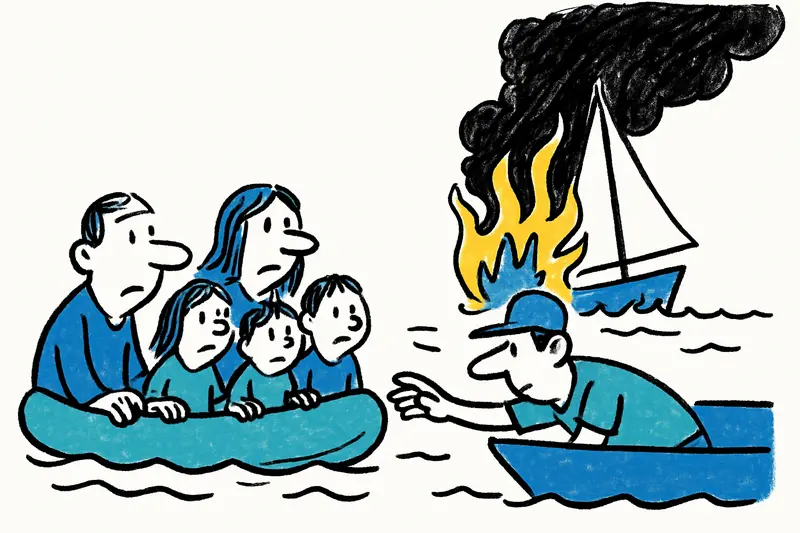
A sailboat went up in flames off La Savina; a family in an inflatable dinghy was rescued by other recreational skippers. The incident raises questions about safety, maintenance and rapid assistance on the water.
Smoke over La Savina: How an outing almost turned deadly
Thursday midday, the sun hangs mild over Formentera, the water sparkling. Then the alarm: a thick, black column of smoke at the harbor of La Savina, the cracking of plastic, a pungent smell that even reaches the promenade. A sailboat is ablaze at the stern. Only a few meters away a small inflatable dinghy with a family on board rocks — three children are among them. Fortunately, other recreational skippers intervene immediately. But the scene remains a wake-up call: how well protected are families really when they set out on what should be a harmless trip?
The minutes when everything counts
Eyewitnesses report frantic activity. An old motorboat takes the dinghy on board, supported by several recreational captains working with hoses and improvised firefighting attempts. From the small harbor bar comes the clinking of cups; the coffee has gone cold at the wrong time. Children cry, are wrapped in blankets, given water and calming words. No serious injuries — a great stroke of luck. But: the hull of the sailing yacht, made of fiberglass, is hard to extinguish. The stern, presumably the engine room, is heavily damaged.
Technology, danger and the invisible risks
Boat fires are treacherous. They start quickly due to oil or fuel leaks, faulty lines, overheated generators or problems with electrical systems and batteries. Glass-reinforced plastic does not burn like wood; it melts and releases toxic fumes. Water alone is often not enough — special extinguishing agents or CO2 fire extinguishers are more effective. Small pleasure boats often lack such automatic systems; firefighting attempts then remain improvised and risky.
What is missing in the public debate
We talk a lot about more controls on the beaches or about berthing fees, but less about the safety standards of recreational boats and the training of their users. Three points are often overlooked: first, regular maintenance and visual checks of the engine installation; second, equipping boats with suitable fire extinguishers and engine-room detectors; third, how quickly professional help can arrive on site. Often people rely on the helpfulness of neighbors — as happened in La Savina — instead of on a comprehensive, well-coordinated rescue concept.
Concrete solutions for Mallorca and Formentera
The incident shows: good intentions are not enough. Some pragmatic suggestions that local politicians and harbor operators could implement immediately:
1. Mandatory checks and information requirements: For charters and regular berths, visual checks of the engine, fuel lines and batteries should be required. A short safety sheet with radio range, location of fire extinguishers and emergency numbers could become standard.
2. Promotion of technical safety equipment: Subsidies or affordable replacement programs for automatic engine-room fire suppression systems, thermal detectors and certified extinguishers would lower the barrier.
3. Training and drills: Recreational boating safety guidance — how to recognize engine-room fires, how to extinguish properly, how to evacuate families and children on board. Practicing briefly once a year is better than panic at the first real fire.
4. Faster harbor intervention: Small firefighting boats in exposed harbors or a coordinated volunteer fleet that acts as the first response in an emergency could save lives. The experience of that Thursday shows how helpful improvised teams are — this should not be left to chance.
Community as the greatest protection — and the responsibility of the authorities
The helpers in La Savina acted correctly: they organized care, protection and calm for the children. Such neighborhood solidarity is typical for our islands and warms the heart. But between a warm handshake and resilient infrastructure the public sector must take responsibility. Safety costs money, but the price of inaction is far higher.
Investigations into the exact cause of the fire are ongoing. The damaged yacht was towed away, and the water around the accident site has since calmed. Until the authorities provide results, the question remains open: will we continue to rely on luck — or will we act?
Frequently asked questions
What should you do if a boat catches fire near Mallorca?
How common are boat fires on recreational boats in Mallorca?
What fire safety equipment should a pleasure boat have in Mallorca?
Why are fiberglass boats especially dangerous in a fire?
Is it safe to take children on a small boat trip in Mallorca?
What should I check before leaving harbor in Mallorca on a rented boat?
What happened at La Savina harbor in Formentera?
What boat safety improvements are being discussed for Mallorca and Formentera?
Similar News
Ancient Piece Brought to Light: Guardia Civil Recovers Roman Anchor Fragment off North Coast of Mallorca
Divers from the Guardia Civil recovered a massive iron piece from Roman times off Mallorca's north coast. The roughly 35...
Who Benefits from the Half‑Hourly Flight on the Edge? Aena, Investments and the Island's Interests
Almost one billion euros is flowing into Son Sant Joan. The figures show the scale of investment and expected beneficiar...
Are the Balearic Islands the Southern Border of Europe? A Reality Check on Immigration
The Balearic Islands are again calling for EU aid after a sharp rise in arrivals by sea. Conflicting priorities between ...

"Expensive chaos" and many open questions: What clients can do when a lawyer suddenly stops responding
Several clients complain that a well-known German lawyer in Mallorca has been unreachable for months. Key question: What...
TV tip: 'The Last Problem' — Mallorca as the setting of a classic crime
A classic whodunit on Mallorca: A new miniseries set in spring 1959 brings storm, an isolated hotel and a dense web of s...
More to explore
Discover more interesting content

Can Cap de Bou

Townhouse Lleo 72
