
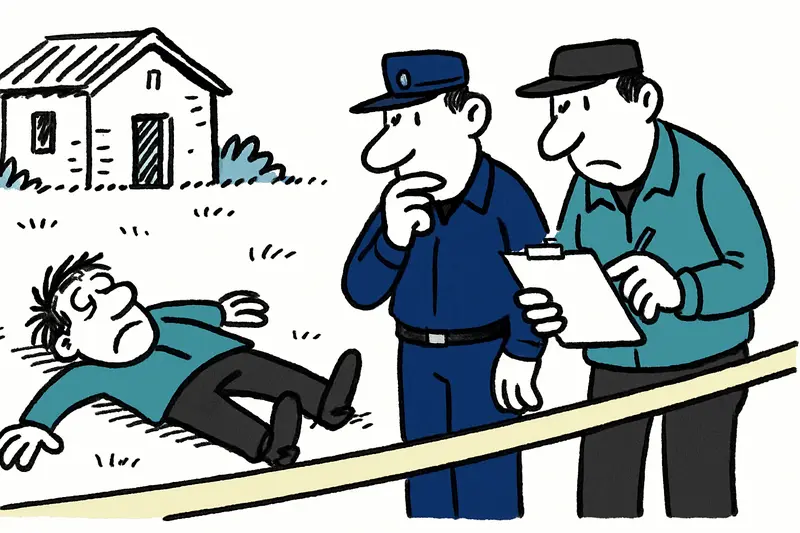
Body on a finca near S'Aranjassa: How safe is the hinterland anymore?
A body found on a finca near S'Aranjassa has shaken the neighborhood. How could this happen, what gaps does it reveal — and what needs to change?
Body on a finca near S'Aranjassa: How safe is the hinterland anymore?
Early on Wednesday morning a police car with flashing blue lights transformed the otherwise quiet access road to the Cadáver en una finca cerca de Llucmajor: ¿qué tan segura sigue siendo S’Aranjassa? into an investigation site. Normally only barking dogs, the distant hum of a tractor and the buzzing of cicadas break the silence there. This time, however, Guardia Civil and local police stood for hours at cordons while forensic teams worked in the dust.
The key question: How could this happen in such a quiet area?
Investigators found the lifeless body of a 57-year-old Spanish man with multiple injuries, reported in Mystery at the finca near Llucmajor: blood traces — but no clear motive. Whether these are the cause of death will be determined by the autopsy. For neighbors the central question is as direct as it is uncomfortable: how can an alleged violent crime find its way into an area many know as a retreat? Eyewitnesses report unusual vehicle movements in the early morning hours, a brief engine noise around 6:30 and then silence again. Such small details may seem insignificant — for the investigation they are often crucial.
Forensic challenges in rural areas
The coroner's team worked for a long time at the scene, securing fingerprints, fibers and soil samples. But rural crime scenes are different from urban apartments: gravel tracks, free-roaming dogs, wind and insects alter traces more quickly. A tyre mark in sand dries differently than on asphalt, blood traces fade faster in the heat, and tracks can be run over by agricultural vehicles. These technical details are rarely highlighted in public debate — yet they explain why investigations in rural areas are often slower and more prone to errors.
Vulnerabilities: lighting, cameras, reporting chains
Many fincas lack surveillance cameras, access roads are poorly lit, and neighbour assistance is not always organised. That creates a mix of low visibility and slow information flow. The Guardia Civil is currently analysing available video footage, checking phone data and interviewing witnesses. But these tools have limits: not every field has cameras, phones may go unanswered, and access routes on maps are sometimes less clearly marked than the drives themselves.
Burglary a few days earlier: coincidence or warning?
Investigations indicate that the finca may have been the target of a burglary or assault just days earlier. In rural regions such incidents are often dismissed as “minor offences” — until something worse happens. The connection between the earlier break-in and the current death is now central to the inquiry. If it remains unresolved, residents and field workers will feel that incidents are not taken seriously enough.
The feeling of emptiness in the neighbourhood
"Before you could leave your shutters open in the evening," says a farmer from nearby. Today shutters stay closed longer, walks happen less often, and unfamiliar cars are viewed with suspicion. This insecurity acts subtly: social presence shrinks, meetings at the village entrance or a brief chat over fences happen less frequently. In a community that relies on visibility and proximity, that reduction in presence can lower protection — fewer eyes mean more room for crime.
Practical measures that would help now
The investigation must be thorough. At the same time, the case reveals structural gaps. Concrete, short-term measures that could increase security include:
1. Crime scene investigation: Teams that can quickly respond to rural scenes and understand the specifics of dirt tracks, climate and wildlife.
2. Neighbourhood networks: Simple reporting chains, digital groups or local numbers so unusual movements can be reported quickly and in an organised way — without wild suspicion.
3. Targeted lighting and presence: More lighting at critical access points, temporary visible patrols by the Guardia Civil or coordinated checks by the local police.
4. Prevention courses for finca owners: Practical advice on securing storage areas, access points and on documenting incidents (timestamped photos, directions).
5. Psychosocial support: Rapid assistance for relatives and traumatized neighbours — often the forgotten side after a violent incident.
A call for calm — and for vigilance
The public prosecutor has ordered a comprehensive investigation; authorities ask people to avoid speculation. The faster neighbours share information, videos or observations, the more likely a swift clarification becomes. This is not a call to distrust but to collective caution: more eyes, better reports and adapted police structures could prevent the silence of the hinterland from being so brutally violated again.
The Guardia Civil in Llucmajor is accepting tips. Every report, however small it seems, can make a difference.
Frequently asked questions
How safe are rural areas near S'Aranjassa and Llucmajor in Mallorca?
Why are crimes in Mallorca's rural areas harder to investigate?
What should finca owners in Mallorca do to improve security?
What is the Guardia Civil doing after a death at a finca near Llucmajor?
Could a burglary at a Mallorca finca be a warning sign?
Has S'Aranjassa in Mallorca become less safe for residents?
What should I do if I saw suspicious activity near a finca in Mallorca?
Why do Mallorca residents worry more about isolated access roads at night?
Similar News
From Workshop to Luxury Villa: What a €19.5 Million House Reveals About Palma's Market
A historic town house on Carrer de la Pelleteria was converted into a 1,000-sq m residence and is on the market for €19....

FC Germania Mallorca: Why does the lead always slip away in stoppage time?
After the 1-2 at C.A. Pal ne da Tesa questions arise: are these coincidences, a shortage of personnel, or a deeper probl...
Hidden War Bunkers in Palma: Remember, Preserve, Reveal?
Beneath Palma's paving lie remnants of a forgotten shelter system from the Civil War. Consolidation, ethics and tourism ...
Death in the Gorge: Key Questions on the Safety of Rallies on the Ma-10
A Porsche plunged into a ravine during the 550 Challenge near Mortitx. Who bears responsibility, what safety gaps were r...

Eighth BAF surge: Why freight costs in Mallorca are rising now — and what it means for us
Fuel surcharges (BAF) for ferries between the mainland and the Balearic Islands rose by around eight percent in October....
More to explore
Discover more interesting content

Can Cap de Bou

Townhouse Lleo 72
