
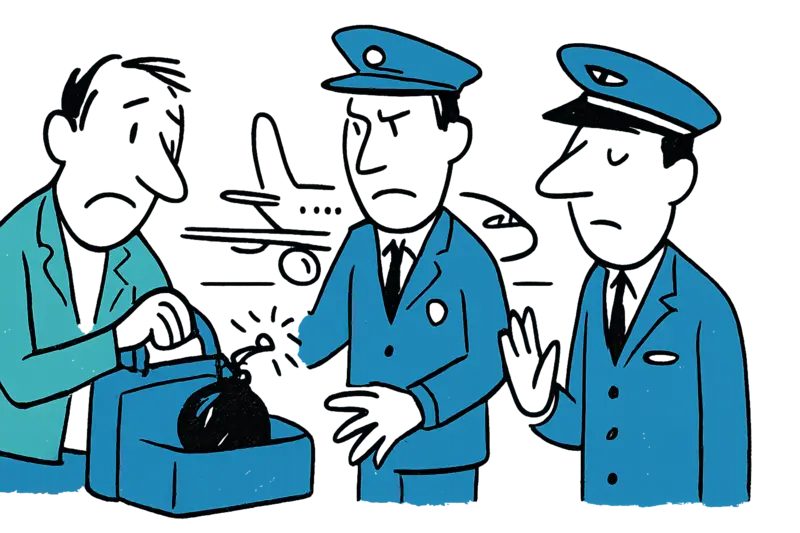
Bomb threat on board? Why the Tenerife incident concerns us in Mallorca
A passenger on a Jet2 flight from Tenerife to London triggered an evacuation and intensive security checks. The result: no explosives found. What remains for travelers here in the Balearics is the question of prevention, communication and consequences.
Bomb threat on board? Why the Tenerife incident concerns us in Mallorca
Evacuation, checks, relief — and many open questions
Last Friday an incident at Tenerife South Airport led to a holiday flight being cleared before departure and luggage being checked one by one. The aircraft, a Jet2 service to London Stansted, eventually departed several hours late; no explosive device was found. For many this may sound like a closed case. For travelers, airport staff and residents in the Balearics, however, the issue remains constantly present.
Key question: How well are our islands, airports and airlines really prepared for such threats — and how seriously do we take the consequences for safety and everyday life?
The facts are limited: A fellow passenger is said to have claimed before departure that he had a bomb in his luggage. The Guardia Civil intervened, the aircraft was evacuated and suitcases were inspected. In the end the plane left about two and a half hours late without any dangerous object being discovered. These procedures are exactly the kind of scenario that security forces must treat cautiously and thoroughly. Still, a closer look is worthwhile.
First: The strain on airports is real. Son Sant Joan in Palma knows long summer departures, stressed passengers and cramped gates. I often see this on the Passeig Mallorca: people with suitcases grabbing a quick café con leche, parents calming children, office workers with headphones. If a similar situation were to occur there, not only flights would be affected but also traffic around the terminal, bus routes and the small meeting points in front of the check-in counters. The logistics of an evacuation and inspection process tie up enormous resources — staff, time, police — and unsettle travelers.
Second: Communication is a problem. In many cases travelers experience being informed late or incompletely. On the islands this quickly leads to rumours: WhatsApp groups fill with speculation, holidaymakers ask at rental car counters about alternative return routes, hotels try frantically to reassure guests. Transparent but precise information helps to avoid panic; this however requires coordinated information channels between airports, the Guardia Civil and airlines.
Third: The legal assessment of such incidents often remains in the dark. Not every suspicion is an intentionally falsified threat — people act out of fear, confusion or, in extreme cases, provocation. On Mallorca I repeatedly hear: What penalties apply if someone falsely claims to have a bomb? Are the measures that bind resources criminally sanctioned or is much left to the discretion of investigators? This is seldom discussed publicly, although clarity about consequences could have a deterrent effect.
Also missing from public discourse is the perspective of employees: security staff, cleaning personnel, ground crew and check-in agents bear the direct burden. Their work becomes invisible during moments of stress and is at the same time crucial. At Plaça de Madrid I recently heard a former airport employee say: 'We practice these cases, but in reality it's different — the fear is tangible.' Such voices should be heard when discussing prevention and staffing.
Concrete solutions can be identified: First, binding information protocols between airlines, airport operators and the Guardia Civil so that passengers are informed promptly and factually. Second, standardized sanctions and a clear legal framework for false threats, combined with offers of psychological support for those involved. Third, regular training and scenario exercises for ground staff that not only practice technical procedures but also de-escalation and passenger management. Fourth, digital tools: an official short app notification or SMS to affected passengers could prevent rumours and direct inquiries to central points.
It is also important to consider the balance between prevention and travel convenience. No one wants hours-long controls without cause, but security measures must be reliable. A pragmatic approach could include more visible but swift random checks at check-in and closer cooperation with airlines so that unusual behaviour is detected early before it leads to an evacuation.
Back in Palma: at the Bicing station on the Passeig near the harbour, the seagulls cry, a bus honks, tourists pack their last souvenirs. The island lives from flying — whether away from Mallorca or to it. Such incidents remind us that security is not a static state but an ongoing process. It needs rules, clear communication and people who know how to act in emergencies.
Conclusion: The incident in Tenerife fortunately did not result in tangible harm, but it should not lull us into complacency. We need to be better prepared in the Balearics: clearer rules, better information, more attention to ground staff. Only then will airports remain places where we start our holidays — or return home — with a sense of security.
Frequently asked questions
What happens when a bomb threat is reported at Mallorca's airports?
How prepared are Mallorca's airports for security threats?
What challenges could Son Sant Joan in Palma face during a security incident?
How can information flow help during Mallorca airport incidents?
What about penalties for false bomb threats in Mallorca?
How can Mallorca improve safety without overly delaying travel?
What is the role of ground staff during incidents at Mallorca airports?
Why does a Tenerife security incident matter for people traveling to Mallorca?
Similar News

More Electric Cars in the Balearic Islands: Sales Rise Sharply
Between January and August, 14,185 vehicles without petrol or diesel propulsion were sold — an increase of more than 40 ...
Autumn in Mallorca: What Truly Remains of Summer
The days grow shorter, the evenings cool — and yet more of summer lingers than you might think: sounds, recipes, people,...
Rescue operation at Tolleric: Why nighttime cliff parties become dangerous
A British holidaymaker fell about ten meters at the cliffs of Tolleric during the night, later climbed back up and was r...
Car accident on the MA-1: Mother and daughter on a bicycle struck by a fellow countryman – Who protects cyclists here?
On the MA-1 between Portopí and the Cala Major exit, a mother and her daughter on a bicycle were struck by a car. A para...
Smoke over the UIB: Who is responsible for the fire on the roof?
On Saturday afternoon a fire broke out on the roof of the Arxiduc Lluís Salvador building at the University of the Balea...
More to explore
Discover more interesting content

Can Cap de Bou

Townhouse Lleo 72
