
Burglary in Son Servera: Why Cameras Alone Are Not Enough
Burglary in Son Servera: Why Cameras Alone Are Not Enough
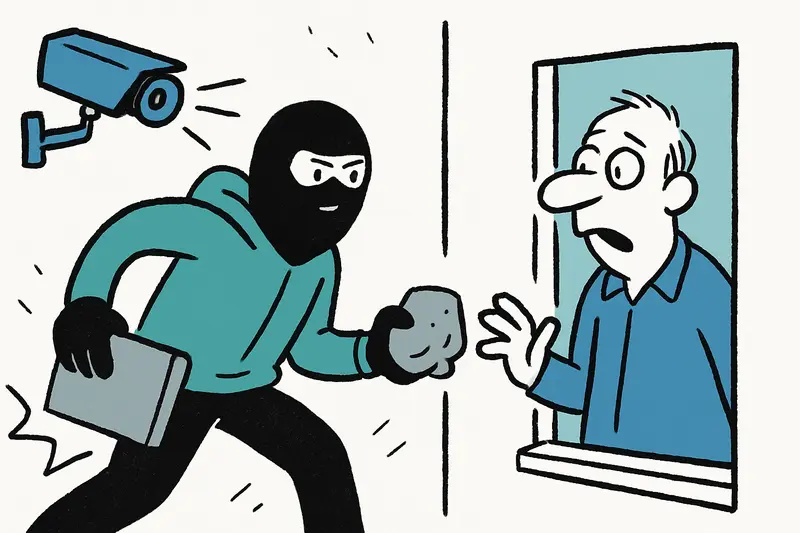
Two masked men smashed a rear window with a stone and ransacked a house in Son Servera. The incident raises questions about safety in rural towns and the role of surveillance technology and police.
Burglary in Son Servera: Why Cameras Alone Are Not Enough
Key question: What do residents and authorities need to change so that such raids become less frequent?
On the morning of May 25, two masked individuals broke into a residential house in Son Servera. According to accounts, the tactic was simple: a stone against a rear window, go in, search the rooms, take valuables and disappear in a waiting vehicle. The residents discovered the mess only later and handed the surveillance camera footage to the authorities. Scenes like this are not new on the island; similar incidents include an attack on a bike shop in Son Servera. Still, the uneasy question remains: if cameras are recording, why does nothing happen at the moment it happens?
The camera documented the sequence of events. But surveillance alone does not stop burglars. Too often perpetrators are quick, prepared and know typical weak points: sides of properties that face away from view, poorly secured windows, low hedges, ineffective alarm systems or lack of lighting. In many villages and on fincas there is a lack of visible presence — and criminals know that. An image from a camera is important afterwards for investigations. Real-time intervention, however, depends on rapid alarm forwarding, networked services and often on nearby police forces. In rural areas like the Part Forana these resources are thinner than in Palma, a fact underlined by a burglary spree on the MA-12.
What is often missing from the public debate are practical, affordable measures for people with houses outside the city. Discussions often revolve around statistics and headlines. Concrete guidance for owners is lacking: which windows really need to be secured, how to implement a low-cost sensor concept, which insurances make sense and how neighborhoods can organize themselves without slipping into mistrust. Also rarely explained is how video material can be handed over to investigators in a legally secure and efficient way — a topic highlighted by the trial over hidden surveillance north of Palma.
A everyday scene: at midday a coffee is served on the plaça of Son Servera, older men chat about football, children play on the nearby playground. Amid them the small fincas with their dragon trees and low walls — a familiar sight for locals, potential access points for burglars. Walking through the side streets you hear the rattle of roller shutters, but you also repeatedly see windows without security measures. This is not a reproach. It is an observation from everyday life here.
Concrete solutions can be started without much effort: 1) Secure windows and rear entrances — sturdy grilles, burglary-resistant locks, lockable shutters. 2) Motion detectors and combined alarm sensors instead of single cameras; sensors can trigger audible alarms and activate lighting. 3) Networking: cameras with live-alarm options that, when triggered, initiate a short emergency call and connect to a hotline at a local security center. 4) Strengthen neighborhood networks: a digital distribution list or a WhatsApp group for suspicious observations, coupled with clear rules to avoid false accusations. 5) Municipal measures: more visible patrols at times with high burglary rates, information evenings on prevention and subsidized security checks for older residents.
For the authorities this means: investigations are important, but solving cases must go hand in hand with prevention. If video material exists but the perpetrators are already gone, it only helps the current victim to a limited extent. Sharing patterns more quickly — for example vehicles with certain characteristics that appear in multiple cases — between municipalities and the Civil Guard would be useful. Technical standards for private surveillance should be communicated more clearly: what resolution is sufficient, how long should recordings be stored, how do you protect neighborhood privacy?
The conclusion is simple: cameras are useful, but protection consists of several layers. Anyone who has a house in a quiet corner needs more than just an eye that records. They need lighting, robust locks, an alarm system, an attentive neighborhood and authorities that are present in the region. And the community? It should not freeze in fear, but be warned and informed. In short: more networking, more prevention, more visibility — then burglars will more often have to decide whether the effort is worth it. That would be a small win for everyone defending their home in Mallorca. For related coverage, see a series of nighttime break-ins in Palma that ended with an arrest and raised similar questions about prevention and response.
Frequently asked questions
What is the weather usually like in Mallorca in late April?
Can you swim in Mallorca in late April?
What should I pack for Mallorca in late April?
Is late April a good time to visit Mallorca?
What kind of activities work well in Mallorca in late April?
Is Palma de Mallorca warm in late April?
How is the beach weather in Alcúdia in late April?
What is Sóller like in late April for a short trip?
Similar News

Who Benefits from the Half‑Hourly Flight on the Edge? Aena, Investments and the Island's Interests
Almost one billion euros is flowing into Son Sant Joan. The figures show the scale of investment and expected beneficiar...

Are the Balearic Islands the Southern Border of Europe? A Reality Check on Immigration
The Balearic Islands are again calling for EU aid after a sharp rise in arrivals by sea. Conflicting priorities between ...

"Expensive chaos" and many open questions: What clients can do when a lawyer suddenly stops responding
Several clients complain that a well-known German lawyer in Mallorca has been unreachable for months. Key question: What...
TV tip: 'The Last Problem' — Mallorca as the setting of a classic crime
A classic whodunit on Mallorca: A new miniseries set in spring 1959 brings storm, an isolated hotel and a dense web of s...

Nipping Sea Creatures: Why Bathers in Cala Major and Elsewhere Should Be Cautious
In Cala Major, bathers have reported being nipped by small fish. What is behind it, how can problems be avoided — and wh...
More to explore
Discover more interesting content

Can Cap de Bou

Townhouse Lleo 72
