
Residents Evacuated After Roof Terrace Collapse in Palma's Old Town – Who Bears the Responsibility?
Residents Evacuated After Roof Terrace Collapse in Palma's Old Town – Who Bears the Responsibility?
Around ten people were precautionarily evacuated in Palma's Old Town after a roof terrace in a neighboring building collapsed. There were no injuries. The city is now checking the structural safety. A situation that raises more questions than answers.
Residents Evacuated After Roof Terrace Collapse in Palma's Old Town – Who Bears the Responsibility?
Key question: Who is responsible when a roof terrace in the old town collapses — and are municipal inspections sufficient to prevent such incidents?
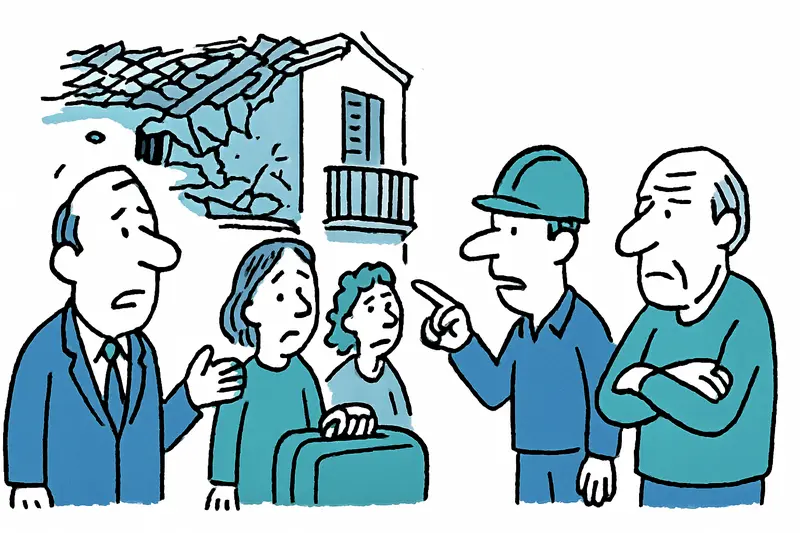
Yesterday in the late afternoon: blue lights briefly cast a harsh glare into the narrow alley, voices mixed with the clatter of construction tools and the distant tolling of a church bell. Around ten residents were precautionarily evacuated from a three-story house in Palma's Old Town after a roof terrace in a neighboring building collapsed. No one was injured. Firefighters and local police secured the area, and city technicians are to check the structural integrity of the affected building.
Available information indicates: workers had apparently been working on the ceiling in the apartment below before the terrace gave way. No further details about the sequence of events, responsibilities or permits are available — and this is exactly where the problem begins, a problem that concerns not only the directly affected neighbors. Similar incidents have been covered elsewhere, for example Playa de Palma Trial: Who Bears Responsibility After the Rooftop Terrace Collapse? and Medusa Beach: Who Bears Responsibility After the Collapse?.
Critical analysis: Palma's old town contains many aged structures, narrow houses and cramped spaces. Small renovations, upgrading terraces or repairs to load-bearing elements are common. If workers are active on a ceiling and shortly after a terrace above collapses, this is a warning sign of gaps in planning, supervision and execution. It is not enough to cordon off the area after an incident and wait for a structural assessment. We must ask whether clear rules exist for such interventions, how construction work is monitored and whether subcontractors are sufficiently qualified and registered. Other recent collapses, such as Collapse at Palma's City Wall: What Needs to Happen Now and After a Roof Collapse in Artà: Termite Alarm on Carrer de les Roques — Who Takes Responsibility Now, highlight the broader risk.
What is often missing in public debate is an honest discussion about daily practice on site. Voices from the cafés on Plaça Major or from small craft workshops tell of quick jobs, time pressure during the high season and work done "quickly" amid tourist flows. Hardly anyone speaks about the administrative hurdles that can drive landlords, homeowner associations and craftsmen to carry out work without full inspections. And there is a lack of clear guidance for tenants: when must the administration be informed? Who is liable for damages?
An everyday scene: an elderly couple who have lived here for decades stand on the pavement with two suitcases, the smell of coffee from a bar mixes with the dust from the barricades. Police officers note down names, neighbors whisper, shopkeepers pack up for a while. Such images are not just news — they are life in Palma, shaped by small neighborhood solidarity but also by growing mistrust toward ad-hoc, non-transparent construction work.
Concrete solutions we need now: First, a mandatory reporting requirement for work on load-bearing elements, linked to digital documentation (photos, a short description of measures, the name of the executing company). Second, a municipal list of certified craft businesses so homeowners can reliably find vetted service providers. Third, regular, random inspections of buildings in the old town by a small mobile expert team that can act quickly. Fourth, clear rules for provisional safety measures during work in occupied buildings — for example temporary supports, dust protection and information channels for tenants. Fifth, a rapid hotline or web platform provided by the city where residents can report cracks, unusual noises or subsidence, with the option to upload photos.
Additionally, it would make sense to oblige homeowner associations more strongly to submit regular inspection reports, especially when buildings are used as holiday rentals. Short-term rentals increase the number of entries and repairs; if these are not performed professionally, the risk for all residents in the building rises.
A pointed conclusion: yesterday's operation in Palma's Old Town shows that technical inspections and quick reactions can protect — fortunate in misfortune. At the same time, the incident exposes existing weaknesses: lack of transparency in construction work, uncertainty about responsibilities and missing, easily accessible control mechanisms. For people in the narrow streets this means: caution is not an exaggeration, but everyday protection. Those who want to take responsibility now must act instead of merely logging events.
For residents there is, for the moment, a simple practical checklist: watch for new cracks, doors that stick, unusual noises in floors or ceilings; in case of doubt immediately inform emergency services or the city's reporting platform; for larger works insist on certified companies and demand written confirmations. That protects the building and the neighborhood — and prevents another afternoon with blue lights from becoming the next warning.
Frequently asked questions
What should residents in Palma do if they notice cracks, strange noises, or subsidence in a building?
Who is responsible if a roof terrace collapses in Mallorca?
Are municipal inspections enough to prevent building collapses in Palma's Old Town?
What should tenants in Mallorca do before renovation work starts in their building?
How safe are old buildings in Palma's historic centre during renovations?
When should homeowners in Mallorca hire a certified contractor for structural work?
What can Palma residents expect after a terrace collapse in a neighboring building?
Do holiday rentals in Mallorca require extra building checks from homeowners' associations?
Similar News
More water than last year: Mallorca's reservoirs breathe easier
September rain refilled the Tramuntana's reserves: overall fill around 35 percent, Cúber at 40.42 percent, Gorg Blau at ...
Three Luxury Hotels in Banyalbufar: Lots of Money, Many Questions
A Danish investor plans three exclusive accommodations in Banyalbufar — including the historic Son Valentí. The announce...
2.1 tonnes of cocaine on sailing yacht off Spain's coast – a reality check for the coastguard
A 14-metre yacht was seized with 2.1 tonnes of cocaine. Who monitors the ports, how does the international hunt succeed ...
Heat Bonus in Mallorca: 100 Euros Extra for Outdoor Staff at MarSenses
MarSenses pays employees who worked outdoors in August an extra €100 as recognition. Lighter uniforms, reduced hours for...
Renovating in Mallorca: What You Really Can Do Without Neighbour Consent
Many think they can do whatever they want in their apartment. That's partly true — but only as long as structural elemen...
More to explore
Discover more interesting content

Can Cap de Bou

Townhouse Lleo 72
