
Horse collapses in front of San Nicolás: A wake-up call for Palma
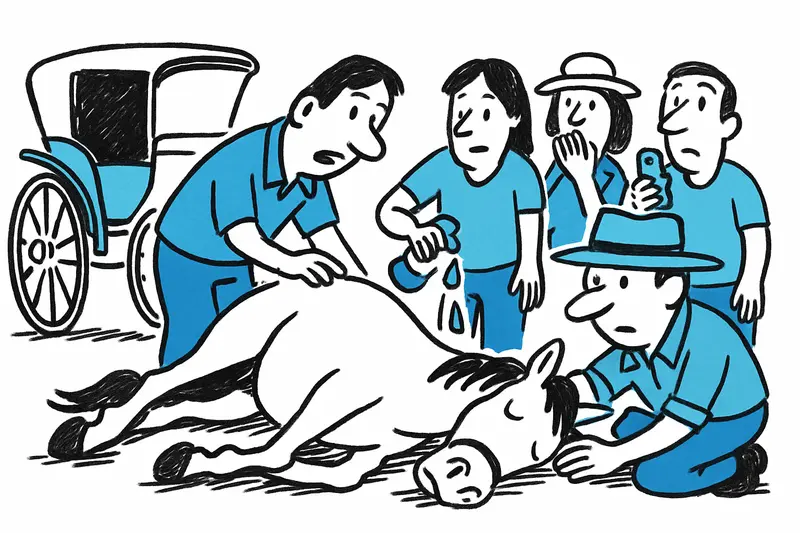
A horse sank onto the hot pavement in front of the San Nicolás church in the afternoon. The incident raises questions about animal welfare, heat limits and how traditional carriages are handled in Palma's old town.
Afternoon alarm: A horse collapsed amid the crowd
On Saturday at around 3:00 pm the normally busy area in front of the San Nicolás church in Palma became the scene of a shocking moment, later reported in Caballo se desploma frente a San Nicolás – Alarma en Palma por la tarde: a carriage horse sank onto the hot pavement. Church bells rang nearby, delivery vans honked, tourists' voices mixed with the rustle of souvenir stalls — then the sound of an animal that could no longer go on.
Immediate help from the crowd, but no calm
The coachman, some passers-by and holidaymakers reacted quickly: harness loosened, water poured over the neck, improvised sun protection with cloths. Several people pulled together to get the animal back on its feet. Pictures and videos circulated immediately on phones while the horse remained visibly exhausted. A veterinarian did not arrive immediately; residents later heard that the animal was to be examined during the day.
A single incident? No: a symptom
This collapse is not merely an isolated incident but an indication of structural problems. When it is around 30°C on a hot afternoon, the asphalt radiates heat and crowds surround the animal, stress, respiratory strain and exhaustion increase. Carriage routes often run over narrow cobbled streets like Carrer Sant Miquel, where there is little shade and constant noise from buses and scooters.
What is often missing
The public debate, highlighted by pieces like Caballo de calesa se desploma frente a San Nicolás: calor, protección animal y la pregunta por el futuro, often lacks concrete, enforceable rules: temperature limits, mandatory breaks, documented rest spots or an official veterinary registry for animals in service. The economic situation of carriage drivers is also rarely addressed — many depend on the income and have limited influence over routes or working hours. That means a ban alone is not a complete solution.
Concrete proposals instead of platitudes
There are practical steps Palma could consider immediately: a binding work-time and temperature rule (e.g. no operation above 28°C), mandatory veterinary checks before service, registered rest areas with shade and water points in the old town and a digital logbook documenting each shift. As medium-term alternatives, electric-powered carriages, shuttle services or increased guided walking tours are options — solutions that preserve tradition while protecting the animals.
Voices from the neighborhood
"I was sitting in the café on Carrer Sant Miquel, the heat was oppressive. The horse looked completely drained," says a shop assistant. A taxi driver from Plaça Cort adds tersely: "In this sun? No place for animals." Such remarks sound more like fatigue than outrage — people from Mallorca who value traditions but do not want to watch helplessly.
Administration, controls, transparency
The city administration has announced it will investigate the incident. What will be decisive is whether the review is public, timely and accompanied by clear consequences. Only with transparent control mechanisms will citizens gain trust: disclosure of veterinary reports, fines for violations, training for coachmen and heat-period monitoring would be sensible measures.
Chance for change
This sad moment can become an opportunity. Palma could set an example by combining practical rules, alternative offerings and social measures for affected drivers. That way tradition would remain visible but not at the expense of a living being. When strolling through the old town you hear not only the clatter of hooves but also the voices of the people — and they increasingly call for a more sensitive approach.
What to do now
Short term: immediate veterinary check, rest and cooling for the horse, clear information from those responsible to the public. Medium term: legal temperature limits, mandatory breaks, registered shade and water zones and alternative offers for tourists. Long term: a concept that combines work and animal welfare and shows ways for Palma to preserve its identity without endangering animals.
The image lingers in the old town: a horse on hot pavement, helpers with hands full of water, and the question of whether traditions need to be rethought. If words remain without consequence, the scene was only a moment. If concern turns into rules, Palma could lead the way — quietly but decisively.
Frequently asked questions
What should you do if a horse collapses in the heat in Palma?
Are horse carriages in Mallorca safe to operate in hot weather?
Why are there calls for temperature limits on carriage horses in Palma?
What happens after a carriage horse incident in Palma?
Is Carrer Sant Miquel in Palma too narrow and hot for horse carriages?
What alternatives to horse carriages are being discussed in Palma?
How can visitors in Mallorca tell if a horse is struggling in the heat?
Why did the horse collapse in front of San Nicolás in Palma?
Similar News
Masked Images, Real Panic: When Social Media Aesthetics Alarm Neighbors
Five German content creators filmed on a recently vacated detention site using deceptively realistic props. The result: ...
Why the Striped Breams in Cala Pí Should Be a Wake-up Call
Once again bathers in Cala Pí were surrounded while swimming by small, nippy fish — some wounds bled. Time for clear rul...

Daily from New York: How Palma's Air Traffic Is Growing — and What Must Change
United will increase the Newark–Palma service to daily flights in 2027 (Boeing, 231 seats). Strong tourist numbers clash...

When Love Ends in Shards: Destruction in Son Vida and the Questions That Remain
In Son Vida a relationship dispute escalated: a woman destroyed furniture in a luxury villa, later pressed a panic butto...
Who Bears the Burden? Mallorca Between Tenant Protection and Landlord Fears
Madrid's new housing decrees strengthen tenant rights — but on Mallorca concern is growing: will the law drive small lan...
More to explore
Discover more interesting content

Can Cap de Bou

Townhouse Lleo 72
