
Cala Millor connected to the Via Verde: More space for cyclists
Cala Millor connected to the Via Verde: More space for cyclists
Sant Llorenç plans new traffic routes: the Camí de Son Moro is intended to make bicycle and pedestrian traffic safer and to provide a direct connection to the Via Verde. Cost: nearly €4.2 million, mostly funded by the EU.
Cala Millor connected to the Via Verde: More space for cyclists
Over €4 million for new cycle and footpaths – the Camí de Son Moro is set to become a link to the island interior
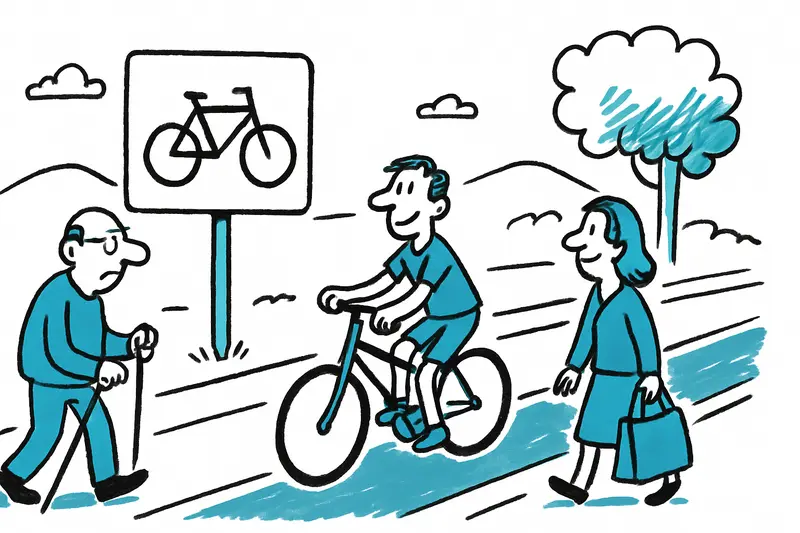
In the early morning, when the first bakeries in Cala Millor open their doors and the smell of coffee drifts over the promenade, you see them again: holidaymakers on rental bikes, locals with shopping bags, seniors with Nordic walking poles. Until now they often share narrow streets with motor traffic. That is set to change.
The municipality of Sant Llorenç has put two construction projects out to tender to connect Cala Millor directly to the so-called Via Verde – the former railway line between Manacor and Artà, which today serves as a green recreational route. A total of €4.19 million is planned for this; the financing comes largely from European funds. Specifically, around €3.1 million is planned for the expansion of the Camí de Son Moro and about €1 million for the connection to the Via Verde.
The plan for the Camí de Son Moro envisions a completely reorganized street space: two lanes for motorized traffic, plus a separate cycle path and improved areas for pedestrians. In addition, a direct connection will be created that gives cyclists and walkers a less busy access to the Via Verde. For active holidaymakers this means: getting from the seafront promenade into the island's interior faster and more safely – without constantly having to dodge cars.
The idea for this network goes back to 2019; the required approval was granted at the end of 2025, and the final clearance was issued in January 2026. Along the way, local development plans had to be adjusted and necessary land acquisitions secured under an accelerated procedure. The calls for tenders for the construction work have now been published.
If you shop at the Cala Millor market in the morning, you occasionally hear a quieter rhythm: fewer horns, more birdsong. That is exactly what supporters of the measure hope for. The municipality emphasizes that the planned infrastructure is intended to strengthen cycling and walking and reduce vehicle load, a goal shared by Mallorca's plan for 60 km of new pedestrian and cycle routes.
From a local perspective, the connection to the Via Verde brings a bit of freedom for excursions: the former railway line runs through quieter landscapes than the coastal road and offers pleasant, largely car-free sections for leisure cyclists. Past hilly fields and olive trees you can explore the other Mallorca without long drives by car.
Construction sites always bring noise and dirt. Many shopkeepers and landlords in Cala Millor will watch closely how the works are organized so that the high season is not affected, and this concern has also surfaced in reporting on Cala Millor modernizes sports facilities — opportunity or burden for the community?. Good coordination of construction times, clear diversion plans and regular information to the public are mentioned by locals as important conditions, similar to debates over new pedestrian and cycle bridges over Palma's ring road.
The connection is not only a gain for holidaymakers: everyday journeys could become shorter, children could cycle to school more safely, and commuters would have an additional, more relaxed route. At the same time, the project offers a chance to change mobility habits: fewer short car trips, more activity right on the doorstep.
In the coming months the island will see how the tenders are awarded and the first diggers move in. Those who already cycle can imagine how much more relaxed a morning ride to the Via Verde will be: the sound of the sea on the left, olive groves on the right, and a corridor that leaves room for everyone.
For Cala Millor this is more than a new stretch of asphalt: it is an invitation to experience the island from the saddle. If planning and construction are implemented in a practical way, the region will gain not only in safety but also in quality of life – and a few more kilometers that people will want to pedal with a smile.
Frequently asked questions
When is the best time to visit Mallorca for beach days and swimming?
How can I get around Mallorca without renting a car?
What should I pack for a Mallorca trip?
Are Mallorca's beaches safe for swimming?
What local Mallorca dishes should I try?
What outdoor activities are popular in Mallorca?
Is Mallorca a good destination for families with kids?
Are there any must-see festivals or events in Mallorca?
Similar News

Key question: Are Mallorca's cities and infrastructure prepared for such cold fronts?
On the night to Wednesday a sharp cold front brought lightning, thunder and heavy rain to the island. AEMET keeps the se...

Oysters, 800 HP and a Charity Heart: Private Greens Business Cup in Canyamel
Around 120 business guests played at Golf de Canyamel in early October, tried an 800-hp McLaren and raised money for chi...

Ryanair leaves Bremen — what this means for Mallorca connections and the island
Ryanair is suspending flights from Bremen to Mallorca from April. Several connections will be lost for travelers, Bremen...

Road collapses in Palma: Who will protect the city's main access routes?
A hole on Avenida Gabriel Alomar has closed three lanes heading toward the Paseo Marítimo. Bus lines are being rerouted....

Boutique Hotel Ranking: Two Mallorcan Hotels in Spain's Top 25
A new ranking based on guest reviews places two hotels from Mallorca among Spain's 25 best properties with fewer than 50...
More to explore
Discover more interesting content

Can Cap de Bou

Townhouse Lleo 72
