
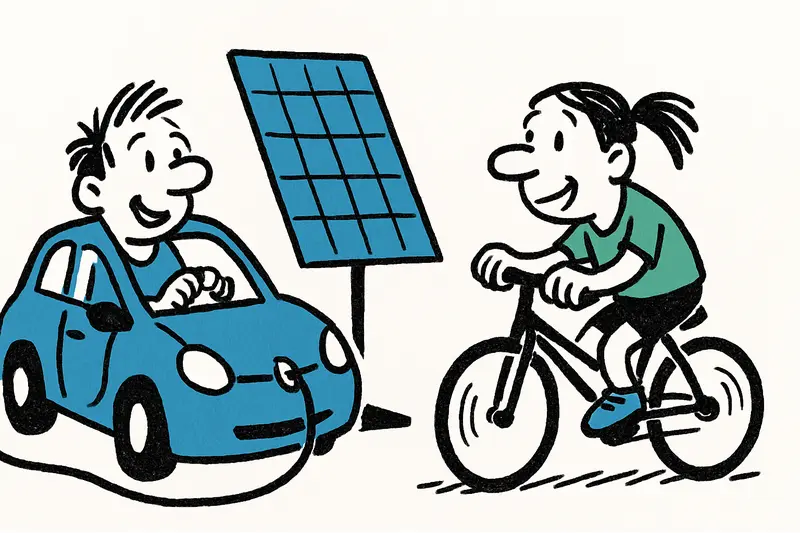
Campos brings energy to life: Children test electromobility and eco-ideas on the square
Campos brings energy to life: Children test electromobility and eco-ideas on the square
On the Can Pere Ignasi square in Campos, 130 children tried out electromobility, made posters, threw recycling cards in relay races and cuddled a young calf. A morning that sparks curiosity and makes local environmental projects visible.
Campos brings energy to life: Children test electromobility and eco-ideas on the square
A colorful morning in Can Pere Ignasi with 130 pupils, a calf and lots of ideas
Late in the morning, the spacious Can Pere Ignasi square in Campos filled with voices, laughter and the light breeze coming from the outskirts. The sun was warm but not oppressive, and between the stalls the scent of fresh fruit mixed with the soft clinking of a bicycle chain. 130 children from three schools transformed the square into a small experimental field for sustainability.
Classes came from the Fra Joan Ballester primary school, the Joan Veny Clar school and the CEIP de Call Vermell. The tents of the Energy BYD Challenge were divided by theme: electromobility, renewable energies, movement and creativity. In one tent stood a modern electric vehicle, next to short explanatory videos and an interactive questionnaire that the boys and girls could answer. Not dry lecturing, but touching and trying out – that's how knowledge sticks.
Next to the electric car, an expert presented a vehicle built specifically for maintenance work, where energy efficiency was explained in practical terms. At the end of the day the children were allowed to take home eggplant seedlings, a small sign of how agriculture and sustainable thinking belong together.
Another team showed how renewable energies can change our everyday lives. Afterwards, a drawing workshop challenged the children's creativity: who designs the poster that will adorn the next Energy action? The results – colorful designs with solar panels, wheels and trees – proved that the topics had been understood.
It got sporty with a relay race using recycling cards: paper, plastic and residual waste had to be thrown into the correct bins. Small teams ran, laughed and learned along the way which waste belongs where. Afterwards there was a break with regional fruit and water; sliced oranges and strawberries quickly filled empty hands.
A special eye-catcher was María Jesús, a four-month-old calf from the Sa Vinya farm, who lay calmly on a blanket and allowed herself to be petted. The presence of the animal helped the children form a connection to local agriculture. At a time when many processes seem distant, the calf made the origin of our food immediately tangible.
The municipal administration of Campos was well represented. Mayor Xisca Porquer as well as councillors from culture, education, construction, urban planning, finance and responsibilities for Sa Ràpita spent the whole morning among the stalls and workshops. More than symbolic participation: the municipality had co-organized the event and used the opportunity to present ongoing measures – for example the modernization of street lighting to LED, the changeover of waste collection, the expansion of recycling centers, the installation of charging stations for electric vehicles and the new drinking water network, and these measures are part of broader local conversations such as the Son Bonet protest over a proposed solar park.
Such visibility pays off. Children bring experiences home, talk to parents about what they saw, and imitate the small gestures – turning off the light, sorting waste, watering a plant. This is precisely the strength of the initiative: not abstract appeals, but tangible offers that invite imitation.
Organizers and partners – from local tree nurseries to energy companies and nonprofit foundations – showed that morning how much can move when administration, companies and associations work together. For Campos this is a good omen: the projects presented on the square are not just visions of the future, but already tangible on site.
Those who walked through Campos that day heard not only the voices of the children, but something else as well: the small steps of a community that not only decides environmental policy but also explains and makes it tangible. When the poster for the next Challenge is ready, the same children may proudly say: "I helped design this." And that is the core: involving people so that change does not come from above but is carried by everyone.
A sunny morning at Can Pere Ignasi – more than an event, a seed for lasting change. Those who live in Campos or drink their coffee on market day will surely watch closely next year when the little seedlings have grown a bit more, as has been seen at the children's market in Santa Ponça.
Frequently asked questions
What did children do at the sustainability event in Campos?
How warm is Campos in spring for an outdoor event or visit?
Can children learn about electric cars in Mallorca in a practical way?
What is the best way to explain recycling to schoolchildren in Mallorca?
Why do local schools in Campos take part in environmental activities?
What role did the calf play at the Campos event?
What sustainability projects is the town of Campos working on?
What can families in Mallorca learn from a school sustainability event like this?
Similar News

Mueller continues expanding in Mallorca: Artà in 2026, Can Picafort in early summer 2027
The drugstore chain Mueller is opening two new stores in Mallorca: a 1,400 m² shop in Artà on 5 November 2026 and a bran...
The Painter Who Lived Mallorca: Franz Taussig and His Century-Old Secret
A hundred years ago a young Viennese arrived in El Terreno, sketched the island and called himself Francis Caron. Today ...
Airport dispute: Bridge, forecasts and the question of responsibility
A video by the Spanish transport minister has ignited the dispute over DORA figures, capacities and local governance pow...

The Painter Who Invented Himself: How a Young Viennese Drew Mallorca
A hundred years ago a 19-year-old draftsman arrived in El Terreno. His diary and sheets, long known under the pseudonym ...
Released with Conditions: The Plus Ultra Suspicion and a Mallorcan Finca as Residence
A Dutch entrepreneur, sought in connection with the Plus Ultra case, was extradited to Spain after his arrest in Germany...
More to explore
Discover more interesting content

Can Cap de Bou

Townhouse Lleo 72
