
Cardiac Arrest in a Bathing Bay: What's Missing on Mallorca's Small Beaches?
Cardiac Arrest in a Bathing Bay: What's Missing on Mallorca's Small Beaches?
A 73-year-old tourist dies after a cardiac arrest in Cala de ses Llises near Peguera. Rescue teams fought for over an hour — time for an honest look at safety gaps on smaller coves.
Cardiac Arrest in a Bathing Bay: What's Missing on Mallorca's Small Beaches?
Key question: Why does a medical emergency in an unremarkable cove so often end in death — and what can be improved quickly?
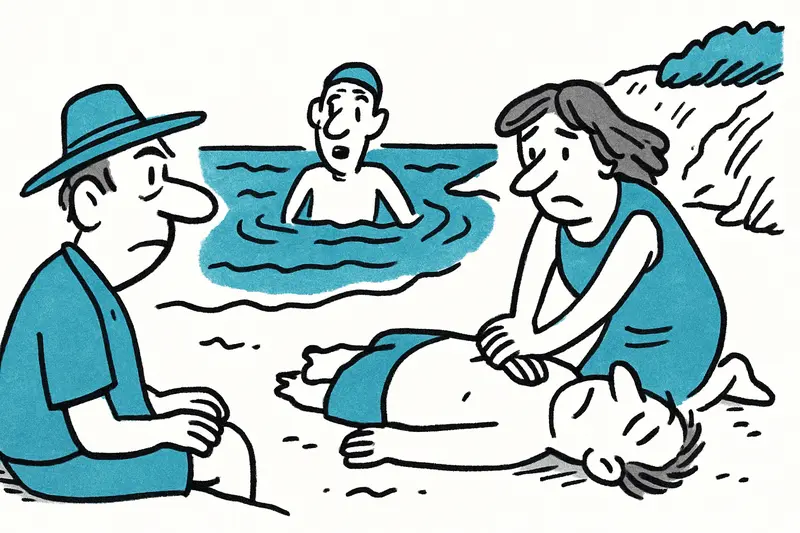
On early Tuesday afternoon, around 1:25 p.m., the silence at the small Cala de ses Llises near Peguera was broken by screams and hurried footsteps. Bathers pulled a 73-year-old man from the water; he was no longer breathing. Lifeguards from the nearest guarded beach in Palmira and later paramedics from emergency service 061, as well as police, the Guardia Civil and volunteer helpers, arrived. The teams began resuscitation efforts and worked for more than an hour, but the senior could not be revived. Tents were set up to protect the work and to preserve the privacy of the victim.
Those are the sober facts. From them come questions that are often missing in public debate: How quickly do professional helpers reach remote coves? Are there automated external defibrillators (AEDs) or at least clearly visible signs indicating the nearest location? And how well are holidaymakers and residents trained to perform life-saving measures in the first minutes after a cardiac arrest?
Critical analysis: On Mallorca, attention usually focuses on the large beaches with lifeguard towers and tourist infrastructure. Small patches of sand and rocky coves like Cala de ses Llises are often only visited seasonally, but fill up quickly in sunny weather. An ambulance access route, mobile phone connection and quick access to an AED can make the difference. In this case passersby and lifeguards did everything possible, yet survival after cardiac arrest depends crucially on the first minutes.
What is missing in public discourse: the debate about beach safety often revolves around sunbed allocation, litter or boat rules — less attention is paid to medical emergencies, as highlighted by Cardiac Arrest on Can Picafort Beach: Questions Remain and Ideas for the Future. Less present are concrete figures on timeframes until the emergency doctor arrives, maps for AED locations, or a plan for how volunteers and neighborhood groups can be involved in the off-season. The perspective of older visitors — their risks when swimming after long travel, heat or taking medication — is also underrepresented.
A small everyday scene from here: in the morning pigeons sit on the low wall at the cove, a woman from a house on the coast folds the beach towels, on the Passeig of Peguera you can hear the radio at a kiosk and a tense fisherman pulls his net into the boat. Such scenes speak of an island that offers both calm and pressure: calm for people, pressure on the rescue chain when something goes wrong.
Concrete solutions that could be implemented immediately:
1) AED strategy for secondary coves: County offices, municipalities and private residents should jointly decide whether permanently installed defibrillators can be placed at central points near popular small beaches. These devices are robust, self-explanatory and often cheaper than assumed.
2) Visible reference points and emergency numbers: Small weatherproof signs at access paths with the exact place name (e.g. Cala de ses Llises – access stairs 3), the nearest AED location and clear instructions on how to report the position by phone or emergency app.
3) Cooperation lifeguards – municipality: If guarded beaches are farther away, mobile lifeguard teams could perform short patrols to smaller coves during peak times or be reachable by radio.
4) Local first aid courses: Free short refreshers for residents, beach renters and businesses in tourist areas — especially before the season starts. Fifteen minutes on chest compressions and AED handling can save lives.
5) Information for risk groups: General practitioners, pharmacies and tourist offices should provide simple advice: about the importance of accompaniment when swimming, sufficient fluid intake, and when medical advice is sensible before swimming in the sea.
These proposals are not a universal solution, but practical steps. They do not require a new law, but coordination and will: municipalities, emergency services and local people must plan hand in hand.
Concise conclusion: The tragic death in Cala de ses Llises is not an isolated accident but a warning signal and echoes other recent incidents such as Tragedy in Son Bauló: Small Cove, Big Questions — How Safe Are Mallorca's Unassuming Beaches? and Cardiac Arrest While Swimming in Colònia de Sant Pere: A Death and the Question of Prevention. The island has the means to improve first aid at small beaches. It needs less theory and more visible AEDs, better directions, coordinated deployment plans and a bit of neighborhood help. The crucial question remains: will we learn from this case or will small coves continue to be safety gaps until next time resuscitation starts too late?
Frequently asked questions
Are small coves in Mallorca usually covered by lifeguards?
What should I know about swimming safely in Mallorca’s small bathing bays?
Where can I find an AED near Mallorca beaches and coves?
What should I do in Mallorca if someone has a cardiac arrest at the beach?
Is Cala de ses Llises near Peguera a guarded beach?
Why are Mallorca’s small coves more vulnerable in beach emergencies?
What emergency information should a small beach in Mallorca display?
Should older visitors take extra precautions when swimming in Mallorca?
Similar News

Mueller continues expanding in Mallorca: Artà in 2026, Can Picafort in early summer 2027
The drugstore chain Mueller is opening two new stores in Mallorca: a 1,400 m² shop in Artà on 5 November 2026 and a bran...
The Painter Who Lived Mallorca: Franz Taussig and His Century-Old Secret
A hundred years ago a young Viennese arrived in El Terreno, sketched the island and called himself Francis Caron. Today ...

Airport dispute: Bridge, forecasts and the question of responsibility
A video by the Spanish transport minister has ignited the dispute over DORA figures, capacities and local governance pow...

The Painter Who Invented Himself: How a Young Viennese Drew Mallorca
A hundred years ago a 19-year-old draftsman arrived in El Terreno. His diary and sheets, long known under the pseudonym ...
Released with Conditions: The Plus Ultra Suspicion and a Mallorcan Finca as Residence
A Dutch entrepreneur, sought in connection with the Plus Ultra case, was extradited to Spain after his arrest in Germany...
More to explore
Discover more interesting content

Can Cap de Bou

Townhouse Lleo 72
