
With Caregivers to Mallorca: Heidemarie's Big Wish Came True
With Caregivers to Mallorca: Heidemarie's Big Wish Came True
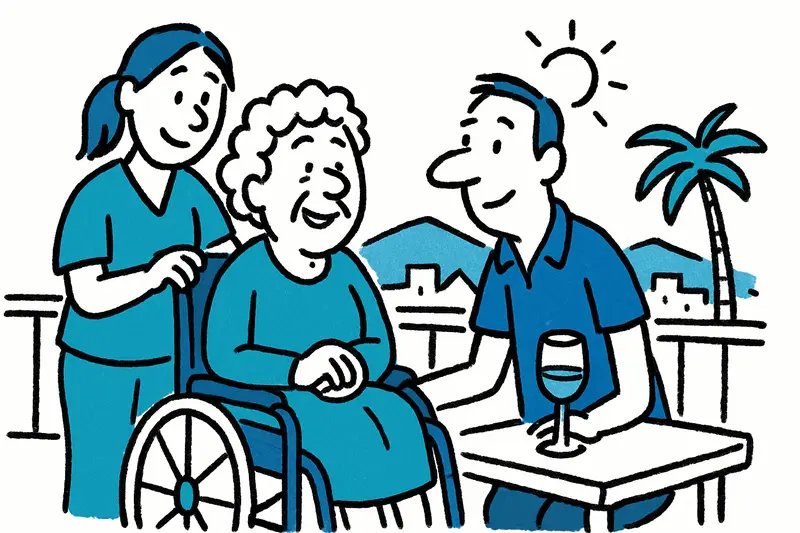
Two senior women from Rostock — 85-year-old Heidemarie and 73-year-old Ingelore — traveled to Palma accompanied by their mobile care service. A calm, joyful holiday showed how inclusive tourism on Mallorca can work.
With Caregivers to Mallorca: Heidemarie's Big Wish Came True
When travel happiness and care come together
In the early morning, before the street sweepers on the Passeig Mallorca fired up their machines, two women sat on the terrace of a wheelchair-accessible finca and looked out over the rooftops of Palma. Ingelore (73) and Heidemarie (85) had one thing in common: the wish to see the island once more. That they were able to make the journey was thanks to a mobile care service from Rostock that offers accompaniment flights for people in need of care.
The two seniors traveled by plane to Palma in October. They stayed in a finca adapted to the needs of people with limited mobility: ground-level rooms, ramps instead of steps, and a garden where in the morning the scent of coffee mixed with the distant sound of the sea. Relatives stayed updated daily via a WhatsApp group — photos of the Plaça Major, the colorful bustle of the old town and later the red train to Sóller quickly became a little family chronicle.
The program wasn’t about marathon excursions, but about things that bring joy: slow walks through the old town, a visit to the Lluc monastery with candles for their deceased husbands, a quiet afternoon at the beach and — to the women’s surprise — an evening at the Megapark. In a reserved lounge they swayed to the music; laughter mingled with the clinking of glasses. There was also a stop at a local gallery and a glass of sparkling wine that Michael, the care service manager, had organized.
The nursing accompaniment was provided by professionals from the service: assistance with dressing and undressing, help in the wheelchair, planning medications, but also the small everyday things — holding hands at breakfast, entering the sea together in the morning. Financially it worked so that the participants covered travel and accommodation; the nursing care was covered by benefits from the social long-term care insurance. For the Rostock caregivers this is no longer an isolated case: the provider plans to offer shorter group trips of up to five participants in the future, similar to recent three-day tours for over-60s, and wants to organize such offers more regularly.
What this means for Mallorca is more than a few happy days. Such trips bring people to the island who would otherwise seldom come: they visit cafés on the Calle de Sant Miquel, hear the church bells at the Plaça Major and strengthen another form of tourism — calm, respectful and tailored to the needs of the guests. Hotels and accommodations that plan barrier-free benefit, as do small shops and venues that rely on a personal welcome. This sits alongside reporting on Beauty Tourism in Mallorca: Between Clinic Luxury, Cryo Chambers and Everyday Life.
At the end of the trip what remained was what always matters: memories to take home. Heidemarie said it was her first flight in her life — and perhaps not the last. Ingelore, who is recovering from a knee operation, laughed and said, "I love Mallorca." For the caregivers, that was confirmation enough: such offers fit an island that wants to be measured not only by package tourism but by days like this, by closeness and humanity, a point echoed in After Eleven Years at the Top: What Mallorca's Tourism Radar Really Needs to See.
As an outlook: the care service is already in contact with Mallorcan partners and is planning a next flight in mid-February. For the island these are small signals: inclusive tourism works when people, organizations and municipalities think together. For other care services in Germany this model could serve as an example — a holiday that combines nursing security and travel enjoyment is a memory that lasts.
A quiet observation from the harbor to the town: on Mallorca hospitality sounds best when it comes without haste and with real faces.
Frequently asked questions
Can people with limited mobility travel to Mallorca safely?
What kind of weather can seniors expect in Mallorca in October?
Is Mallorca a good destination for a calm, slow-paced holiday?
What should you pack for a Mallorca trip if you need care support?
Is Palma easy to visit if you use a wheelchair?
What is barrier-free accommodation like in Mallorca?
Can caregivers accompany an elderly person on holiday to Mallorca?
What are some gentle activities for older visitors in Mallorca?
Similar News
Injured captain, big plans: Germania Mallorca before the away match in Consell
The newly founded FC Germania Mallorca travels to Consell on Saturday. Captain Bastian Müller is out injured, but coach ...
Palma, Palma de Mallorca, Palma‑Mallorca: What is it really about?
The debate over the city's name is more than grammar: it concerns identity, law and branding policy. A sober reality che...

Warning to Bathers: Nipping Fish in Cala Major and Other Coves — a Reality Check
In Cala Major and several beaches around Mallorca, bathers report painful “nips”. Who are the animals, why are they gett...

Rental Car Theft in El Arenal: What This Incident Reveals About Our Gaps
A teenager steals a running rental car in El Arenal, flees on foot, climbs over walls and is caught by the Guardia Civil...

Red Rope in Palma's Library: What Helps Against Selfie Tourism — and What's Missing
Palma's city library cordoned off an area with a red rope to keep selfie tourism away from reading and working activitie...
More to explore
Discover more interesting content

Can Cap de Bou

Townhouse Lleo 72
