
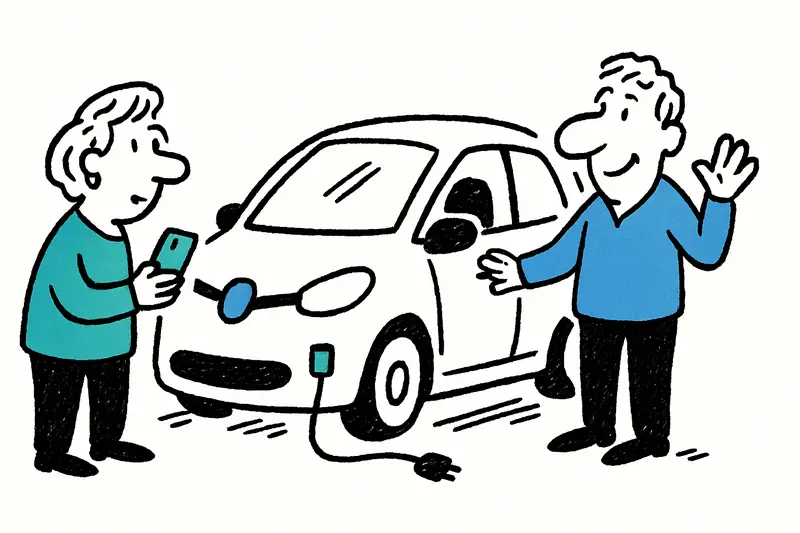
Carsharing in Palma: electric, cooperative and under €5 per hour
In Palma small white Renault ZOE glide through the streets — not from a large company but from a local cooperative. For a one-time membership fee there is flexible, minute-accurate booking via an app and rates starting at €4.95 per hour. Why the model appeals in the narrow lanes of the island city and how it can grow further.
When the church bell rings and a soft whir arrives
Where before you mainly heard scooters and seagulls while strolling through Palma, a gentle electric hum has now been added. Small white Renault ZOE park on corners where otherwise only delivery vans struggle: on the plaza, near the market – between market stalls and the smell of fried peix. They are not the fleets of big providers but cars of a local cooperative. They can be unlocked via app, booked by the minute or hour – and cost hardly more than a coffee.
How the system works
Those who want to join pay a one-time membership fee of €100. Afterwards a profile is created online, two drivers can be registered, and reservations are made via the portal or smartphone app. Open, drive, return: all digital. There's no more key chaos, only the quiet click of the app and the whir when manoeuvring out of a parking space.
The rates are straightforward: €4.95 per hour, €45 per day (for use from nine hours up to 24 hours) and about €0.04 per driven kilometre. The fleet currently consists of five Renault ZOE – enough for spontaneous errands, a quick trip to the supermarket or a short weekend at Cala Major beach.
Why many join
The special thing: the initiative is organised as a cooperative. Members are not only users but co-owners. They have a say in new parking spots, charging points or strategic direction. In a city where parking is scarce and streets are narrow, it feels like a neighbourhood project with purpose.
The operators claim that one shared car can replace up to a dozen private cars. For many that sounds plausible: fewer cars in the alleys means more space for pedestrians, kick scooters and cyclists, similar to initiatives during the Palma and Marratxí car-free day. Regular users report that they mainly use the cars when bus or bike are not suitable – about two to three times a month, for big shopping trips or appointments outside the metro lines, an issue highlighted in coverage of free buses in Palma.
Where the cars are parked — and how it should continue
The parking spots are central: within walking distance of supermarkets, stations and residential areas. Often this is noticeable in neighbourhoods like Santa Catalina or near the Estació, where in the morning the market sellers' voices fill the air. The cooperative plans to extend the fleet and locations to other parts of the island – provided there are charging opportunities and committed hosts willing to offer parking spaces, as shown on a new map of charging stations across the Balearic Islands.
As an incentive new members sometimes receive free hours to test. Anyone who can provide a parking space with charging may get in touch. Bureaucracy remains an issue – permits and parking regulations take time – but many see the project as a practical, sustainable addition to everyday life.
A pragmatic outlook
The model has charm: it combines simple technology (app, digital keys) with a sense of community. For it to grow, however, it needs more than good ideas: more charging points, clear signage at parking spots, support from municipalities and a bit of neighbourhood enthusiasm. Possible collaborations include supermarkets, housing cooperatives or municipalities for reserved charging spots.
For residents of Mallorca this means: fewer cars on residential streets, fewer rounds circling in search of parking and more space for people. And for the one who wants to spontaneously go to the sea on a Saturday: a tip from the neighbourhood – reserve early. Especially on Fridays the slots are in demand.
The soft hum of the e-cars is already mixing into Palma's soundscape. Whether it becomes a broader movement depends in no small part on whether the city, property owners and neighbours go along.
Frequently asked questions
How does carsharing work in Palma, Mallorca?
How much does carsharing cost in Palma?
Is electric carsharing in Palma a good option for short trips?
Do I need to be a member to use the Mallorca carsharing cooperative?
Where are the carsharing cars parked in Palma?
Can carsharing help with parking problems in Palma?
How far in advance should I book a carsharing car in Palma?
Can visitors use carsharing in Mallorca, or is it mainly for residents?
Similar News

Maribel: Five Decades of Service – Housekeeper from Peguera Celebrated with a Special Honor
Over 50 years in the hotel business: María Isabel “Maribel” Molinos was honored in Palma at the Nit del Turisme by Unive...

Orange Alert over Parts of Mallorca: Are We Prepared?
Dark clouds and an announced wet spell have triggered an Orange alert in parts of Mallorca. A reality check: what's miss...

Sundair & Co.: Sale speculation and what it could mean for Mallorca
Rumors about a possible sale of the airlines Sundair and Fly Air 41, which belong to Schauinsland-Reisen — and whether b...
Anne Wünsche in Mallorca: A job offer with a catch — who fits the role of personal assistant?
Influencer Anne Wünsche has left Berlin and is urgently looking for a full-time personal assistant in Mallorca. Why the ...

Daily from New York: Palma Between Boom and Strain
United will increase the Newark–Palma route to daily flights in 2027 using Boeing aircraft (231 seats). What does the in...
More to explore
Discover more interesting content

Can Cap de Bou

Townhouse Lleo 72
