

When Proceedings Wait for Years: How Mallorca's Justice Handles German Cases
When Proceedings Wait for Years: How Mallorca's Justice Handles German Cases
Why do proceedings on Mallorca often take so long, and how do German defendants experience it? A reality check focusing on pre-trial detention, overburdened courts and practical steps for those affected.
When Proceedings Wait for Years: How Mallorca's Justice Handles German Cases
Key question: Why do some proceedings on Mallorca stall for years while defendants and their families pendulum between fear, uncertainty and dealings with the authorities?
The scene: It is early afternoon on the Passeig Mallorca, taxis honk, a seagull circles above the traffic and further north, behind warehouses and a few commercial buildings, lies the Palma prison. Here two realities meet: the routine of island life and the internal strain of an overloaded justice system.
Lawyers like María Barbancho, who are familiar with both German and Spanish criminal law, see the same patterns again and again: arrests, rapid appearances before a remand judge, followed by months — sometimes years — of investigation. In Germany many defendants expect the case to be closed quickly. On Mallorca it is different: the public prosecutor is more inclined to bring charges, and investigating judges and hierarchical directives also play a role, as local reporting discusses in When the Verdict Is Delayed: Why Court Proceedings in Mallorca Often Take Years.
Core problem number one is the burden on the courts. In some departments judges work with scarce support staff — in some offices only a few secretaries — and the stack of files grows faster than capacity. A written submission often wanders through piles of files for a long time, decisions are delayed, travel bans remain in place even when the substantive matter seems resolved.
Another problem is the practice of pre-trial detention. While short-term detention is often the rule in Germany, Spain can impose significantly longer periods of pre-trial detention in serious cases. That means additional pressure for defendants, families and lawyers: bail, conditions, restricted freedom of movement — all while the outcome of the proceedings remains open.
Another factor is the use of agreements: early guilty pleas are more common in Spain than many Germans expect. Under heavy pressure people sometimes accept reduction offers to avoid long prison sentences — with the consequence that questions of innocence are not always clearly resolved in the end, a point underlined by Suspended Sentence After Abuse in Palmanova: A Verdict That Raises More Questions.
What is often missing in public discourse is a look at the very practical procedures: How is communication between lawyer, consulate and family organised? How quickly are documents available when they must be sent from Germany? What role do interpreters play, phone calls from detention or visits to the prison?
Everyday life on Mallorca provides illustrative examples: a German tourist arrested in a beach bar can be before a remand judge within two days; the family in Germany sends an employment contract and rental papers via WhatsApp; the lawyer later that day drives to the detention centre on the northern edge of Palma to see the client. This logistics works — but it is vulnerable to delays when courts are overloaded or forms are not processed in time — and such incidents have led to trials back in Germany, for example Trial in Essen: Four Germans charged over alleged incident in Mallorca.
Concrete solutions that follow from practice: first, better digital file management and more back-office staff in the courts so that submissions can be reviewed more quickly. Second, increased use of translators and consular support so that important documents are not lost in the early phase. Third, targeted training for prosecutors in handling international cases so decisions about charges and dismissal options become more comparable and comprehensible.
In addition, clearer rules on pre-trial detention would be sensible: deadline checks and regular reviews could prevent cases from hanging in limbo unnecessarily. Finally, funds for public defence and external experts should be increased — often the quality of the defence in the first days already determines the further course.
For those affected locally the most practical recommendations are: hire a language-capable lawyer immediately, contact the consulate, keep all relevant documents available digitally and ask persistently but patiently. A committed defence that systematically gathers documents and monitors deadlines can make the difference.
Conclusion: The justice system on Mallorca is not a black hole, but it is vulnerable — to overload, to hierarchical directives from the public prosecutor's office and to pragmatic defence decisions under pressure. Those who know this can act more effectively: use official contacts, document processes and arrange professional help in time. For the island this also means: more staff, less paperwork backlog and a few pragmatic reforms could ensure proceedings are not left on ice longer than necessary.
In the end there remains an image I often see when I drive from the harbour towards the city: people living their daily lives — cafés fill up, delivery vans roll — and alongside them a justice system that clearly needs more support so that legal certainty for everyone is not just a promise.
Frequently asked questions
Why do court cases on Mallorca sometimes take so long?
What should a German defendant do first after an arrest on Mallorca?
How does pre-trial detention work in Mallorca compared with Germany?
Why do defendants on Mallorca sometimes agree to an early guilty plea?
What role does a lawyer play in a Mallorca criminal case with German links?
How important are translations and consular help in Mallorca cases?
What is happening with court delays near Palma in Mallorca?
Can travel bans or other restrictions stay in place for a long time on Mallorca?
Similar News
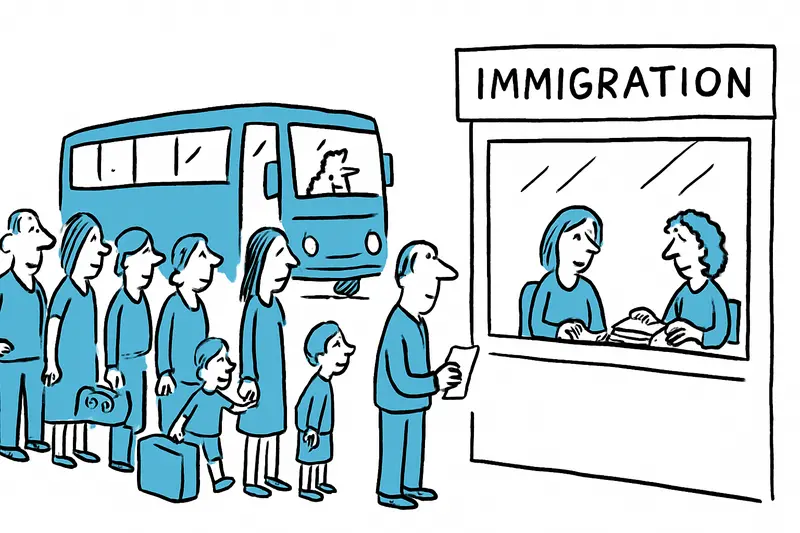
Are the Balearic Islands the Southern Border of Europe? A Reality Check on Immigration
The Balearic Islands are again calling for EU aid after a sharp rise in arrivals by sea. Conflicting priorities between ...

"Expensive chaos" and many open questions: What clients can do when a lawyer suddenly stops responding
Several clients complain that a well-known German lawyer in Mallorca has been unreachable for months. Key question: What...

TV tip: 'The Last Problem' — Mallorca as the setting of a classic crime
A classic whodunit on Mallorca: A new miniseries set in spring 1959 brings storm, an isolated hotel and a dense web of s...
Nipping Sea Creatures: Why Bathers in Cala Major and Elsewhere Should Be Cautious
In Cala Major, bathers have reported being nipped by small fish. What is behind it, how can problems be avoided — and wh...
Forced eviction in Santa Catalina: When a 65-year-old slept in her car and showered on the beach — a question of responsibility
The story of Pilar López from Santa Catalina represents a problem affecting many Mallorcans: How can an island with a bo...
More to explore
Discover more interesting content

Can Cap de Bou

Townhouse Lleo 72
