
Flight from Thirst: Two Dehydrated Babies Rescued off Ibiza — a Critical Assessment
Flight from Thirst: Two Dehydrated Babies Rescued off Ibiza — a Critical Assessment
Two young children were admitted to Can Misses with fluid deficiency after a rescue off Ibiza. How do the island, emergency services and politicians respond in the short and long term?
Flight from Thirst: Two Dehydrated Babies Rescued off Ibiza — a Critical Assessment
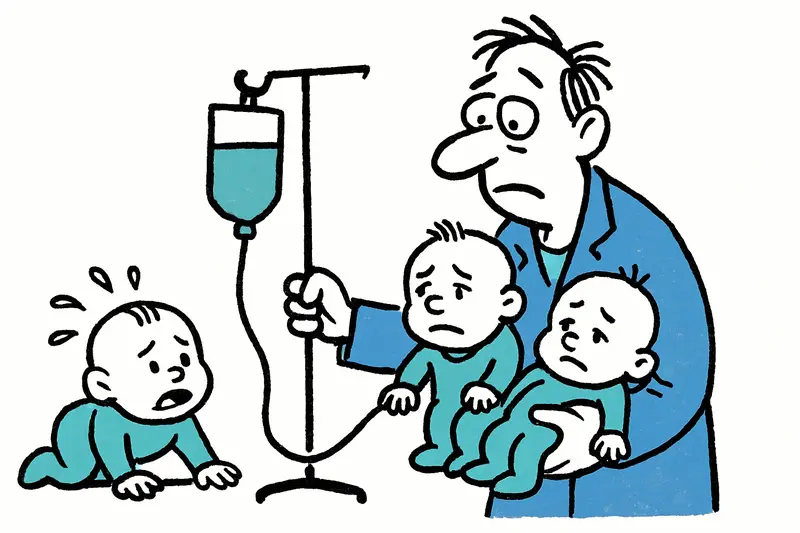
How can an island like Ibiza react when migrant boats repeatedly arrive on its coasts and small children on board suffer acute fluid loss? This question now faces Hospital Can Misses, where two girls (two and 18 months old) were admitted after a rescue with symptoms of dehydration. Their condition is improving, but the scene raises bigger questions.
On Saturday an inflatable boat carrying 32 people reached the town of Ibiza; on board were several women and two infants. Local helpers, a civil society organisation and the search and rescue services all played a role in the recovery, a pattern seen in 337 People in One Day: Between Rescue, Improvisation and Strategy. According to authorities and the organisations involved, the families had already feared that boats were disappearing: one of the affected boats is said to have set off from the Algerian coast on January 22. At the same time, state agencies report interception actions by the Algerian navy and further rescues by the Guardia Civil and search and rescue units in the waters south of Mallorca, detailed in New surge of boat migrants: 122 people rescued in one day off the Balearic Islands.
Critical analysis: At first glance medical care on Ibiza appears well organised — the Can Misses emergency department received the children, paediatric services and IV fluids apparently led quickly to improvement. But the logistics around landings, information flow and family contacts remain fragile. Boats reported missing reappear; interception reports by other states are not always explained transparently. This creates confusion for those searching, for NGOs and for the affected families in the countries of origin.
What is often missing in public discussion are the everyday practices needed when children come ashore. First aid is not enough. Interpreters, psychosocial first response, short-term accommodation, legal information for parents and coordinated communication with families in Africa are required. Much of this is improvised — local helpers report that phone calls, SIM cards and simple rehydration solutions often make the difference.
A Mallorcan atmosphere helps to make the scene visible: outside Can Misses in the early morning, when shifts change, you hear sirens, fishing boats motor out of the harbour, and the bakery on the street smells of freshly baked ensaimada. Volunteers from Santa Eulària or the old fishing harbour bring blankets and milk. Such scenes are humane and moving — and at the same time symptomatic of a system that relies on individual goodwill.
Concrete solutions that can be implemented immediately: 1) Arriving boats should be prioritised at designated ports and received with a standardised medical-social protocol — including a paediatric initial check, hydration kits and multilingual information sheets. 2) Regional coordination between Spain, neighbouring countries and NGOs on secured reporting chains, so interrupted search requests do not end in silence. 3) Short-term funding for mobile paediatric emergency kits at ports and airports: IV sets, electrolyte solutions, ad-hoc translator pools. 4) Establishment of small reception centres with trained staff for vulnerable groups such as infants and pregnant women so they are not lost in general triage.
Long term, more is needed: safe and legal access routes, increased transparency in international interception operations, clear responsibilities between coast guards and civilian rescue organisations, and a regional network for digital family communication so relatives in Africa are not left in the dark for days.
What is concretely possible in Ibiza: the hospital can form a small working group together with the town hall and local NGOs — a pilot team to test the protocols mentioned above. The Guardia Civil and search and rescue services should rehearse procedures in joint exercises with nursing staff and local hospitals. And: a simple thing that is often missing are rechargeable prepaid SIMs and power banks for rescued people so they can contact home immediately.
Conclusion: Two dehydrated babies are a stark warning signal. They show that immediate medical aid works — but that the overall system of information, coordination and protection for the most vulnerable needs improvement. On the streets of Ibiza, between the harbour and the narrow lanes, people help spontaneously. Policymakers and authorities must turn that goodwill into concrete structures so that the next boat does not meet improvisation instead of coordinated response and care.
Frequently asked questions
What happened to the two dehydrated babies rescued off Ibiza?
How are rescued migrants with children treated in Ibiza?
Why is dehydration such a serious risk for babies rescued at sea in Mallorca and Ibiza?
What should volunteers in Ibiza or Mallorca bring to help rescued families?
What is the role of Can Misses hospital in Ibiza during sea rescues?
Why do boat rescues off Ibiza and Mallorca often create confusion for families?
What would improve the response to migrant boat arrivals in Ibiza?
Can small island hospitals like those in Ibiza or Mallorca handle these emergencies?
Similar News

The Maricarmen Case: Why an Eviction Is Forcing Spain's Housing Debate
Images of an 87-year-old woman on a stretcher have sparked a debate in Spain that also runs deep in Mallorca. Who protec...

Parking dispute in Els Hostalets: When a gap leads to violence
A parking dispute on Calle Aragón escalated into a mass brawl at night. Why do trivial conflicts here turn bloody so qui...
Bodycams in Palma: More clarity needed so surveillance doesn't become the norm
Palma's local police equip UII officers with Axon Body 4 cameras. Useful for evidence collection — but specific rules on...
When the Bread Door Closes: Why Maria de la Salut Lost Its Last Bakery
The only bakery in Maria de la Salut, a sales outlet of Forn de ca'n Joan Terès from Palma, has permanently closed. What...
Ancient Piece Brought to Light: Guardia Civil Recovers Roman Anchor Fragment off North Coast of Mallorca
Divers from the Guardia Civil recovered a massive iron piece from Roman times off Mallorca's north coast. The roughly 35...
More to explore
Discover more interesting content

Can Cap de Bou

Townhouse Lleo 72
