
71-year-old woman dies in supermarket parking lot in Palma — a reality check
71-year-old woman dies in supermarket parking lot in Palma — a reality check
On Tuesday midday a 71-year-old woman collapsed in the parking lot of a supermarket in Palma and died despite resuscitation attempts. A look at emergency response, gaps and simple solutions.
71-year-old woman dies in supermarket parking lot in Palma — a reality check
Key question: What goes wrong when an emergency doesn't happen in a clinic?
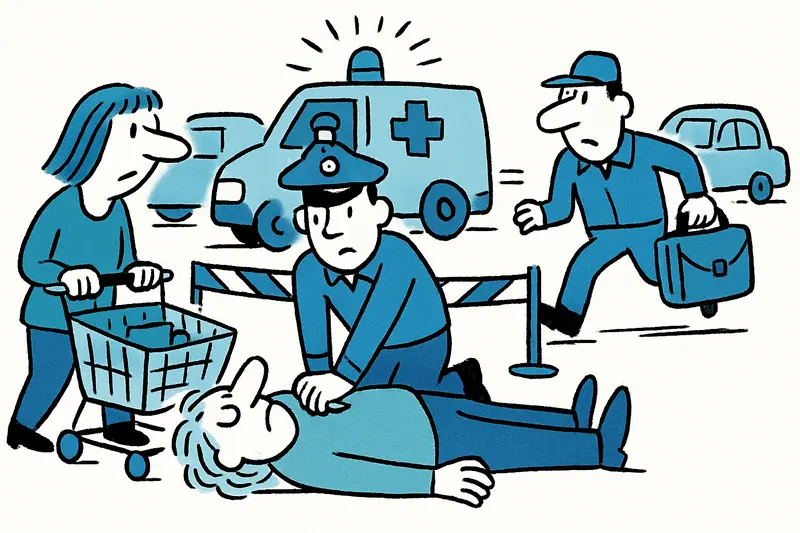
Early Tuesday afternoon, around 12:30 p.m., a 71-year-old woman collapsed in the parking lot of a supermarket in Palma. Customers and employees noticed the incident, alerted the emergency services and attempted first aid. Ambulances, a command vehicle and a logistics vehicle from the urgent medical service (SAMU 061) arrived; the rapid response unit of the local police was also on scene. Despite resuscitation measures, the woman died at the location. Her family was at the parking lot, staff cordoned off the area and redirected traffic. A forensic examination is to clarify the cause of death.
The sober facts can be told quickly. What matters, however, is the time in between: the minutes from collapse to the start of professional help. A parking lot has people, shopping carts and cars — no medical infrastructure. In such moments simple things count: an immediately available defibrillator, courageous first responders, and clearly regulated procedures for store personnel.
The responses of the emergency services are impressive, both in vehicles and personnel. However, Palma is not a closed clinic but a city with many places where emergencies can occur. Public discussions often focus only on statistics. What is rarely asked: the practical equipping of public spaces and commercial areas with life-saving means.
What is missing in the public discourse? First: the presence of automated external defibrillators (AEDs) where many people gather — supermarkets, parking lots, markets; recent tragedies, for example Mourning in Port de Sóller: 87-year-old dies while swimming, show the stakes. Second: regular first-responder training for retail staff; even basic resuscitation knowledge is not a given everywhere. Third: standardized procedures for quickly securing the area, protecting and emotionally supporting relatives and witnesses — not only from a legal perspective, but to give people space in those minutes.
A picture of the scene: It is a bright, slightly windy midday, trolleys clatter against bollards, radios from parked cars hum quietly, strollers push mothers by. Staff pull up tapes with quick hands, a young man tries to give instructions by phone until the professionals arrive. These scenes are familiar in Son Sardina or on Avenida Aragón — they are everyday, yet a sudden cardiac arrest always takes people by surprise.
Concrete proposals that could be implemented immediately: 1) a requirement or incentive for large supermarkets to install an accessible, documented AED in the parking lot; 2) mandatory, paid first-responder training for staff, refreshable every two years; 3) visualized emergency plans at entrances and in parking lots (where the AED is, who calls whom, assembly point); 4) local cooperation between municipalities, emergency services and retail chains for faster alarm chains and regularly rehearsed emergency scenarios; 5) low-threshold offers for the public: free CPR courses in neighborhoods, organized by the town hall or community centers — cases such as 82-year-old tourist dies in Port de Sóller — why an accident at the harbor must not remain an isolated case underline the need for public CPR; 6) psychosocial immediate assistance for relatives and witnesses after such an event.
Practically and legally these are not utopian demands: many mainland municipalities already have funding programs for AEDs, and public health authorities offer curricula for first responders. Mallorca, however, needs local prioritization — island life is different: narrow streets, scattered parking areas, tourists in places without family networks, as shown by Dead Tourist at Playa de Palma: An Accident Raises Many Questions. For that reason a pragmatic approach that does not silently accept long rescue times is worthwhile.
Conclusion: A parking lot is not a hospital. Still, the time until SAMU 061 arrives can be better used if operators, politicians and neighbors take simple precautions. A defibrillator in a visible place, trained staff and clear procedures cost little for operators but can save lives. The sad scene in Palma is a warning: we should not wait for the next collapse to then talk about the fundamentals.
Frequently asked questions
What should you do if someone collapses in a supermarket parking lot in Mallorca?
Are defibrillators available in supermarkets and parking lots in Mallorca?
How long does it usually take for emergency services to arrive in Palma?
Can supermarket staff in Mallorca legally give first aid in an emergency?
Why do public places in Mallorca need AEDs and first-aid training?
What is the best time of year to swim safely in Mallorca?
What should you pack for a day out in Palma or around Mallorca?
Where can people in Mallorca learn CPR or basic first aid?
Similar News

More water than last year: Mallorca's reservoirs breathe easier
September rain refilled the Tramuntana's reserves: overall fill around 35 percent, Cúber at 40.42 percent, Gorg Blau at ...
Three Luxury Hotels in Banyalbufar: Lots of Money, Many Questions
A Danish investor plans three exclusive accommodations in Banyalbufar — including the historic Son Valentí. The announce...
2.1 tonnes of cocaine on sailing yacht off Spain's coast – a reality check for the coastguard
A 14-metre yacht was seized with 2.1 tonnes of cocaine. Who monitors the ports, how does the international hunt succeed ...
Heat Bonus in Mallorca: 100 Euros Extra for Outdoor Staff at MarSenses
MarSenses pays employees who worked outdoors in August an extra €100 as recognition. Lighter uniforms, reduced hours for...
Renovating in Mallorca: What You Really Can Do Without Neighbour Consent
Many think they can do whatever they want in their apartment. That's partly true — but only as long as structural elemen...
More to explore
Discover more interesting content

Can Cap de Bou

Townhouse Lleo 72
