
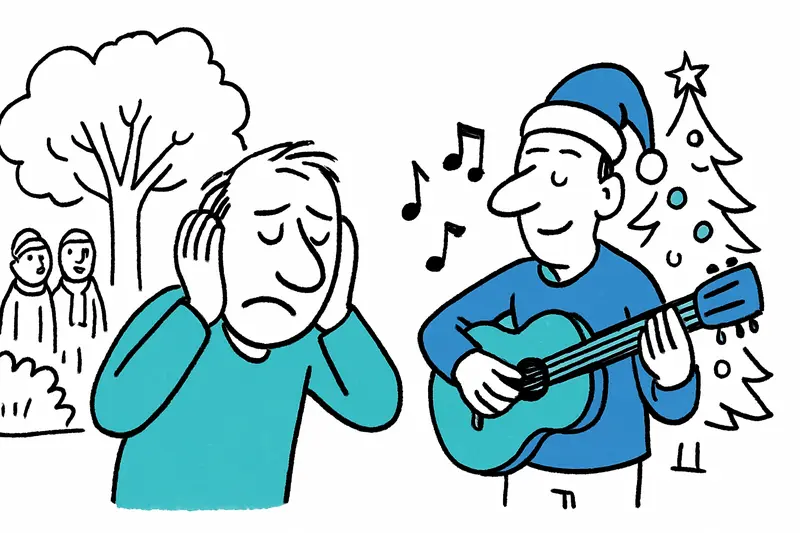
Sa Feixina grows quieter: Music at the Christmas market sharply limited
The city of Palma restricts music playback at the new Christmas market in Sa Feixina to narrow time windows. After resident protests, strict rules now apply — but many questions about transparency, enforcement and the market's duration remain unanswered.
Less volume, more trouble — how Palma turns down the sound in the park
The city administration has put the loud pre-Christmas beats in Sa Feixina on a diet, as reported by Less Christmas Noise in Sa Feixina – Success for Residents, but How Lasting?: music at the new Christmas market is now only permitted on Fridays and Saturdays from 7:30 pm to 9:30 pm — and even then so quietly, "that it can no longer be heard outside the park." For residents of Sa Gerreria and along the Passeig del Born this sounds like a small victory. For organisers, vendors and some visitors it is a clear limitation.
The new rule — what it means in practice
In practice, this means continuous sound systems, live DJs or loud rehearsals before opening hours are no longer foreseen. Market stalls may offer crafts, mulled wine and fairy lights, as noted in Christmas Market in Sa Feixina: Ice Rink, Reindeer Slide and Noise Dispute, but musical accompaniment remains forbidden outside the few permitted hours. Residents report that measurements are planned in the coming days to check whether the volume really remains confined to the park. The city has announced additional on-site controls.
The central question — how much city life is acceptable?
The decision raises a larger question: How does Palma organise festivities in densely built neighbourhoods without sacrificing residents' everyday peace? It's not just about a few hours of music in December. It's about planning transparency, measurable rules and the costs of monitoring and security measures. The neighbourhood initiative Barri Cívic calls the decision a success, but also demands clearer answers (see Residents protest Christmas market in Sa Feixina Park): Who pays for the checks? How long will the market remain in the park? And what are the consequences of higher visitor numbers during the peak season?
Less highlighted: the details of implementation
Technical and organisational details are often missing from the public debate: Which decibel limits apply at the park boundary? Who conducts the measurements — city staff or an independent expert report? And how will violations be handled? Such questions are not merely bureaucratic: they determine whether a measure works or is circumvented after a few days. Without clear, verifiable rules the regulation risks becoming a toothless announcement.
Concrete opportunities — three proposals for a better solution
1. Defined measurement points and decibel limits: A measurable threshold at defined points outside the park creates transparency. 55 dB at the park edge (example value) should be documented and published so residents can verify compliance.
2. Time-limited, verifiable permits: Instead of an indefinite permission, the market should receive a temporary special-use permit — with clear conditions, inspection dates and the possibility to adjust or revoke the permit in case of violations.
3. Community involvement and financial clarity: A small residents' representative on the permitting commission and transparency about costs (security services, measurement technology) would build trust. Cost-sharing between organisers and the city should be made public.
What Palma stands to gain
A pragmatic regulatory framework would benefit everyone: vendors would have planning security, residents could expect quiet nights, and the city would have a model that can be applied to other events. Technical alternatives are also conceivable: acoustic shielding, headphone discos in enclosed areas or a reduction of loud acts in favour of craft presentations would reduce noise without completely sacrificing the market's appeal.
A locally shaped outlook
On a winter evening as you walk down the street toward Sa Feixina, you can already smell the chestnuts roasting and hear the faint rustle of fairy lights — no longer the bass waves from large speakers. Children's laughter, conversations in Mallorcan and Spanish, the clinking of cups: that is the sound many residents want back in their park. The question remains whether Palma will make this case a sensible blueprint for living together in the city — with clear rules, measurable control and an open debate about the use and preservation of public green spaces.
Frequently asked questions
When is music allowed at the Sa Feixina Christmas market in Palma?
Why has Palma restricted noise at the Sa Feixina Christmas market?
Can you hear the Sa Feixina Christmas market music outside the park?
What kind of Christmas market will Sa Feixina have in Mallorca?
How will Palma check whether the Sa Feixina noise limits are being followed?
What do residents near Sa Feixina and Sa Gerreria think about the music restrictions?
Will the Sa Feixina Christmas market in Palma stay in the park long term?
What changes could make Christmas markets in Mallorca quieter in the future?
Similar News
Who Gets Left Out? Why Overbookings Will Hit Many Mallorca Travelers This Summer
On hot check-in days at Son Sant Joan, frustrated travelers pile up. New figures from Reclamador.es show that a large sh...
When the Handyman Came: How an Engagement Ring Disappeared in Mallorca and What It Says About Trust
During a repair in Andratx a highly personal engagement ring went missing — a case that calls not only for punishment bu...
How Burglars Test Fincas in Mallorca — and What You Can Do About It
The Spanish National Police warn of a simple but effective trick: small markings on doors reveal whether a finca is occu...
Palma doubles blue zone: What this means for residents, tourists and narrow streets
From 1 January 2027 Palma's ORA area will grow from around 12,000 to 24,000 spaces. Key question: Will the expansion bri...
Engagement ring disappears during repair: court upholds prison sentences for plumber and partner
During a heating repair in an apartment in Andratx an engraved engagement ring disappeared. After a trace to a pawnshop ...
More to explore
Discover more interesting content

Can Cap de Bou

Townhouse Lleo 72
