
Bench removed, trust gone too? The man on the Paseo and what's missing
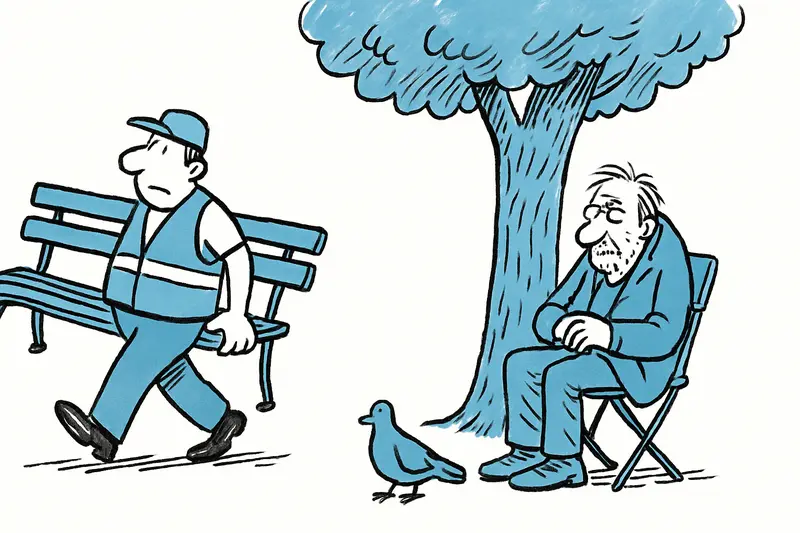
Early in the morning the city removed the long-used bench on Paseo Mallorca. A well-known man now sits on a folding chair. The action reveals a local problem: short-term order instead of lasting help. What is now missing is trust and a coordinated strategy.
Bench removed, trust gone too? The man on the Paseo and what's missing
On Paseo Mallorca there was the smell of fresh ensaimadas, the bakery on the corner blew warm air and yeast into the cool morning air. Around 9:30 a.m. residents suddenly heard a clatter: a van, two men in high-visibility vests and the decision to remove the long-used park bench that had become a makeshift home. The scene was unspectacular and yet symbolic – no fuss, just a gap in the street furniture and a man who had to move from that bench to a worn folding chair.
More than a piece of furniture: who stays, who leaves?
The man by the tree is no stranger here. Some call him kindly "the gentleman of the Paseo", others have for years only noticed him on the margins. He slept on the bench for months, came punctually to the newsstand on Sundays, and seldom spoke. When the workers lifted the bench, social services were present; according to witnesses help and sleeping places were offered – offers that were partly refused. That repeats a familiar difficulty in outreach work: help often only works when there is trust, as covered in Trust Damaged in the Old Town: What Palma's Jewelry Theft Reveals About a Larger Problem.
The city explains pragmatically that in future there will be two smaller single seats under the tree. That sounds like order and an attempt at compromise. For the man it means, for the time being: a folding chair. For the neighborhood the measure raises a quick question: Are we fighting visible symptoms – or organizing real solutions? This echoes other municipal controversies, such as When Bollards Disappear: What the Theft at the Municipal Utilities Reveals About Palma's Controls.
The invisible reasons behind a visible problem
Estimates suggest Mallorca has several hundred people without a fixed home. They sleep in parks, under bridges, in corners like this. What public measures often overlook: refusing an offer is rarely pure provocation. There is shame behind it, the fear of being unable to follow rules, the worry of losing belongings, or trauma that makes stable structures impossible. One-off visits by social services are not enough; continuity is needed.
The neighborhood also plays a role. Some call for more presence of law enforcement, others criticize the hasty removal of seating. In online chats it sounds pragmatic, but in faces it looks cold. Situations arise in which people are constantly 'moved on' – and with that the small but important element of trust is destroyed.
What helps now — concrete measures instead of symbolic politics
Experts name a combination of short- and long-term measures: mobile teams that come regularly at the same time; emergency beds and basic medical care; low-threshold contact points without strict admission rules; and in the long term more affordable housing. The term "Housing First" is mentioned particularly often — Housing First.
Practical suggestions that could be implemented locally and quickly:
- Regular street outreach teams with fixed rounds so trust can grow.
- Luggage and mail service for people without a postal address – a small but life-changing help.
- Flexible opening times at emergency shelters; those who are out at night may not arrive at a facility punctually during the day.
- Involvement of neighbors in mediation projects: volunteers who do not lecture but build bridges.
At the administrative level, better data is needed: recording seasonal fluctuations, coordinated assistance between tourism, social and health departments, and regular evaluations. And: whoever removes benches should consider whether they are not merely shifting the problem.
The Paseo as a test case
The spot under the tree is small but highly visible. It shows how urban society deals with vulnerability: a quick intervention, a later explanation and an empty gap in between. The question is whether the coming days will bring more than two new single seats. Is redecorating enough, or is a networked strategy that truly reaches people required?
Those who smell ensaimadas in the morning, hear the traffic and pause briefly do not only see tourists with cameras, but also a city deciding how it treats its weakest. A first step would be to use the removal of a bench as an opportunity to talk not only about order but about care.
If you want to help: local aid organizations and street outreach services as well as the city's hotline provide information about current services and volunteer opportunities.
Frequently asked questions
What is happening with homelessness on Paseo Mallorca in Palma?
Why do some homeless people in Mallorca refuse help or shelter?
What is Housing First and is it used in Mallorca?
When is the best time to visit Mallorca for comfortable weather?
Can you swim in Mallorca outside the summer months?
What should I pack for a trip to Mallorca in spring or autumn?
What is special about Paseo Mallorca in Palma?
How can people help homeless services in Mallorca?
Similar News
Release after bloody attack in Palma: Why the court's decision raises questions
An 18-year-old who allegedly inflicted a serious neck injury on a man at Plaza Gomila using a wristwatch wrapped around ...
Kidnappings in Inca: Three young men forced into car trunks and abused in the forest – a reality check
In Inca, three 18-year-old men were forced into car trunks by masked assailants at the Plaça des Bestiar, taken to a for...
Spreading Massification: The Brake That Still Has Much Work to Do
Marga Prohens announces limits on volume tourism. The measures sound harsh — but are they enough to save everyday life, ...
Through the Keyhole onto the Party Yacht: How Daniela Katzenberger Is Planning Her 40th on Mallorca
Daniela Katzenberger turns 40 and wants to celebrate it on the island — likely with a boat, cake and her mother. A relax...
By Boat Instead of the Road: Palma's Water Bus — a Reality Check
The 'Bus Nàutic' launches in two stages — but questions remain over interim operations, fares and environmental requirem...
More to explore
Discover more interesting content

Can Cap de Bou

Townhouse Lleo 72
