
Trust Damaged in the Old Town: What Palma's Jewelry Theft Reveals About a Larger Problem
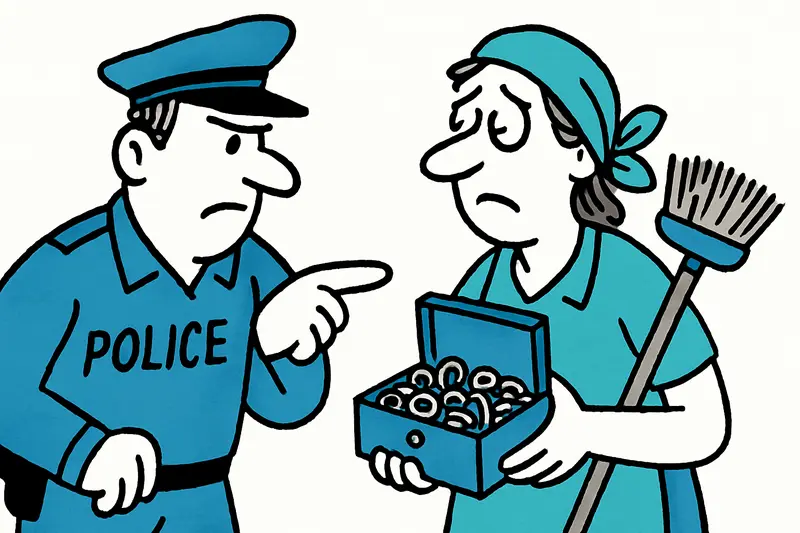
A longtime cleaner is in custody — 32 pieces of jewelry and gold coins worth around €20,000 were found. The arrest raises a central question: How do you protect privacy and trust without becoming suspicious?
Leading question: How do you protect privacy and trust in Palma's Old Town?
It began like a small puzzle in a narrow alley of the old town: the church bells in the morning, the smell of freshly brewed coffee, and a woman who had been keeping the apartment clean since 2012. She usually arrived around 9 a.m., had keys to the flat — and seemed part of the routine. Now she is in custody. Similar incidents have been reported elsewhere, including a jewelry theft in Porto Cristo. Investigators found 32 pieces of jewelry, gold coins and other valuables; the damage is estimated at about €20,000. But the story is less a crime drama than a magnifying glass on everyday life and structures that are rarely questioned.
The breach: more than just material losses
Those who live on Palma's Calle de Sant Miquel know the small rituals: the murmur from the market, the creak of old balconies, the occasional rush of mopeds. When an heirloom is missing, it affects people in several ways: emotionally, because a keepsake is gone; socially, because a relationship of trust has been violated; and practically, because insurance and legal avenues are often cumbersome. Many owners only noticed something was missing after an inventory — a hint of how invisible trust can be in everyday life.
What is rarely said: the situation of household helpers
Part of the problem lies in the shadow of informal work. Cleaners often work for years in the same apartments but are formally little protected or registered. Without clear employment contracts there is little evidence of working hours, tasks or responsibilities — and employers find it difficult to exercise control. This creates situations where opportunity meets need. That explains a lot, but excuses nothing.
Police work and the limits of investigations
The police found many of the missing items during a search and returned some to their owners. That is a success. At the same time, cases like this show the limits: investigations take time, witnesses and evidence. Not all losses can be clarified, and even an arrest often does not answer the deeper questions that trouble the neighborhood, as highlighted in Arrest after Jewelry Heist in Palma: Questions Remain.
The neighborhood reacts divided
You can hear two tones this morning: relief among those who got jewelry back; and a quiet hurt among those who feel exploited. Some neighbors warn against snap judgments and point out that there may be backgrounds one does not know. Others demand clear consequences and more precautions. Between espresso and small talk on the corner grows an invisible caution — keys may not be handed over so easily in the future. Evening routines have also been shaken by street thefts, such as the Robbery in Palma's Old Town: Luxury Watch Stolen, which adds to the sense of vulnerability.
Concrete weak points — and how to patch them
The guiding question remains: How do you protect privacy and trust without turning the old town cold and suspicious? Some pragmatic approaches are easy to implement:
1. Clear contracts: Written agreements even in private households create transparency — working hours, tasks and liability issues should be documented.
2. Temporary access solutions: Smart locks or codes that change regularly reduce the need for physical keys.
3. Inventory and documentation: Photos of important items, simple lists and receipts make reimbursement and return easier in case of loss.
4. Insurance and value limits: Many home insurance policies have add-on options for antiques and jewelry — a short consultation can save a lot of trouble.
5. Professionalisation: A voluntary municipal register for household helpers or a quality-seal initiative could strengthen trust without being stigmatizing.
What politics and municipalities can contribute
At city level it would be possible to provide information for private households and cleaners: templates for contracts, advice on insurance, workshops on rights and duties. That costs little and can prevent much unease. Advisory centers for employees in the cleaning sector could also be strengthened — prevention works from both sides.
An appeal to the neighborhood
Mistrust is not a good adviser, but thoughtless openness can hurt. The solution often lies in small, practical steps instead of suspicions: seek conversation, create clarity, use technical aids. Those who live within Palma's walls understand the balance between neighborhood and privacy better than anywhere else. We must learn to find the right mix of trust and precaution — so that keepsakes remain, and life in the alleys does not grow cold.
The case will proceed legally. For those affected the question remains whether the lost trust can be restored. For the neighborhood the task is to learn from the incident — quietly, practically and with an eye on the people who work and live here.
Frequently asked questions
How can I protect valuables if a cleaner or house helper has access to my home in Mallorca?
What should I do in Mallorca if I notice jewelry or other valuables are missing from my home?
Are informal cleaning arrangements a risk for private homes in Mallorca?
What can Mallorca homeowners do to build trust without handing out permanent keys?
What should I know about insurance for jewelry and antiques in Mallorca?
Why are jewelry theft cases in Palma’s Old Town especially upsetting for residents?
What support is available in Mallorca for household workers in cleaning jobs?
What practical steps can Mallorca neighborhoods take after a trust-related theft case?
Similar News

Why the Striped Breams in Cala Pí Should Be a Wake-up Call
Once again bathers in Cala Pí were surrounded while swimming by small, nippy fish — some wounds bled. Time for clear rul...

Daily from New York: How Palma's Air Traffic Is Growing — and What Must Change
United will increase the Newark–Palma service to daily flights in 2027 (Boeing, 231 seats). Strong tourist numbers clash...

When Love Ends in Shards: Destruction in Son Vida and the Questions That Remain
In Son Vida a relationship dispute escalated: a woman destroyed furniture in a luxury villa, later pressed a panic butto...

Who Bears the Burden? Mallorca Between Tenant Protection and Landlord Fears
Madrid's new housing decrees strengthen tenant rights — but on Mallorca concern is growing: will the law drive small lan...
On the Edge: What Mallorca's Airport Loses If a Major Low-Cost Carrier Falters
The company that operates numerous connections from Palma to France and domestically is negotiating with creditors to re...
More to explore
Discover more interesting content

Can Cap de Bou

Townhouse Lleo 72
