
After the clear-cut in Calatrava: What the felling at Plaça Llorenç Villalonga revealed
A nighttime felling operation in Palma felled 17 historic elephant trees at Plaça Llorenç Villalonga and sparked fierce protests. Key question: Was this necessary—or was responsibility used as a pretext?
After the clear-cut in Calatrava: What the felling at Plaça Llorenç Villalonga revealed
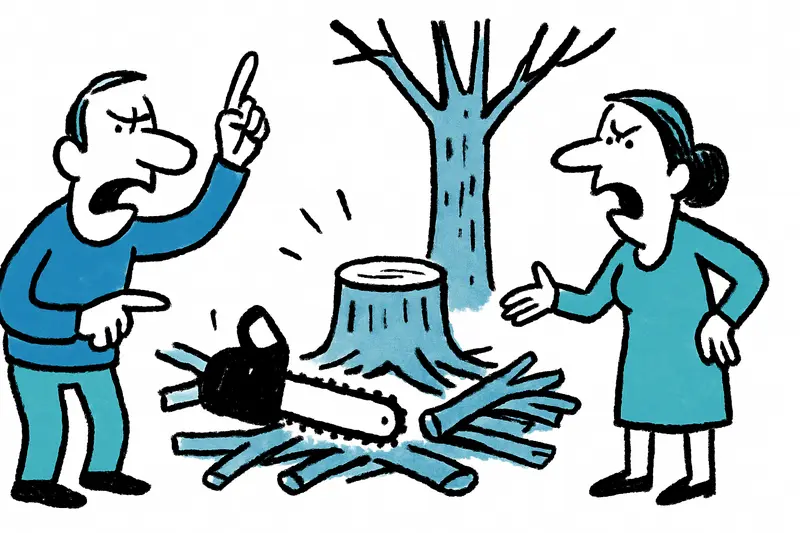
In the early hours of a cold week, 17 of the characteristic elephant trees at Plaça Llorenç Villalonga were felled. The operation took place almost silently until the gaps in the foliage and the remaining stumps woke the neighborhood and ignited anger, as reported in Alarm in Palma: Neighborhood Resists Tree Felling on Plaza Llorenç Villalonga. The sound of chainsaws, usually associated with distant summer work away from the beaches, felt like a foreign element that morning in the narrow streets of the Calatrava quarter.
Key question
Was the radical removal of the trees an unavoidable safety measure — or has a municipal administrative action become the symbolic loss of a civic agreement?
What exactly happened?
Seventeen trees that had long been seen as the shady icons of the plaza were cut down professionally but suddenly. A court had previously approved the measure; municipal assessments attested to the trees' poor condition and an increased risk of falling branches. In spring 2024 five trees from the same group had already been removed; this was the larger, final action, as detailed in Dispute over 17 Ombu Trees on Plaza Llorenç Villalonga: Who Decides on Urban Green?.
Critical analysis
The basis presented by the city—safety concerns due to allegedly poor vitality—is not unusual in itself. Problematic, however, is the sequence: reports from the municipal parks and gardens department, a court decision, immediate enforcement. A neutral, independent assessment that was made publicly comprehensible was missing. In such emotionally charged cases, acceptance depends not only on the technical findings but on the manner of communication and the timeframe. The nighttime execution reinforced the sense of secrecy and inevitability.
What is missing from the public discourse
There was much discussion about risk and legality, but less about alternatives. Few people talked about technically possible interim solutions such as crown securing, pruning under expert supervision, temporary closures or support measures. Also underexposed was the question of long-term care and financing of the city's tree stock: Who inspects regularly, how often are external experts consulted, and what documentation exists about the condition of individual trees considered historic?
The mood on site — an everyday scene
The afternoon after the operation: cut branches lie at the edge of Plaça Llorenç Villalonga, a couple sits on a bench where there had once been dense shade, children run barefoot across warm paving stones that no longer offer cool islands. In front of city hall people gather with notepads and smartphone cameras, some drum on pieces of wood, others carry the last leaves in plastic bags. Voices are rough, you can hear distant bus horns on the Passeig, an older woman says softly: "That was our summer."
Lacking transparency and trust
Crucially, trust in authorities is lost when measures are executed suddenly. A court ruling alone does not automatically create acceptance. The city spokeswoman defended the procedure by referring to responsibility; environmental organizations and citizen initiatives describe the action as rushed. Without accessible photos, full reports or a public protocol, room for doubt remains, a dynamic explored in When Palma's Trees Fall Silent: Felled Pines and Lost Trust.
Concrete solutions
1. Independent second opinions: For trees with high public significance, an external assessment by recognized tree specialists, such as tree risk assessment resources from the International Society of Arboriculture, should be mandatory. 2. Public documentation portal: Photos, measurements and the city's reports should be available online before irreversible measures are taken, following public participation guidance from UN-Habitat. 3. Step-by-step plan instead of a quick decision: Develop a traffic-light system (monitoring — securing — restricting access — felling) with clear deadlines. 4. Temporary protection measures: Crown securing, climbing care or provisional supports could buy time for a more thorough review. 5. Neighborhood involvement: Information events and limited windows for objections create legitimacy. 6. Reforestation and maintenance fund: Every felled city tree should entail an obligation to replant and ensure long-term care.
Legal and administrative steps
It makes sense to review existing regulations: What standards apply to the assessment of "endangered" trees, what deadlines are set for appeals, and how are monument protection rules weighed against safety concerns? An independent review of these procedures would not immediately save trees, but it would improve the basis for future decisions.
Why the issue continues
City trees are more than mere greenery. They regulate heat, capture fine dust and shape social life on squares and streets. If a city repeatedly resorts to radical interventions without informing the community or working transparently with experts, not only foliage disappears — a piece of civic cohesion fades as well.
The result in Calatrava is visible: gaps in the row of trees, conversations that now focus less on shade and more on anger. The lingering question remains: How can Palma resolve future conflicts so that safety, preservation and public trust are not set against one another?
Pointed conclusion
The felling has shown that law and justification can provide a range of answers, but not trust. Anyone who wants to permanently change a city's appearance must not only inform the public but involve it seriously. Otherwise, after the action only the echo of the chainsaw — and the emptiness that no report can fill — will remain.
Frequently asked questions
Why were the trees at Plaça Llorenç Villalonga in Palma cut down?
Was the tree felling in Palma a safety measure or a public controversy?
What could Palma have done instead of removing the trees immediately?
Why did the tree cutting in Calatrava upset so many residents?
What happens to a square in Mallorca when large shade trees are removed?
When is the best time of year to notice tree loss in Palma?
How transparent should Palma be before cutting down city trees?
What does the tree felling at Plaça Llorenç Villalonga mean for future city trees in Mallorca?
Similar News
Injured captain, big plans: Germania Mallorca before the away match in Consell
The newly founded FC Germania Mallorca travels to Consell on Saturday. Captain Bastian Müller is out injured, but coach ...
Palma, Palma de Mallorca, Palma‑Mallorca: What is it really about?
The debate over the city's name is more than grammar: it concerns identity, law and branding policy. A sober reality che...
Warning to Bathers: Nipping Fish in Cala Major and Other Coves — a Reality Check
In Cala Major and several beaches around Mallorca, bathers report painful “nips”. Who are the animals, why are they gett...
Rental Car Theft in El Arenal: What This Incident Reveals About Our Gaps
A teenager steals a running rental car in El Arenal, flees on foot, climbs over walls and is caught by the Guardia Civil...
Red Rope in Palma's Library: What Helps Against Selfie Tourism — and What's Missing
Palma's city library cordoned off an area with a red rope to keep selfie tourism away from reading and working activitie...
More to explore
Discover more interesting content

Can Cap de Bou

Townhouse Lleo 72
